
WORCESTER—Worcester is looking to track something that isn’t always visible—but can affect how residents breathe.
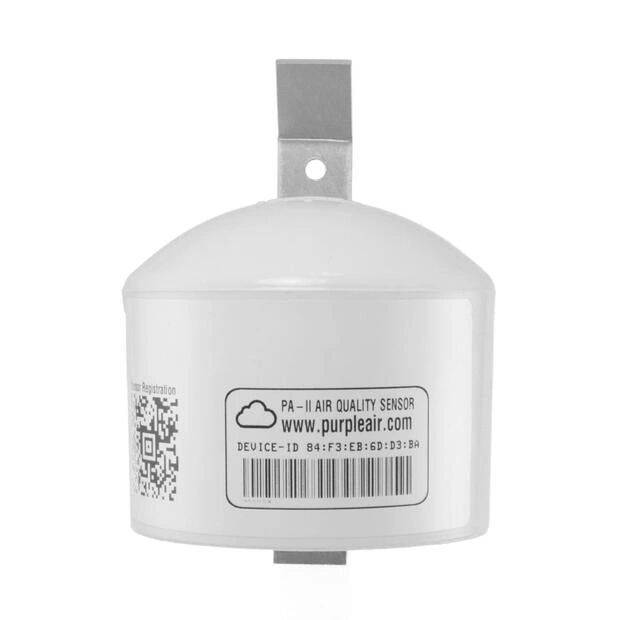
City officials are seeking to install five air-quality sensors that would measure tiny airborne particles known as PM2.5, along with heat and humidity, under a proposed state grant. The sensors would help the city identify neighborhoods where air pollution may be contributing to asthma and other respiratory problems.
The city council voted to accept an in-kind grant from the Massachusetts Department of Environmental Protection under its 2025-2026 Air Sensor Grant initiative. The award provides Worcester with five air sensors to support air quality monitoring efforts through the Worcester Division of Public Health.
In a letter to the council, City Manager Eric D. Batista wrote, “I respectfully recommend adoption of a resolution to file and accept an in-kind grant from the Massachusetts Department of Environmental Protection providing the City of Worcester with five environmental air sensors under its 2025-2026 Massachusetts Air Sensor Grant initiative.”
According to city officials, the sensors would measure outdoor particulate matter (PM2.5), along with heat and humidity, for 12 months following installation. The data would be made publicly accessible and used to help identify environmental patterns that may contribute to poor health outcomes, particularly in high-risk communities.
The PurpleAir Flex units offered through the state’s grant transmit real-time air quality readings via built-in WiFi to an online public map, allowing residents to view neighborhood-level data on a smartphone or computer. Sensor readings can also be viewed on the U.S. Environmental Protection Agency’s AirNow Fire and Smoke Map alongside data from state-operated regulatory monitors.
The Worcester Division of Public Health said the program supports “our efforts to reduce health inequities in our city and provides us with the data needed to develop effective mitigation planning and education efforts to ensure the wellbeing of all residents.”
The grant does not require matching funds or additional staffing.
During the brief discussion before the vote, Councilor Luis Ojeda asked whether locations for the five sensors had been identified.
“I’m not aware of what those five areas would be,” Batista said, adding that the city is requesting a grant application and that he could provide that information later.
Ojeda replied he would appreciate an update at a future meeting.
The resolution was approved by roll call vote as part of the manager’s agenda.
Have a story tip, community concern, or insight to share? Email Editor Charlene Arsenault at carsenault@theworcesterguardian.org.
The Worcester Guardian is a nonprofit newsroom serving Central Massachusetts. Help keep independent reporting alive by making a donation today.
