
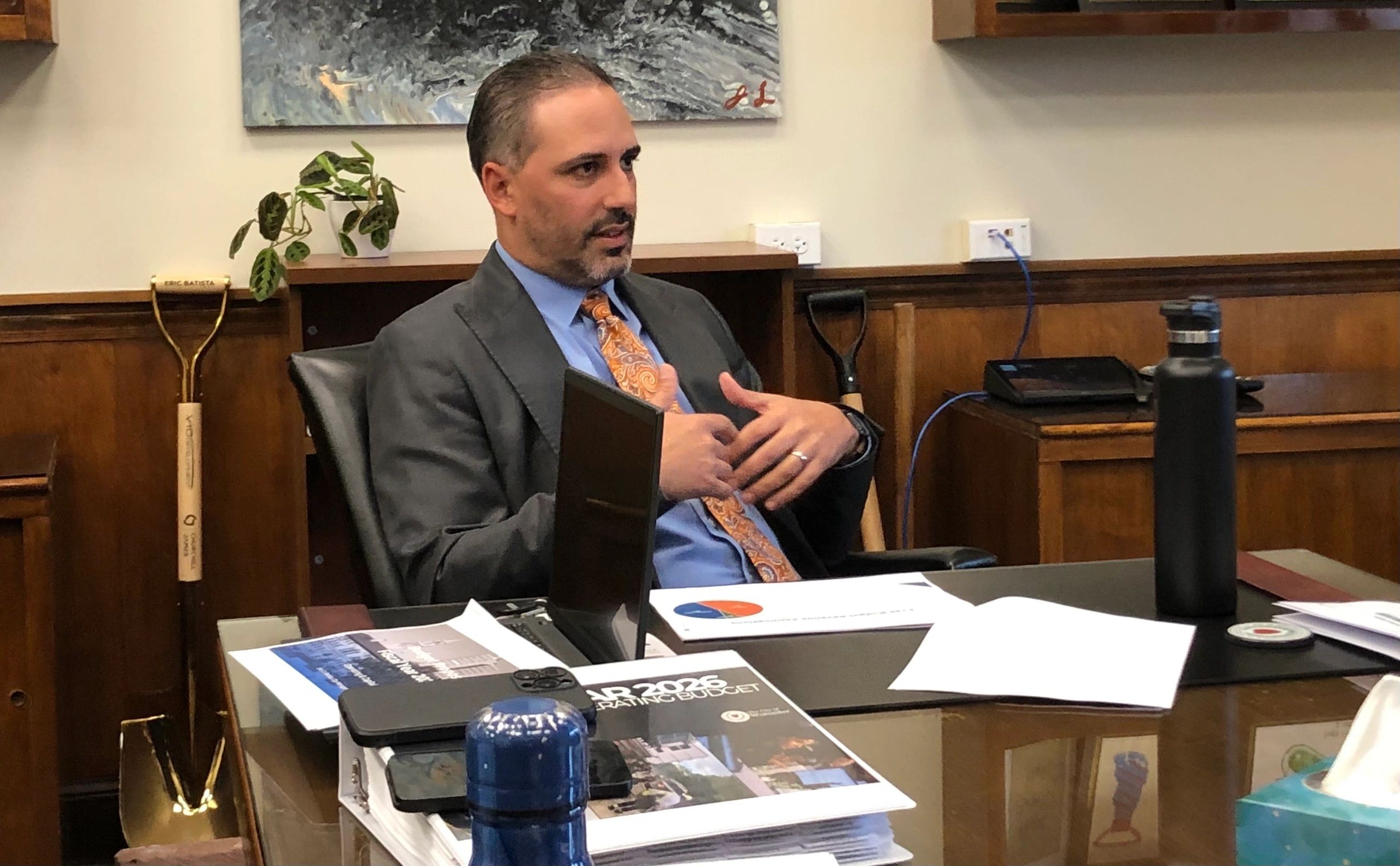
WORCESTER—City Manager Eric Batista on Tuesday unveiled a proposed $947.9 million operating budget for Fiscal Year 2026, a 6.2% increase over the current year that he said reflects Worcester’s commitment to strengthening essential services and preparing for potential financial volatility.
“The budget this year is really focused on maintaining and improving core city services—not just to strengthen them,” Batista told reporters at a media briefing, “but also to build human capital.”
The proposal, which goes before the city council Tuesday night, outlines key investments in education, public safety, infrastructure, and technology, while setting aside a strong contingency fund in case of revenue shortfalls or unexpected costs. Batista said the financial blueprint represents the city’s “vision for sustainability, stability, and readiness.”
Education and public safety lead budget growth
Education continues to be the largest line item, making up 60.8% of the total FY2026 budget at $574.4 million—a 7.7% increase over FY2025. Of that, $412 million, or about 71%, is funded through Chapter 70 state aid, which is up 9.1% under the governor’s proposed budget.
“We are fortunate to have robust support from the state in education,” Batista said, “but we also need to make strategic decisions locally to ensure we’re supporting our students and facilities effectively.”
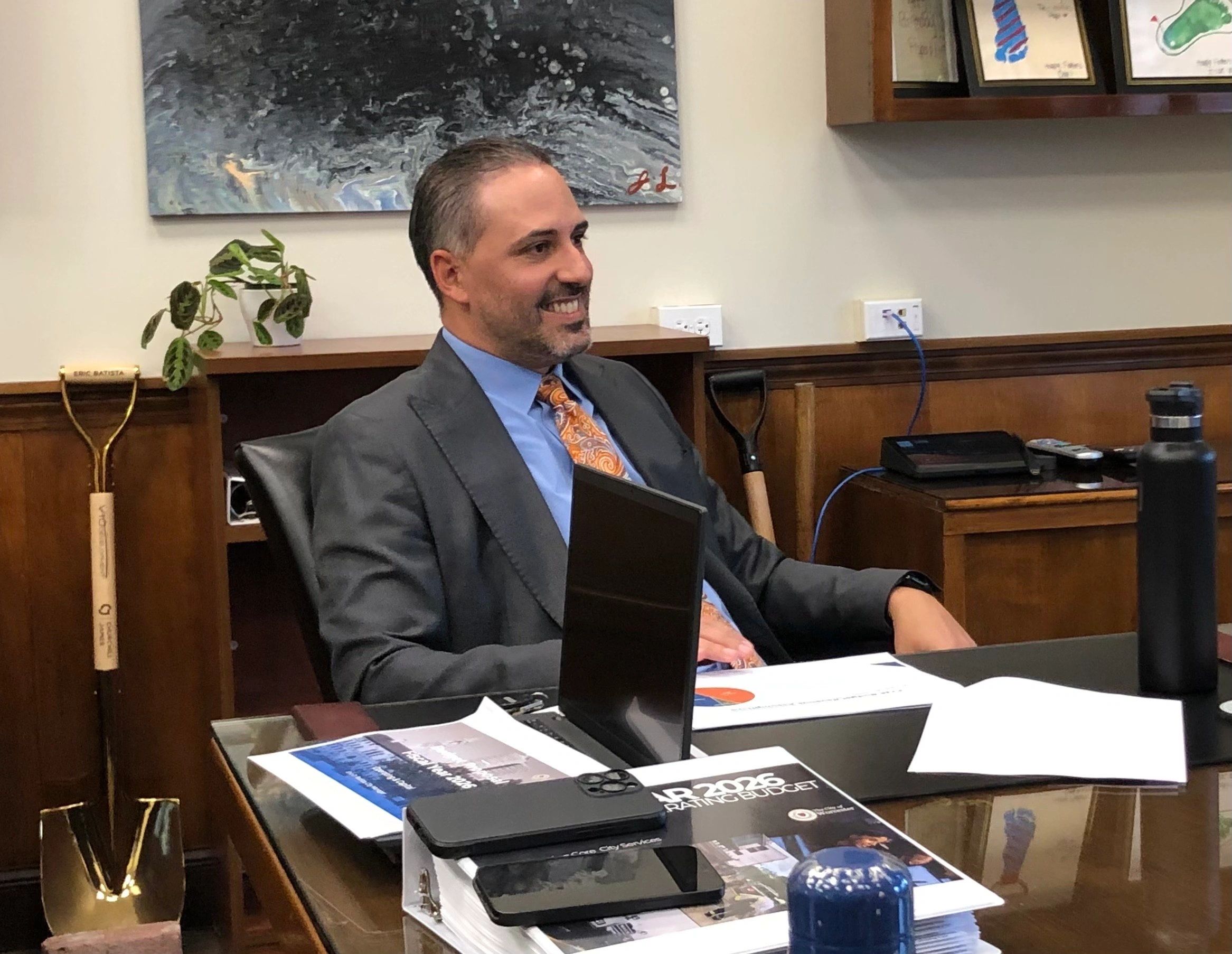
Public safety spending also sees a significant bump, with a proposed $5.2 million increase for the fire department and $2.3 million more for the police. The fire department’s budget supports contractually obligated salary adjustments, new PFAS-free turnout gear, overtime costs, and facility maintenance.
“Public safety is critical, and we’ve made a deliberate effort to prioritize both equipment and personnel,” Batista said.
Police department increases are earmarked to fund wellness programs, new equipment, and staffing stability, including a 15% recruit class to maintain department size.
Revenue drivers and contingency planning
The proposed budget assumes total revenue of nearly $948 million, boosted by a $34.4 million increase in state aid, a $17.6 million increase in property taxes, and a projected 4% uptick in local receipts from fines, licenses, and interest income.
Even so, Batista warned that the numbers remain subject to change. “Based on what’s happening globally, we anticipate there could probably be changes,” he said during the press briefing on Tuesday. “That’s why we are building our contingency account more than typical. If there are changes to staffing or services, we want to have that in place.”
A $1.9 million reduction in the contingency line item reflects the fact that last year included funding for open labor contracts, which have since been settled. But Batista emphasized that the city has expanded its contingency approach elsewhere in the budget to hedge against unpredictable shifts in state or federal funding.
Capital projects and infrastructure
The FY2026 capital budget includes nearly $159 million in new authorizations, with $113 million in planned borrowing and $32 million from grants and other sources. Key projects include the completion of Doherty Memorial High School, a feasibility study for Burncoat High and Middle Schools, major street and sidewalk upgrades, fire station construction, and renovations to city buildings such as the Worcester Memorial Auditorium and the DCU Center.
On the infrastructure side, Batista highlighted a continued focus on “clean city” initiatives, aquatics maintenance, catch basin cleaning, and rat control.
“These are the quality-of-life issues people really feel in their day-to-day,” he said. “We’re making sure we’re responsive and improving on those fronts.”
Realigning the ranks
A key component of the FY2026 budget, Batista stressed, is a continued effort to address compensation inequities among city staff—particularly mid-level managers and professional employees. The proposed budget includes salary adjustments for 188 of the 256 positions reviewed within executive management, management, and professional categories.
Batista said this effort is about aligning pay grades appropriately rather than issuing across-the-board raises. “We want to right-fit those pay grades,” he told reporters. “We are addressing our core managers doing the day-to-day work in our city… trying to create a differential between them and the cabinet.”
According to the budget, 86% of the adjustments are for management positions, aimed at retaining talent and building a more equitable, competitive pay structure.
Technology, staffing, and long-term outlook
The budget includes nearly $950,000 for emergency communications improvements and the launch of a 311 customer service center, along with nearly $1 million in investments in cloud-based software, phone systems, and IT centralization. The city is also preparing for the future with modest personnel changes, including new fire lieutenants, security staff, and a CDL-certified HR position. A 2% cost-of-living adjustment for employees is also built into the plan.
Batista said the budget reflects caution in the face of potential state and federal funding shifts, and noted that strengthening contingency accounts was a key strategy to safeguard core services and staffing if economic conditions change.
Next steps
The FY2026 budget was formally submitted to the city council on May 6. A series of public budget hearings and meetings follows: May 13, May 20, May 27, and June 10, when final approval is anticipated during a regular city council meeting. An additional council meeting is scheduled for June 17, with the new fiscal year set to begin on July 1.
Have news, tips, or a story worth telling? Reach Editor Charlene Arsenault at carsenault@theworcesterguardian.org—because good stories (and great scoops) deserve to be shared.
The Worcester Guardian is an independent nonprofit news organization. Support local journalism by making a DONATION today.
