
For years, Gary Labovich has had to explain a reality his family never anticipated.
“My son has schizophrenia.”
David, now 34, had been captain of his high school football team, an accomplished musician and a standout student headed to Williams College to study biology. By young adulthood, however, increasingly troubling behavior had developed into psychosis, followed by broken friendships, periods of homelessness and encounters with police.
His family spent years trying to find treatment and stability for him.
That experience ultimately helped bring together two organizations that might seem unlikely partners: a national mental health advocacy group and a university game-design program.
With support from a gift from the Labovich family, the Schizophrenia & Psychosis Action Alliance has partnered with Clark University’s Becker School of Design & Technology to explore whether games and other digital tools can help people living with schizophrenia and psychosis combat loneliness, strengthen social connections, develop practical skills and feel better understood.
The collaboration moves into the spotlight Sept. 26 and 27, when Clark hosts its first Games Matter! Jamathon at the university’s Center for Media Arts, Computing and Design.
Over two days, students, game designers and developers will work alongside clinicians, researchers, caregivers and people living with serious mental illness to create concepts for video and computer games as well as board and card games addressing real-world challenges associated with schizophrenia and psychosis.
The effort is already underway.
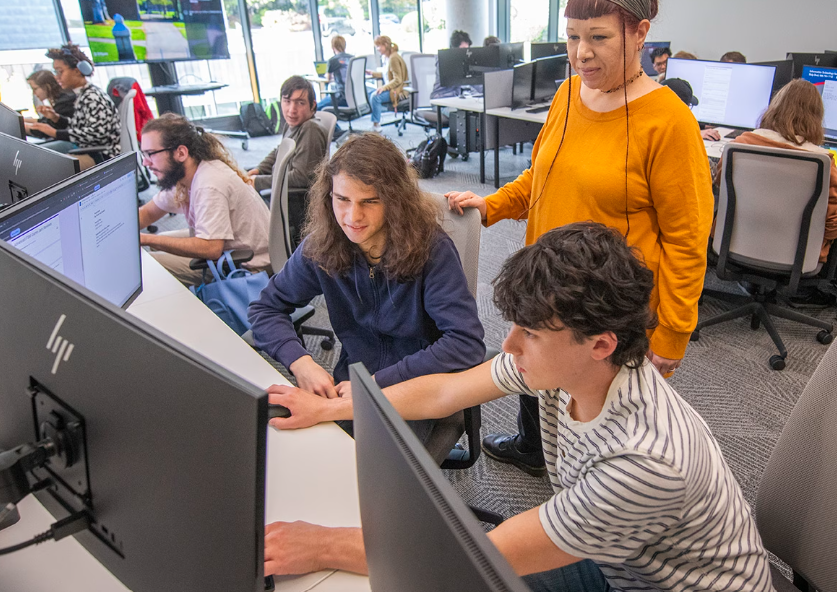
About 80 Clark students worked in teams last spring to develop prototype games focused on reducing isolation and improving social connection, according to a university announcement. Students worked directly with professionals from the Schizophrenia & Psychosis Action Alliance, or S&PAA, and people with lived experience to develop and test their ideas.
For Labovich, a 1981 Clark graduate and former chair of its Board of Trustees, the partnership grew from a deeply personal understanding of how difficult it can be for families to find help.
His son experienced anosognosia, a neurological condition in which a person is unable to recognize their own illness. Labovich and his wife struggled for years to navigate medical and social service systems from their home in the Washington, D.C., area while their son was living across the country.
They eventually found a stable living arrangement for him, and counseling and medication have allowed him to work part time and function more independently, according to Clark’s announcement.
“Schizophrenia tends to impact young people who are quite accomplished and talented,” Labovich said in the announcement.
The experience led Labovich, a retired Booz Allen executive, to join the board of S&PAA, which focuses on research, education, advocacy and public policy surrounding schizophrenia and psychosis.
It also eventually connected that work with his alma mater.
Finding a role for games
S&PAA CEO Gordon Lavigne became interested in Clark after reading about the Becker School’s Games for Good Conference last November. That gathering focused on “serious games” — games designed not simply for entertainment, but to serve purposes including education, training, health and social impact.
“I was so excited by this work,” Lavigne said in the announcement. “It just seemed to connect aspirationally with what we were trying to do — not only through games but across the college landscape.”
Lavigne said the organization “tries to connect the dots between treatment, survival, and recovery,” particularly because symptoms of serious mental illness often emerge during adolescence and young adulthood, a period already marked by substantial social and emotional change.
“We know that if we don’t lean in and pursue challenging transformational initiatives, no one will,” he said in the announcement.
That collaboration reached Clark classrooms last spring.
Krissa Rouse, S&PAA’s director of programs and community engagement and a licensed clinical professional counselor, spoke with students in Becker’s Serious Games course about schizophrenia and psychosis and the experiences of people living with them.
Rouse pushed back against assumptions that a serious psychiatric condition erases a person’s abilities or future.
“The best part of my clinical work is helping brilliant young people understand that their life is not over, and that they can still rely on their brain with the right level of treatment, support, education, self-care, and stress management,” Rouse said in the announcement. “Their brain is still magnificent. They can still dream and achieve.”
The partnership is built around the idea that games can provide another route to social connection and empathy while also helping people develop practical skills.
At Becker, students in the Serious Games course develop concepts with outside organizations around real-world problems. Some prototypes can then advance into Game Studio courses, where students work toward producing a finished game.
“Partners are very back-and-forth with us in a really great, cooperative way,” Becker School Chair Terrasa Ulm said in the announcement. “It’s nice because we’re actively collaborating on each piece of it. The community’s involvement is so important because they need to be the ones informing this process.”
“The Game Studio’s specific purpose is to produce games,” she added. “So our goal is to get it in there and make something.”
Bringing lived experience into development
That involvement is a central feature of the Sept. 26-27 Jamathon.
Rather than asking designers to develop solutions based solely on assumptions about serious mental illness, the event will put people with lived experience in the room with those creating the games.
The collaboration also extends beyond the Jamathon. S&PAA representatives are participating this fall in a first-year course taught by Ulm and Becker School Dean Paul Cotnoir, introducing another 24 Clark students to designing serious games with content experts.
Plans also include an annual symposium and classes bringing experts to campus to explore issues surrounding serious mental illness.
“This partnership with S&PAA reinforces the Becker School’s commitment to being at the forefront of thinking about not only how games are made, but why we make them and the impact they can have,” Cotnoir said in the announcement.
“By bringing game designers together with mental health professionals and people with lived experience, we are exploring how the game-development process itself can become a vehicle for positive social impact,” he added.
For Labovich, the project that grew partly from his family’s experience has ambitions beyond a single event or classroom.
“I would love to see Clark leading a consortium of schools that are developing gaming tools and other technologies to support people with schizophrenia and psychosis; and our students will be on the front line,” Labovich said in the announcement. “This is what college is and should be.”
Have a story tip, community concern, or insight to share? Email Editor Charlene Arsenault at carsenault@theworcesterguardian.org.
The Worcester Guardian is a nonprofit newsroom serving Central Massachusetts. Help keep independent reporting alive by making a donation today.
