
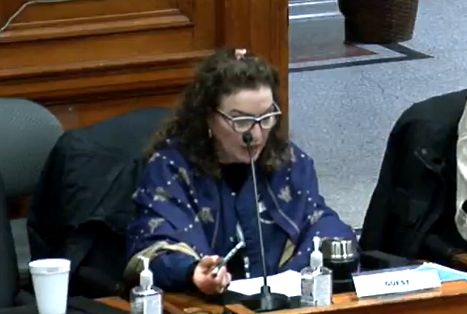
WORCESTER—At the April 7 Worcester Board of Health meeting, Amelia Houghton, the city’s chief public health nurse, reported a continued decline in several communicable diseases tracked by the city in March.
Houghton told the board that Worcester recorded six norovirus cases in March, down from 10 in February, following a period of “many outbreaks.” Influenza cases also dropped significantly — from 1,097 in February to 375 in March. COVID-19 cases saw a similar decline, from 104 to 63.
There were only “a couple of salmonella cases” reported, and “thankfully no measles or pertussis to report,” Houghton said.
She emphasized that while the numbers are trending downward, residents should remain vigilant. “These topics are ever present in the news and I just really need to keep stressing how important it is that we are aware of what’s happening,” Houghton said.
For norovirus prevention, Houghton reminded residents that alcohol-based hand sanitizers are not effective and stressed proper handwashing and use of bleach-based cleaners. She advised people not to eat perishable food left out for more than two hours and to thoroughly wash fruits and vegetables.
With respiratory illnesses such as the flu and COVID-19, precautions remain the same: those with mild symptoms should stay home and rest, while people with more severe symptoms should seek medical care. Houghton added that masks, regular handwashing, and staying up to date on vaccinations remain important tools for disease prevention.
Houghton also provided a national update on measles, which has seen more than 600 cases across 22 states in 2025 — already more than double last year’s total. Texas has been hardest hit, and most cases are among unvaccinated individuals.
“The measles, mumps and rubella vaccine is highly effective,” she said, citing CDC guidance that two doses provide 97 percent protection.
Although there have been no confirmed measles cases in Massachusetts so far this year, Houghton said the city is watching the situation closely.
There have been 70 bird flu cases and one death reported nationally, but none in Massachusetts. The CDC says the public health risk remains low, with no human-to-human transmission reported.
Houghton noted that while the virus continues to spread among wild birds, the risk to humans in Massachusetts remains low. Human-to-human transmission has not been reported, and approved bird flu vaccines are stockpiled for emergency use. Residents are encouraged to report dead birds through Worcester’s 311 system, particularly if they are found in public areas or if five or more are located in one spot.
“The most important thing is prevention,” Houghton said.
