
WORCESTER—As the city’s Community Preservation Program (CPP) moves forward with its implementation timeline, affordable housing stands as one of its key focus areas, with at least 10% of funds mandated for community housing initiatives.
The program, which began collecting a 1.5% property tax surcharge in FY24, is expected to generate approximately $4.759 million in FY25, creating a substantial funding source for affordable housing projects in Worcester. This number includes a match from a State Trust Fund.
“There are a lot of options for community housing,” CPP Manager Jacquelyn Burmeister told the Worcester Guardian. “And there’s actually more options for the community housing funding category than any of the other categories. We are able to allocate a portion, or as much as we decide we want to, to the Affordable Housing Trust Fund.” Specifically, they can go up to 75% of annual revenue by state law (20% must go to the other funding categories, and there is 5% set aside for Admin), according to Burmeister.
Under the state requirements, eligible housing projects will target low and moderate-income residents, including seniors aged 60 and over. Low-income is defined as 80% of the areawide median income, while moderate-income extends to 100%.
“We can reevaluate some of the restrictions around the money that’s coming into the funds, since Community Preservation Act (CPA) has different restrictions than American Rescue Plan Act (ARPA) funding or funding from other sources,” Burmeister added. Residents are also being asked how they feel about the current way the funding is allocated, and if there should be more of a focus on other types of projects with potentially more requirements for accessibility.
“There are other types of projects that CPA money can fund projects for,” Burmeister explained. “Land purchases for community houses can be purchased with APRA funds, housing buydown programs, rental assistance programs, first time homebuyer programs…these are all programs that can be funded with CPA dollars.”
“The state understands that it’s very expensive to build affordable housing in general,” Burmeister noted, “so the predevelopment activities are eligible in this program. Preservation of existing affordable housing is covered, as well as new construction and adaptive reuse projects.”
Peter Dunn, chief development officer, added that because of the significant cost to construct houses— either new or adaptive reuse of older buildings—projects consistently rely on government subsidies in order to offer affordable rent prices.
“That is why the new tools we have created at the local level and the passage of the Affordable Homes Act at the state level are so important,” said Dunn.
The Community Preservation Committee is reviewing existing plans, including the city’s Housing Production Plan, to ensure alignment with Worcester’s housing needs. This process includes extensive community engagement, with public hearings scheduled for winter 2024 regarding the plan and application draft.
The final framework for housing initiatives, including funding allocation percentages and maximum project amounts, will be determined through the Community Preservation Plan, which is being developed with public input throughout fall 2024.
“In the last two years or so, the Affordable Housing Trust Fund has been in the process of developing over 450 units, with most of those being ADA units,” said Mayor Joe Petty. “We’re going to be distributing some of the Community Preservation Act that goes into the Affordable Housing Trust Fund. The apartments at The Cove in Worcester should be opening soon as well, probably by next month,” he added.
Interested organizations and residents can expect the funding application process to open in winter 2024, with project recommendations to be finalized in spring 2025. The city plans to announce funded projects in summer 2025.
“We will have a community forum in December, where the public will provide input on the priorities of the plan,” said Burnmeister. “The draft plan will be released in early 2025, and will have a period of public comment and a public hearing before the final Plan and Application is released.”
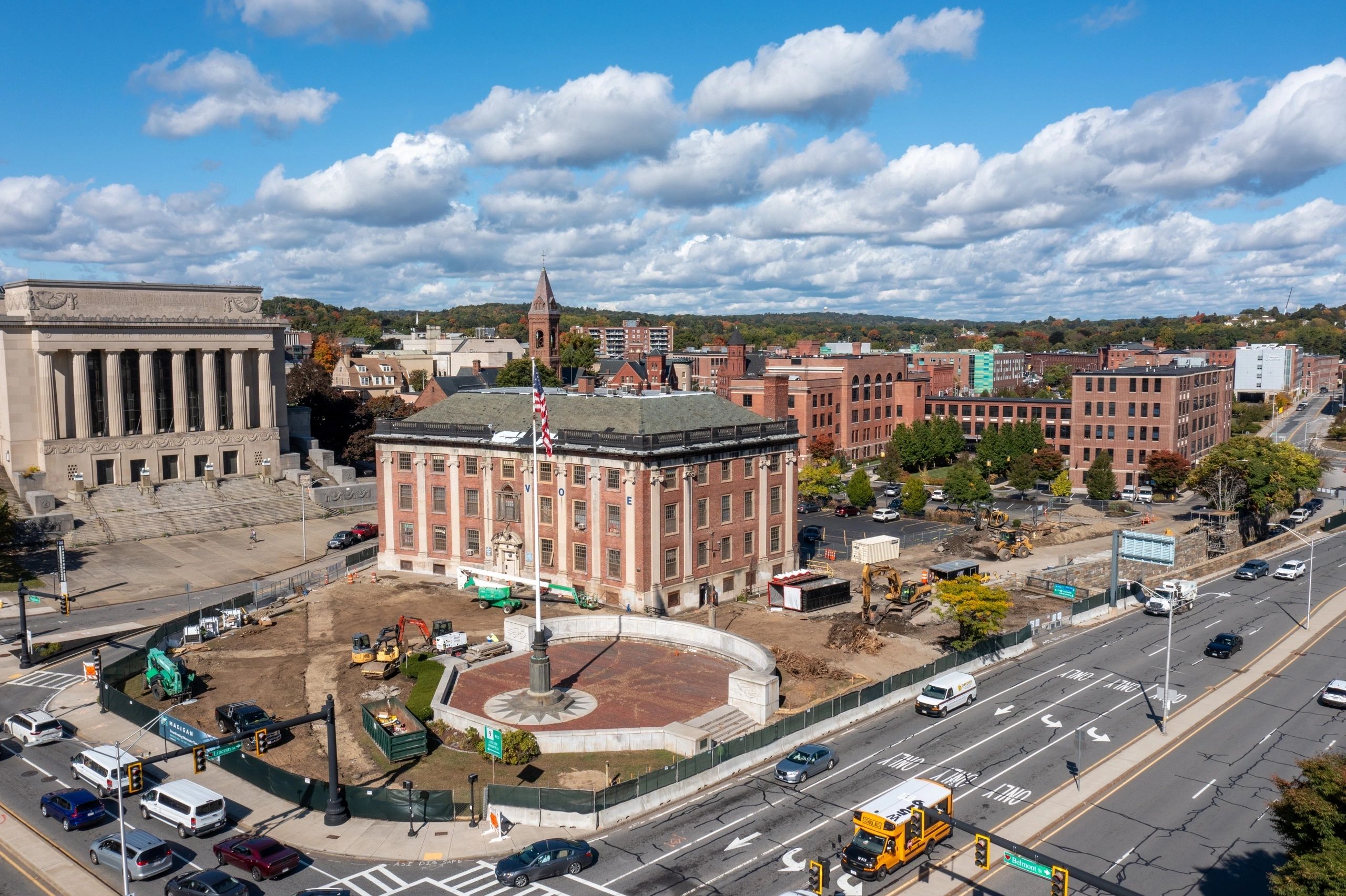
In a separate development, Winn Cos. has begun construction on The Residences on Lincoln Square in downtown Worcester, converting the historic Lincoln Square Boys Club building into an affordable senior housing complex. The $70 million project will offer 16 affordable housing units, while adding a connected five-story building with 64 additional apartments.
The 80-unit development, scheduled for completion in April 2026, serves residents aged 55 and over. The complex will include 19 studios, 46 one-bedroom, and 15 two-bedroom apartments, with eleven units specifically designed for residents with disabilities.
Twelve units are reserved for residents earning 30% or less of the area median income, with the remaining 62 units designated for those earning up to 60% AMI. Located on the northern edge of downtown Worcester, the development provides residents with walkable access to mass transit, businesses, entertainment venues.
As for future funding and grants to address affordable housing, “based on our population and demographics, [the city is] classified as an “entitlement community” under the U.S. Department of Housing and Urban Development,” said Dunn. “We receive federal funding through their programs (CDBG, HOME, HOPWA, ESG) every year that contribute to the creation and preservation of affordable housing as well as supportive services.”
Those interested in learning more about the Community Preservation Program’s housing initiatives can contact the Department of Economic Development’s Special Projects Division or sign up for the Community Preservation Newsletter for updates.
Matt Olszewski is a freelance content and news writer based in Boston, MA. In his free time, Matt enjoys running, hiking or skiing. Matt is currently finishing up the MPH degree program at Tufts University. He can be reached at mattoskier@gmail.com