
WORCESTER—City council candidate Keith Linhares wants to change the way Worcester residents are able to get information about roadwork, service requests, and city infrastructure projects.
At the May 13 city council meeting, he filed a petition calling for a searchable, public-facing digital database of all Department of Public Works (DPW) projects—past, present, and future.
But according to Worcester’s newly appointed DPW Commissioner, John Westerling, that system already exists.
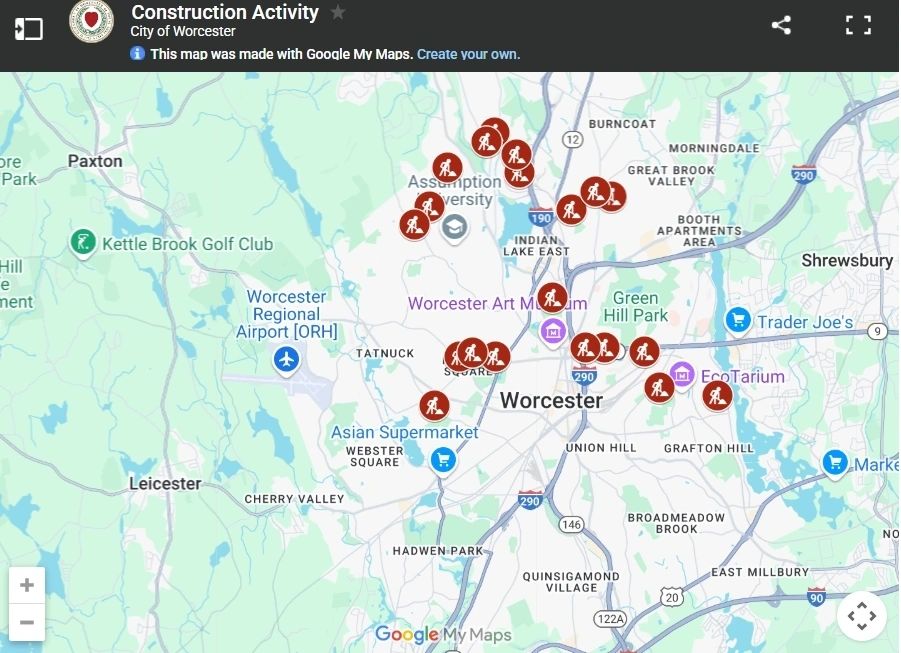
“We have an internal database that tracks our projects,” Westerling said. “There’s also a forward-facing page under the engineering division of our website. It includes an interactive map with details about what’s happening and where—shutoffs, closures, and construction schedules. It’s all available to the public.”
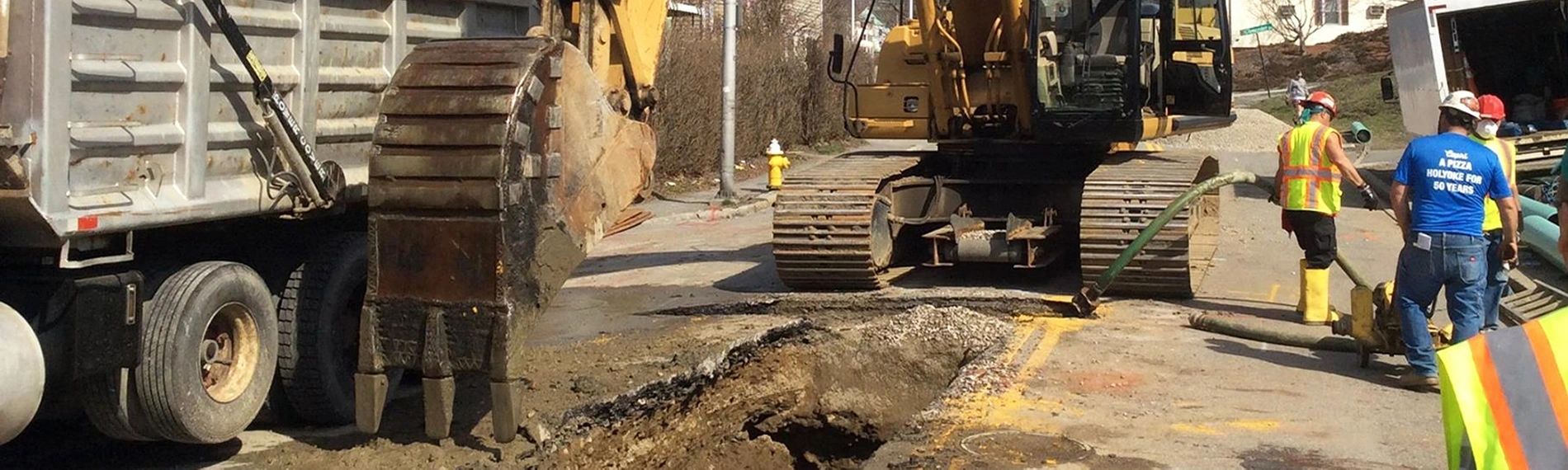
For example, the map currently pins roughly 20 road construction projects, most of them resurfacing efforts on streets such as Salisbury, Benedict, May, and Westinghouse Parkway.
So what’s the issue? Linhares, who’s running to represent District 1, says the petition is less about building something from scratch and more about making existing systems more accessible, more transparent—and more resident-friendly.
“My goal isn’t to criticize DPW,” Linhares said. “I just want Worcester to have an exceptional customer service experience. Residents are tired of what feels like a patronage system for filling potholes, where your ability to get basic services depends on whether your councilor makes a call for you.”
The petition requests a digital, searchable list of all public works petitions—complete with committee references, petition categories, dates of action, outcomes, and current status. Right now, Linhares said, those petitions are buried in PDFs under the city clerk’s “agenda and minutes” section.
Linhares, whose background is in information technology, argues that a simple database—“even something as basic as a shared Excel file”—could vastly improve transparency.
“Constituent service is vital, but councilors shouldn’t have to act like middlemen for street repairs,” he said. “In a city of our size, we should be improving the structures, not just greasing the wheels.”
The West Side, he argues, often gets better service and faster responses than other neighborhoods—a perception that’s fueled by lack of consistent data.
Westerling acknowledged that the city hasn’t fully assessed Linhares’ petition yet, but said he’s open to suggestions.
“We’re interested in being transparent,” he said. “That’s why we put the map online. But I haven’t evaluated the petition in depth, and we’d want to know: What specifically is missing? What additional information are residents looking for that’s not currently shown?”
For Linhares, the answer is clear: integration, context, and clarity.
“The current engineering map shows where construction is happening, but often without key context—like why the project is happening, how it was initiated, what percentage is complete, or what petition or request it stems from,” he said.
Linhares cited his own street, Germain Street, as an example. The historic road recently underwent repaving and sidewalk work, but residents weren’t sure whether the brick sidewalks—part of the street’s character—would be preserved.
“It took multiple calls to Councilor [Jenny] Pacillo and DPW before we learned that the bricks would be incorporated into the new design,” he said. “That information wasn’t in the paper handout, and it wasn’t on the website. It should have been.”
Linhares reiterated that his proposal is more about upgrading and integrating existing systems, including Worcester’s 311 app and the DPW’s engineering map.
“There’s a real lack of integration,” he said. “The 311 app shows service requests, but they don’t appear on the website. The engineering page isn’t linked from 311. You basically have to already know what you’re looking for to find it.”
Linhares also floated the idea of creating a resident-led DPW oversight commission, modeled after one in Malden, to help set priorities and ensure fairness.
And he’s not stopping at potholes.
“My partner suggested a ‘one-stop shop’ where residents could search their street and see everything—planned work, neighbor requests, utility projects, even trash schedules and leaf pickup,” Linhares said. “Chatbots could answer basic questions, reducing the burden on staff and councilors. This isn’t rocket science.”
Asked whether such changes are realistic, Linhares said it depends on political will.
“If the city council and city manager are serious about transparency and service, then yes, it’s doable,” he said. “But if they’re more comfortable acting as gatekeepers of information, then no database is going to fix that.”
As of May 13, the petition was referred to the city manager on a unanimous 10-0 vote (Councilor Thu Nguyen was absent). Westerling said the department is just beginning to explore it.
In the meantime, Linhares said the conversation itself is a win.
“When residents start to imagine a better system, they start asking bigger questions about how government serves them,” he said. “That’s exactly the kind of conversation Worcester needs to be having.”
Have news, tips, or a story worth telling? Reach Editor Charlene Arsenault at carsenault@theworcesterguardian.org—because good stories (and great scoops) deserve to be shared.
- The Worcester Guardian is an independent nonprofit news organization. Support local journalism by making a DONATION today.