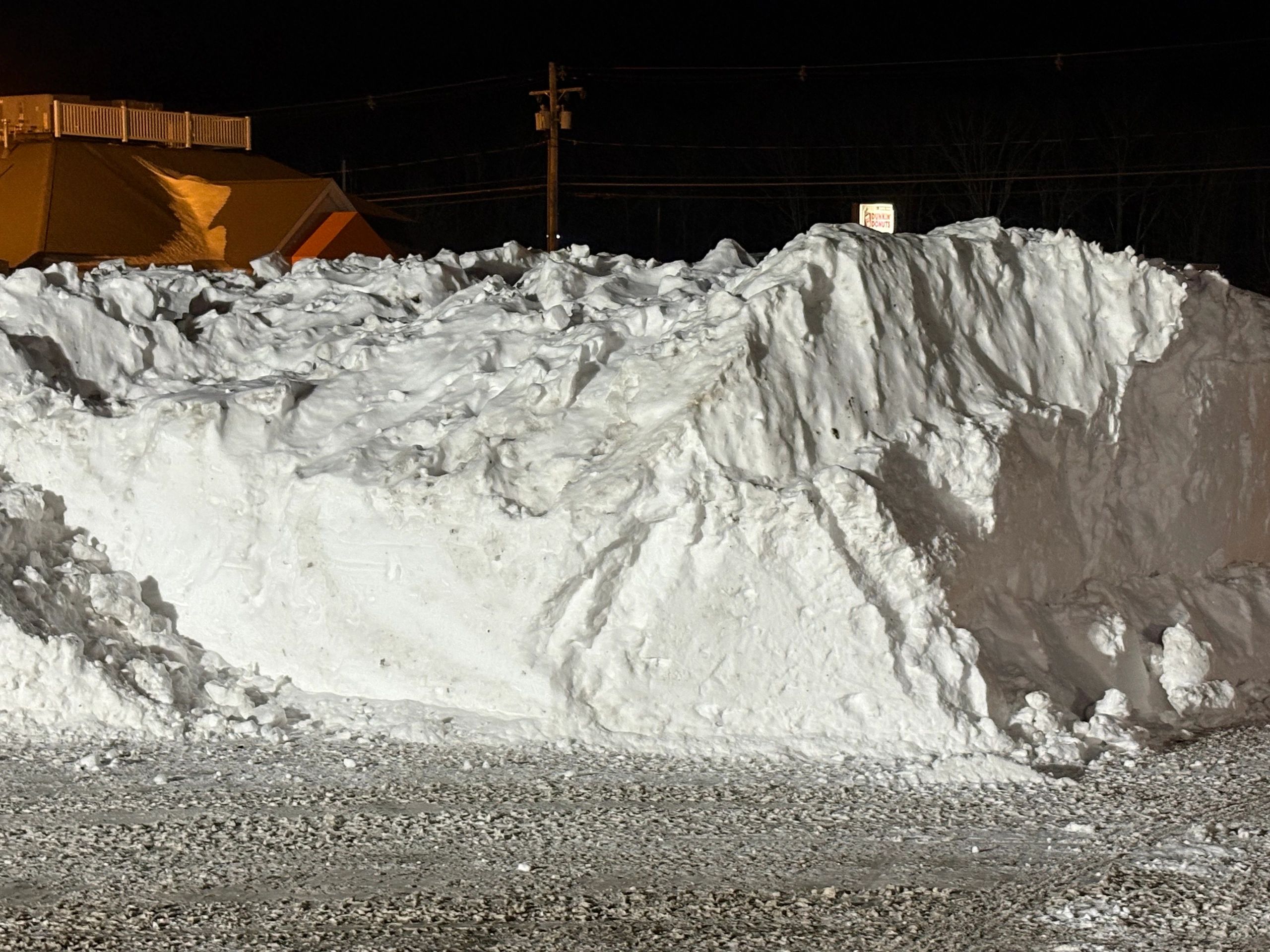
WORCESTER — The city council on Feb. 10 approved a $1 million funding transfer to cover contractor costs tied to the city’s snow removal efforts, including cleanup from the Jan. 24-26 winter storm.
The vote followed a Department of Public Works report outlining the city’s response to the storm and the operational challenges it faces during major snow events.
Councilor Tony Economou asked whether the city has sufficient manpower to manage large snowfalls while maintaining other essential services.
Department of Public Works Commissioner John Westerling praised city employees and private contractors, noting that several worked between 70 and 100 hours during the week of the storm. Still, he acknowledged limitations.
“We could always use more,” Westerling said, adding that while the city relies on more than 300 private contractors, the number of available vehicles and drivers has declined.
370 plows and 65 salt spreaders
The city deploys 370 plows and 65 salt spreaders to cover approximately 540 miles of roadway. Those numbers can drop because of staffing shortages. Westerling said the city is training additional DPW employees to obtain commercial driver’s licenses so they can operate plow trucks. During storms, workers are reassigned between divisions as needed.
“Every day, we have 8 trucks on the road that are collecting curbside trash,” Westerling said. “We have 8 drivers and 8 laborers. If any of those folks call in sick, if they’ve got vacation time, or are otherwise unavailable, we have to pick up the trash every day. So, what that requires us to do — we’ve got days when we are taking eight people from streets to drive sanitation trucks. If we have 8 people driving sanitation trucks, we don’t have 8 people to drive our plows.”
Adequate training in place?
Economou said the city should evaluate whether it has adequate training in place.
“Do we need to further train our employees on plowing?” he asked. “Do we need to train them how to get to curb-to-curb, or how to stack snow in the corner if that’s the case?”
Westerling said compliance with parking bans remains a significant obstacle. During the late January storm, more than 1,000 vehicles were in violation, he said. About 300 were towed, leaving hundreds still obstructing plows.
“We’re also looking at the ability and capacity for ticketing and towing vehicles,” Westerling said. “It’s a collaborate effort between not only the DPW, and the Police Department and DTM (Department of Transportation and Mobility) but also residents to adhere to the parking ban. It’s put in there for a reason, not only for snow removal operations, but also for emergency vehicles being able to get access down those roads. I understand the frustration and challenges of moving your car every time it snows. It is inconvenient for residents, but it’s necessary for us to do a good job and keep those roads open.”
Improvements will be made
Mayor Joe Petty said a storm of that size would require days, not hours, for full cleanup.
“I didn’t know people were actually shoveling snow into the streets,” he said, adding that he’s learned a lot from the recent storm, and he’s sure DPW has as well, and improvements will be made.
“They’re learning, too, as they go through the city, and understand what they have to do for the next storm,” Petty said. “I just want to tell everyone to hang in there, and I think Councilor Economou’s orders are pretty good.”
Residents spoke during public comment.
Fred Nathan said the city should not fine property owners for uncleared sidewalks if municipal sidewalks remain unaddressed.
“I think there are a lot of sidewalks that still need some action,” Nathan said. “There are public areas, owned by the city, that are kind of lagging behind. You can’t be fining somebody for a non-shoveled sidewalk if the city isn’t going to do its own work.”
Resident Mark Andrews said he cleared a fire hydrant on his street more than once after it was buried by plows and urged the city to install markers to improve visibility.
“We have a fire hydrant at the corner of my street, and it was buried quite deeply on the Monday after the storm. I shoveled it out. It took me about 15 minutes to find it. The next day, it was buried again, so I shoveled it out again.”
Natalie Gibson, who said she has lived on 4th Street for 19 years, said plows need to reach steep streets sooner.
“We can’t just wait until there’s one inch of snow, to then turn around and try to plow it,” she said. “Then, we are waiting hours upon hours for either a sander or a salt truck to put product down, so we are not sliding up and down the hill.”
Steve Smith can be reached at steve@stevephotographysmith.com