
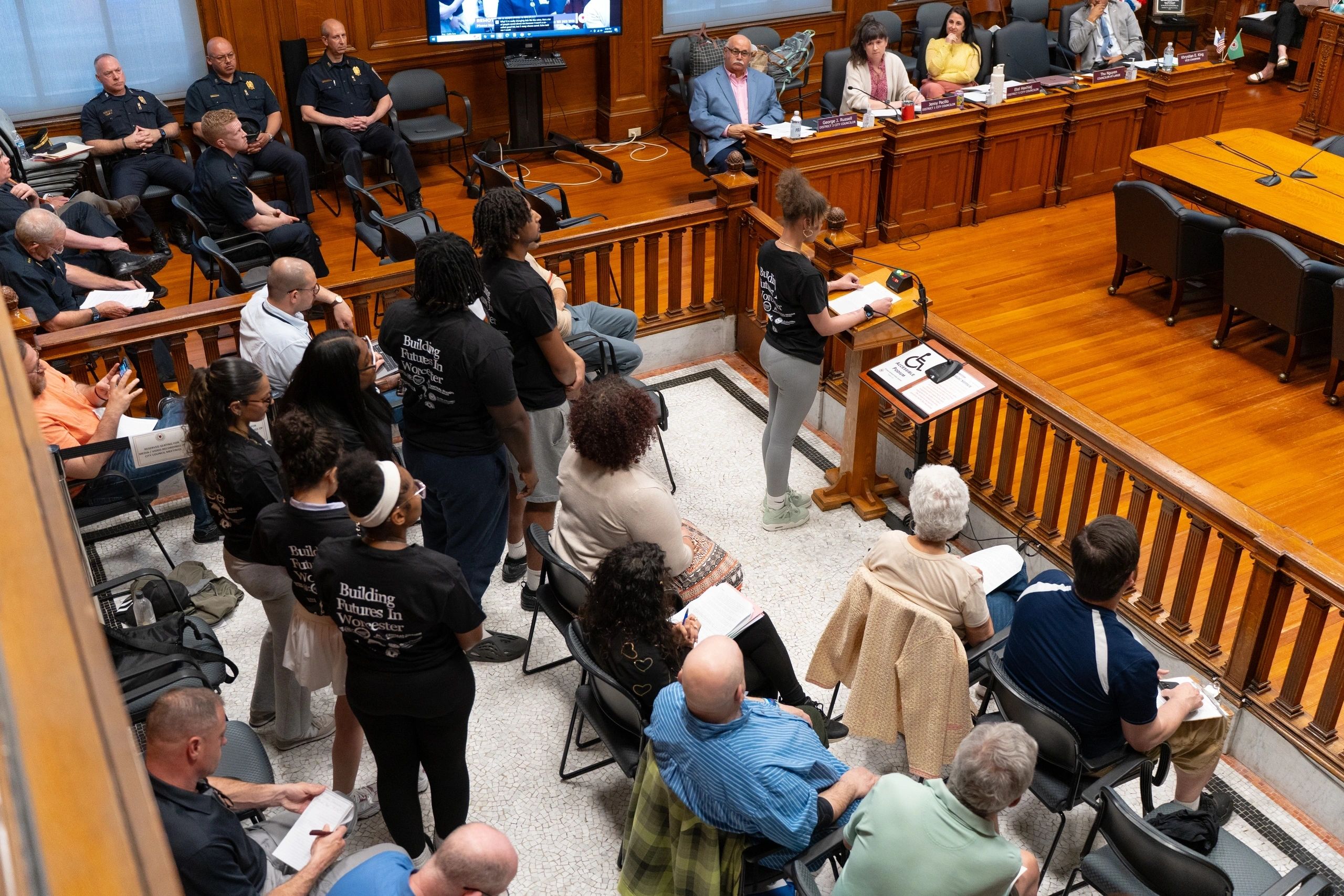
WORCESTER—At Tuesday night’s Worcester City Council meeting, members unanimously approved five orders aimed at increasing transparency and oversight in response to the U.S. Department of Justice’s scathing December report on the Worcester Police Department. But much of the evening’s discussion centered on whether the WPD’s internal review is doing enough to reckon with the allegations.
At the request of council vice-chair Khrystian King, Worcester Police Chief Paul Saucier submitted a report responding to incidents outlined in the DOJ’s findings — which alleged multiple cases of misconduct, including excessive force and sexual assault. The chief’s report offered examples of four incidents where WPD’s internal investigations differed from the DOJ’s conclusions and laid out current policies that Saucier said diverge from the DOJ’s characterizations.
But King said the document was only half the story.
“This is really not a complete report,” he said. “I would like the rest of the report — what I requested — to make sure it gets into committee and it’s not a one-sided document.” He also asked for a list of departmental changes stemming from both the DOJ report and the department’s prior equity audit.
“The public needs to understand. The department needs to understand. We as elected officials need to understand from whence some of this comes,” he said.
King also questioned the WPD’s longstanding practice of conducting background checks on individuals who file complaints against officers, suggesting it could deter people from coming forward.
“Can someone explain to me the relevance of that, and what weight is given with respect to any determinations of veracity?” he asked, noting that many in the community see the policy as discouraging.
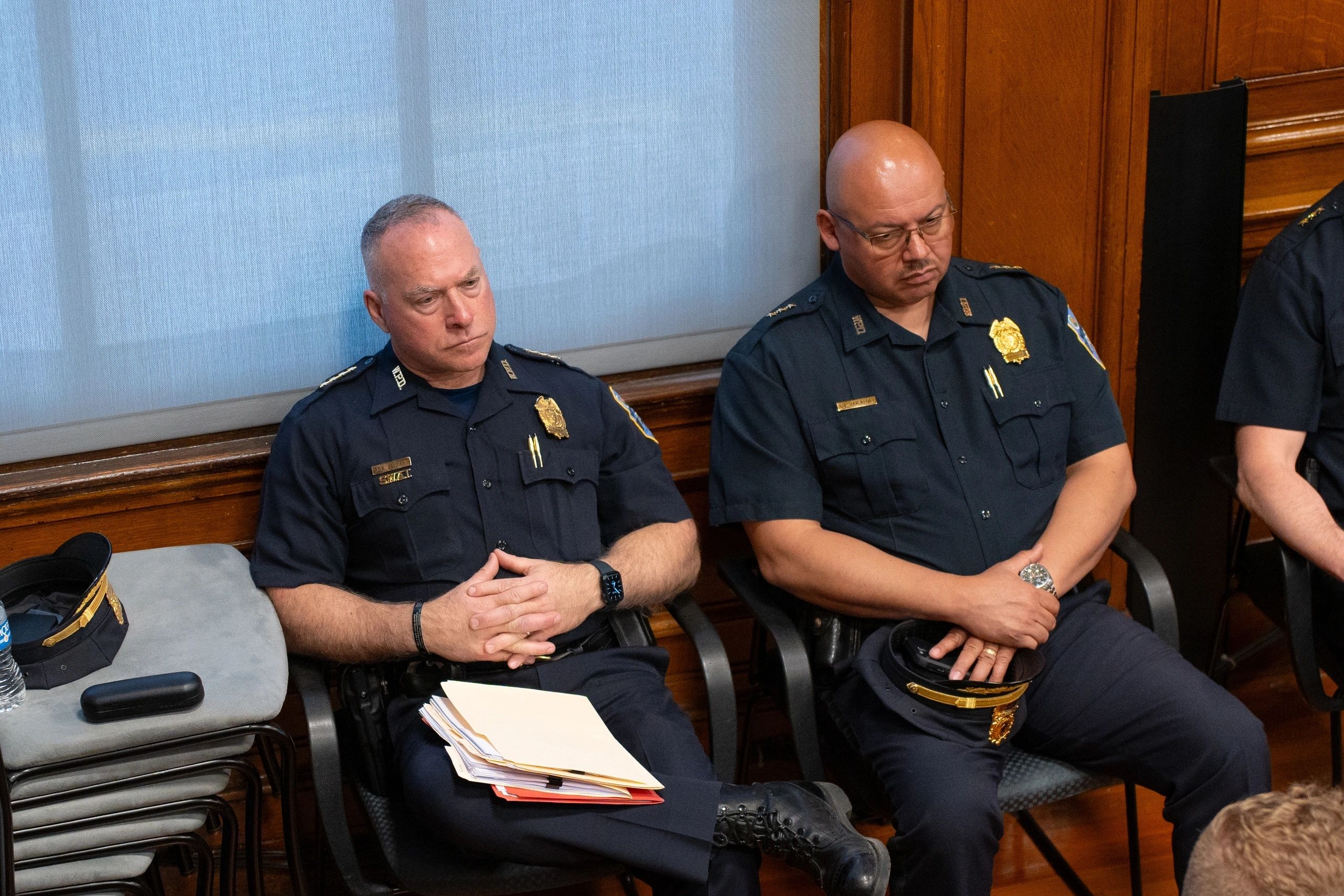
Saucier defended the practice. “If you were the complainant, and you’ve taken out six complaints about me, yeah, it would go toward your veracity,” he said. “We need to find the underlying causes of why there were so many complaints. There are a lot of people out there who are very biased against the police and they file a lot of complaints.”
Councilor Etel Haxhiaj acknowledged the integrity of most officers but voiced frustration over what she described as a lackluster response to the DOJ’s findings.
“I do not hate any of you,” she said. “It’s my expectation, however, as an elected official, of the city manager, and my expectation of the chief of police, that we commit to police reform, transparency, accountability, and constitutionality.”
Haxhiaj said the chief’s analysis lacked acknowledgment of wrongdoing or harm.
“What I think is missing from that analysis is that there is no admission or addressing of acceptance of harm committed by a few officers,” she said.
She added that the response from the city has not instilled confidence among residents and raised concerns that some well-known incidents in the DOJ report have yet to be addressed publicly — including any accountability for the officers involved.
“The elephant in the room is, ‘How do we know if any of these police officers or their supervisors have faced any discipline?’” she said. “Maybe we should [make settlements] public in the interest of public transparency.”
Saucier’s report noted that out of 1,300 use-of-force records reviewed during the DOJ’s timeframe, roughly 530 were considered actual uses of force — accounting for only 0.8% of total incidents. Haxhiaj pushed for more rigorous data tracking and public reporting.
“Has there been any commitment on your end to change the existing policy to require data collection and reporting regarding use of force?” she asked.
Saucier responded that a new software system will help better manage such data. He added that several new policies had been implemented under his leadership — even before the DOJ report — and more are on the way.
“Any new policy that we write, with no exception, we’re going to ensure strict compliance,” Saucier said. “We’re going to do that through training, through oversight, and through transparency.”
On the issue of sexual assault allegations, King sought further clarity about reporting and accountability. Saucier explained that while the department writes the initial policy and conducts investigations, it is the district attorney’s office that determines whether a case proceeds.
Mayor Joseph Petty expressed confidence in the department’s direction and said the WPD is committed to implementing the DOJ’s 19 recommendations. Saucier cited the department’s efforts to pursue accreditation as another step toward transparency and reform.
“It’s a long process, but it’s the highest [powered] microscope you can have on a police department,” he said.
City Manager Eric Batista urged balance, saying the department is improving even while disagreeing with parts of the DOJ’s findings.
“It’s extremely important to understand that two things can be right in this case,” Batista said. “Unfortunately, the message continues to be that the City of Worcester is completely against this report. I want to say, right now, completely that that is not true.”
The five council orders approved:
- A report on any legal settlements stemming from incidents in the DOJ report
- Details on departmental policy changes made as a result of those settlement
- A list of changes implemented since both the DOJ report and the department’s equity audit
- A report on how complainants’ background checks were used in investigations
- An update on the Community Health Link co-response model and the WPD’s overall progress on DOJ recommendations
Steve Smith, a veteran reporter with 17 years at The Hartford Courant, now brings his passion for photojournalism to Worcester. An award-winning photographer, he has covered major events like U.S. soccer, pro football, and UConn basketball. He is also the official photographer for the Miss Massachusetts competition and works as a realtor. Contact him at steve@stevephotographysmith.com