
WORCESTER—Tuesday’s city council meeting brings another twist in what’s become a surprisingly hard-to-follow lead-up to the annual tax classification vote. Although it’s only the third week the item has appeared on the agenda, councilors haven’t discussed any of it yet — in part because Mayor Joe Petty moved on Nov. 25 to hold seven tax-related items, pushing the hearing off until revisions were complete.
Now a third version of the tax package has landed, even as much of the supporting material remains a maze of documents stamped “old version — do not use.” Despite all the updates and delays, the key number hasn’t budged: the proposed FY26 single tax rate stays at $16.67 per $1,000 of value.
The new packet appears to be driven largely by corrections rather than policy changes. According to the latest material, two personal-property accounts totaling approximately $7.3 million in value — inadvertently left out of an earlier version — have now been restored to the overall valuation.
City officials say the fix does not alter the total levy, but it does adjust the distribution of the burden ever so slightly across the commercial, industrial and personal property classes. That small change required updating the tax-table ranges, including the minimum residential factor, which shifts to 79.8778, and the top end of the commercial rate, which now maxes out at $29.16.
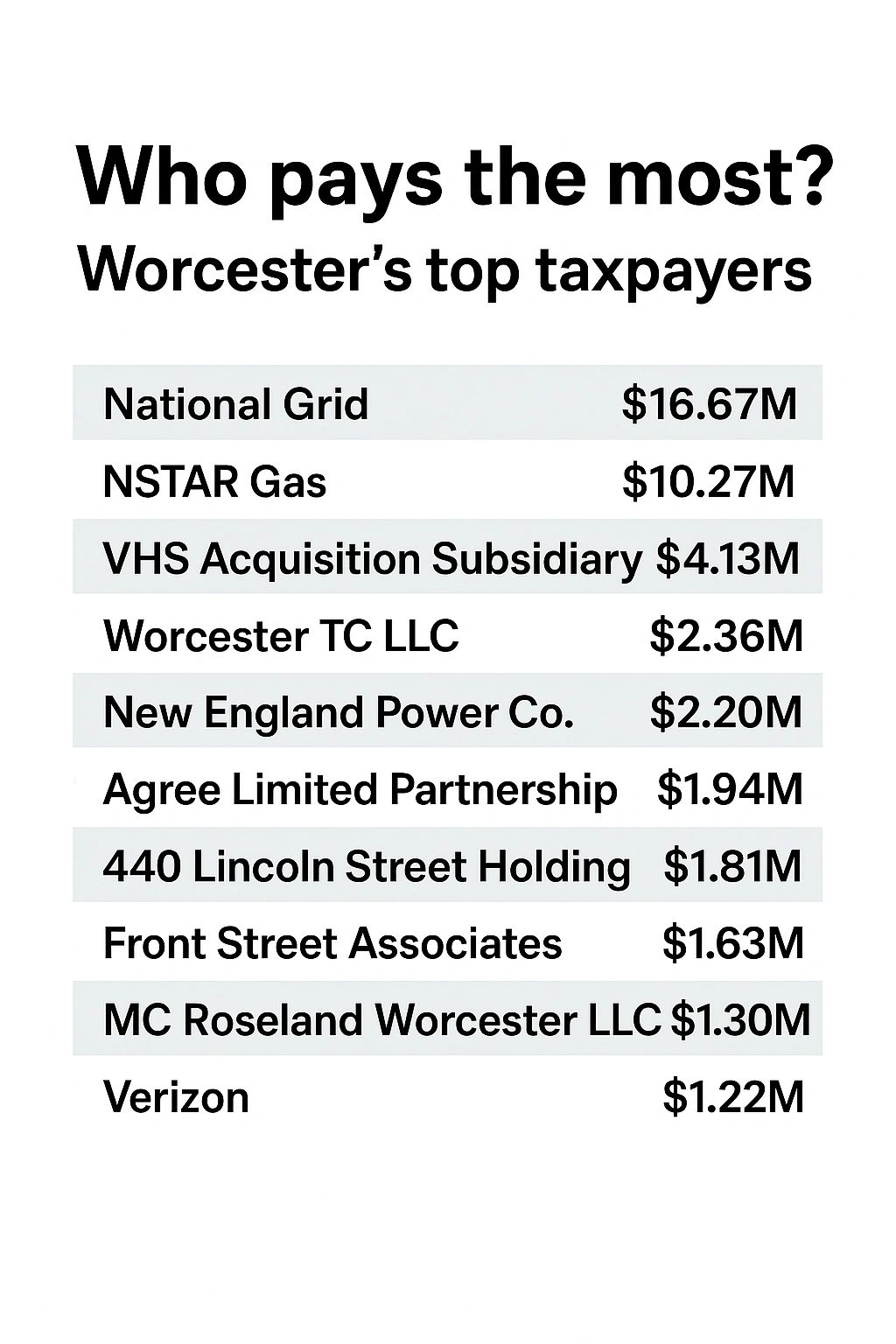
The rest of the key metrics hold. Worcester’s taxable valuation rises to $25.332 billion for FY26, a 4.12% increase driven by still-strong development and utility investment. New growth clocks in at $10.37 million — far above the conservative estimates built into the FY26 budget — with another $1.52 million rolling forward from last year. The recommended levy is unchanged at $422.4 million, continuing the city’s practice of keeping roughly $25.8 million in excess capacity on hand as a cushion against fluctuating state aid and school-year obligations.
An accompanying amendment from the administration further adjusts the budget’s internal funding sources in response to reductions in additional new growth and state aid. The proposal restores local support for schools, veterans benefits, special education and other accounts through a $4.99 million realignment, keeping both the city and Worcester Public Schools “harmless” from mid-year state changes.
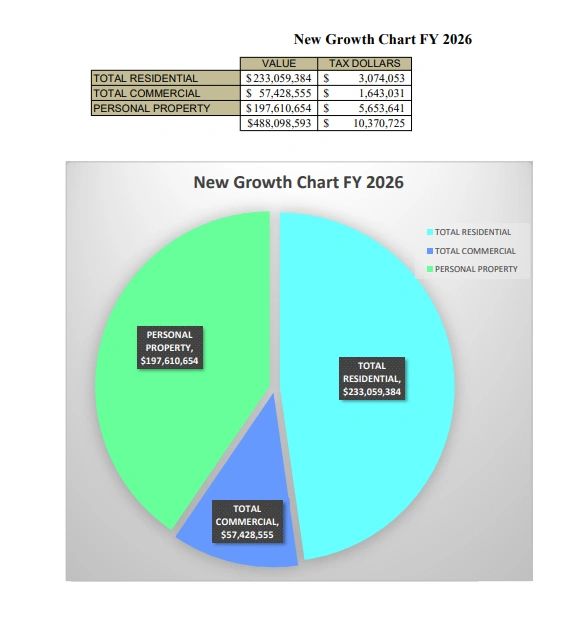
The hearing also includes the annual release of Worcester’s largest taxpayer rankings — a list dominated, once again, by the utility companies. National Grid remains the city’s highest single taxpayer, contributing roughly $16.67 million, followed by NSTAR Gas at about $10.27 million. A major hospital entity holds the third slot at just over $4.1 million, with biotech, energy and large commercial real-estate groups rounding out the top tier. Altogether, the ten largest taxpayers account for more than 11% of Worcester’s entire levy, which shows how much of the tax base remains concentrated among a relatively small number of major institutions and infrastructure companies.
While the tax package is the towering centerpiece of the night, the rest of the agenda brings forward a mix of public-safety oversight, infrastructure spending and housing questions — including a pair of long-delayed police oversight reports that return for their third week under council privilege.
CSX neighborhood funds transfers
Councilors vote on two orders tied to CSX Neighborhood Improvement Funds. The first would move $200,000 from Gate Fees into the Holmes Field project account to cover costs for new field lighting already installed. The second would shift $300,000—also from Gate Fees—into the city’s resurfacing project fund to pay for improvements made along Harding Street. Both transfers come at the recommendation of the CSX Neighborhood Advisory Committee and are essentially bookkeeping steps to match the spending already completed on those projects.
WPD oversight items (held twice)
Two major Worcester Police oversight communications may return to the agenda after being held under privilege twice. The first is the city auditor’s follow-up on the 2023 audit of WPD overtime and detail policies, including procedural failures and compliance breakdowns documented by CliftonLarsonAllen’s forensic team.
The second is CLA’s analysis of the department’s body-worn camera program, with performance issues and utilization data that councilors have been asking for since the start of implementation. Both items were held by Councilor Khrystian King on Nov. 18 and again on Nov. 25 and are expected to draw questions about transparency, management of overtime and whether the BWC program is meeting its stated accountability goals.
Other highlights on the agenda:
- Handicap parking notifications: The Traffic & Parking Committee is recommending that residents receive courtesy notices whenever a handicap parking space is removed from their street. Councilors say residents have been caught off guard when spaces disappear without explanation, leading to confusion and disputes. The request would require the Transportation & Mobility Department to formalize a notification process.
- Emergency vehicle clearance rules: Another T&P item asks the city solicitor for a legal opinion on whether all vehicles must provide at least 12 feet of road clearance for emergency vehicles, even on narrow streets where that standard may not be physically possible. Councilors want clarity on whether current state law or local ordinance governs these situations, particularly in older neighborhoods with tight rights-of-way.
- Snow and Ice priority List — accident history: Traffic & Parking also wants DPW&P to start using historical crash data when determining which hills get priority for winter snow and ice treatment. Councilors say some of the city’s trouble spots are predictable and that documented collision patterns should guide which hills are pre-treated or plowed first to reduce risk for drivers.
- HUD cuts and permanent supportive housing: District 5 Councilor Etel Haxhiaj is pushing for a report on the impact of federal HUD cuts to Worcester’s permanent supportive housing programs. She wants exact numbers on how many units won’t be renewed, how many residents will lose housing and how these reductions may increase homelessness. She says the city needs this information immediately to prepare for displacement and to plan for emergency shelter demand.
- DPW performance in the Dec. 2 snowstorm: Councilor Morris Bergman is seeking a detailed explanation from DPW&P about its response to the Dec. 2 snowstorm. His request asks why roads weren’t pre-treated, whether the department started operations late and if there were enough drivers and equipment on the street. It also asks DPW to assess whether staffing and equipment levels are adequate for this winter.
- When the oven and the lights go out on Thanksgiving: Councilor Jenny Pacillo is asking the city manager to contact National Grid about the Thanksgiving Day outage that hit the Burncoat Street neighborhood. She wants a clear explanation of what caused the failure, how widespread it was and what National Grid is doing to prevent a repeat during peak winter months.
Editor’s note: This story will be updated as agenda items are added or revised. Refresh this page for the latest developments.
Worcester City Council meets Tuesday, Dec. 9, at City Hall in the Esther Howland (south) at 6:30 p.m. It is also live streamed on the city’s website.
Have news, tips, or a story worth telling? Reach Editor Charlene Arsenault at carsenault@theworcesterguardian.org—because good stories (and great scoops) deserve to be shared.
- The Worcester Guardian is an independent nonprofit news organization. Support local journalism by making a DONATION today.
