
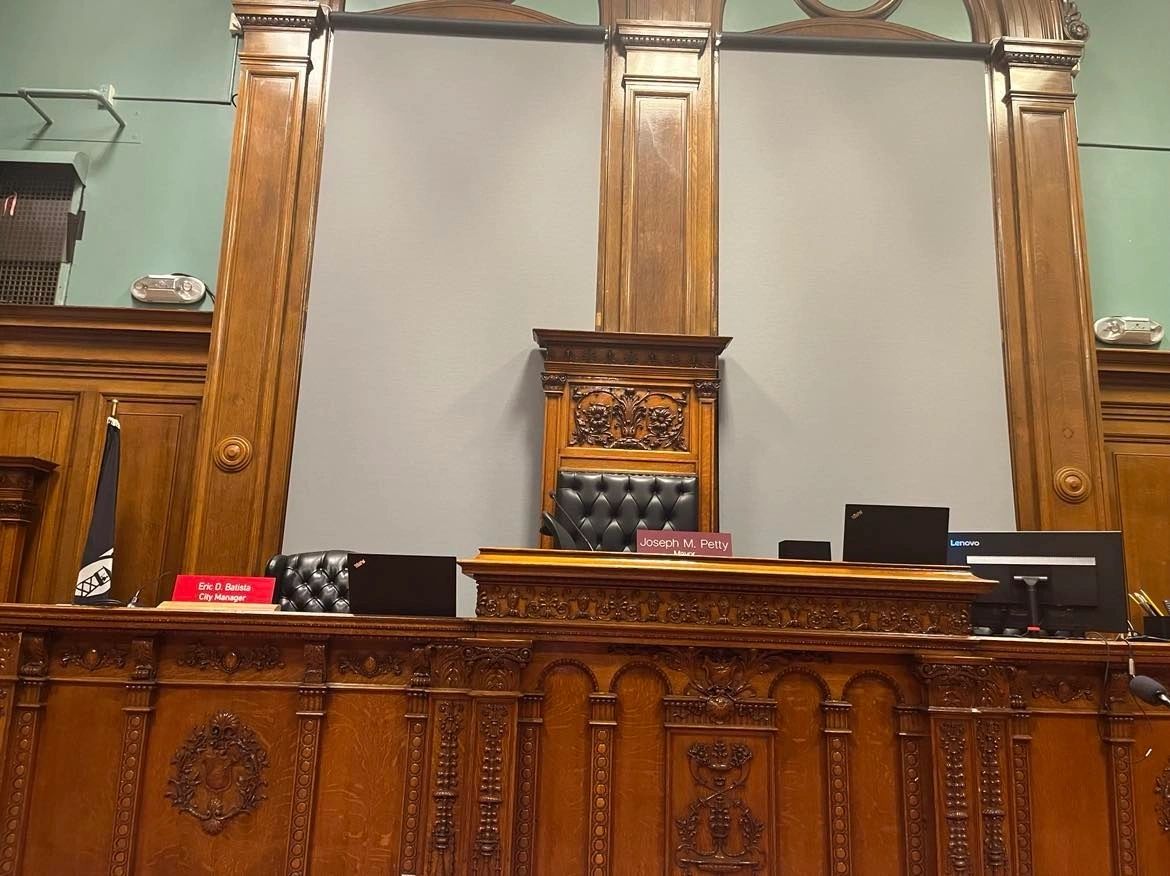
WORCESTER—In the process of turning the former Fallon Health office building into 198 market-rate apartments, Synergy Investments is asking the city for a tax break.
In a letter to the city council, City Manager Eric Batista asks the body to approve a Tax Increment Exemption Plan for the redevelopment of the office space into residential units.
“This project advances several objectives we have for our economic development agenda: stimulating new growth to the tax base and new tax revenue; productively repurposing an office building that has been mostly underutilized since the COVID-19 Pandemic; and creating new mixed-income housing opportunities for our residents, including affordable homeownership in our downtown,” Batista wrote in the letter.
The project—which converts the 11-story building to 74 studios, 84 one-bedroom units, and 40 two-bedroom units—is expected to cost $73 million, according to Batista.
The project includes the creation of amenities such as shared workspaces, a fitness center, a roof deck, an outdoor pool with an expanded landscape plaza area, and lounges, according to Joshua Lee Smith of Bowditch & Dewey, a firm representing Synergy.
While the residences in the building, commonly referred to as One Chestnut Place, will be available at market rates with proposed initial rents ranging from $1,967 to $2,841 per month, the city’s new inclusionary zoning ordinance does not apply to this project, as stated by Batista.
However, Synergy has committed to transforming a nearby four-story building into 22 affordable residential condominiums. This building, known as 2 Chestnut Place, will be converted into six one-bedroom units, 13 one-bedroom units, and three three-bedroom units that will be restricted to tenants who earn 80% of the area median income for 30 years.
“The traditional tools for affordable housing creation and the necessity to layer many sources of financing for those projects lead to inefficiencies and a pre-development timeframe that often extends two or three years,” Batista wrote. “This type of public-private partnership exemplified by this proposed project is a way that we can create more affordable housing.”
Batista’s administration negotiated a recommended TIE plan with an annual exemption of 44 percent of the incremental value of the property for 15 years. The plan would provide an estimated $3,960,000 in savings for Synergy, while they would still be responsible for paying an anticipated $7,870,000, according to the city’s Chief Development Officer Peter Dunn.
If the city council approves the TIE plan, it will be valid starting July 1, 2025, and end June 30, 2040. After the TIE plan expires, Synergy will then be responsible for paying an estimated $950,000 annually, according to Dunn, $750,000 of which is due to the property’s increased value due to the redevelopment.
The property is currently assessed at around $9.6 million and Dunn said after the redevelopment, its expected improved value is over $48 million.
Batista is asking the council to send the item to its Economic Development Committee for further review and discussion.
Kiernan Dunlop is an award-winning journalist who has spent the past five years reporting in Worcester, New Bedford, and Antigua and Barbuda. Her work has been published in Bloomberg, USA Today, Canary Media, MassLive, and the New Bedford Standard Times, among other outlets. She can be contacted at kdunlop@theworcesterguardian.org
