
What do a masquerade ball ticket, clipper ship advertisement, corset trade card, and canned food label have in common? All were meant to be used for a short time and then thrown away. But because someone saved them instead, these scraps of nineteenth-century life now offer a revealing look at how Americans lived, worked, and consumed in the 1800s.
“Ephemera are some of the best resources we have for understanding the past, because they show us what people bought and sold, what they ate and wore, what they did for work and for fun, and how goods and people moved around the country,” said Christine Morris, curator of graphic arts at the American Antiquarian Society (AAS).
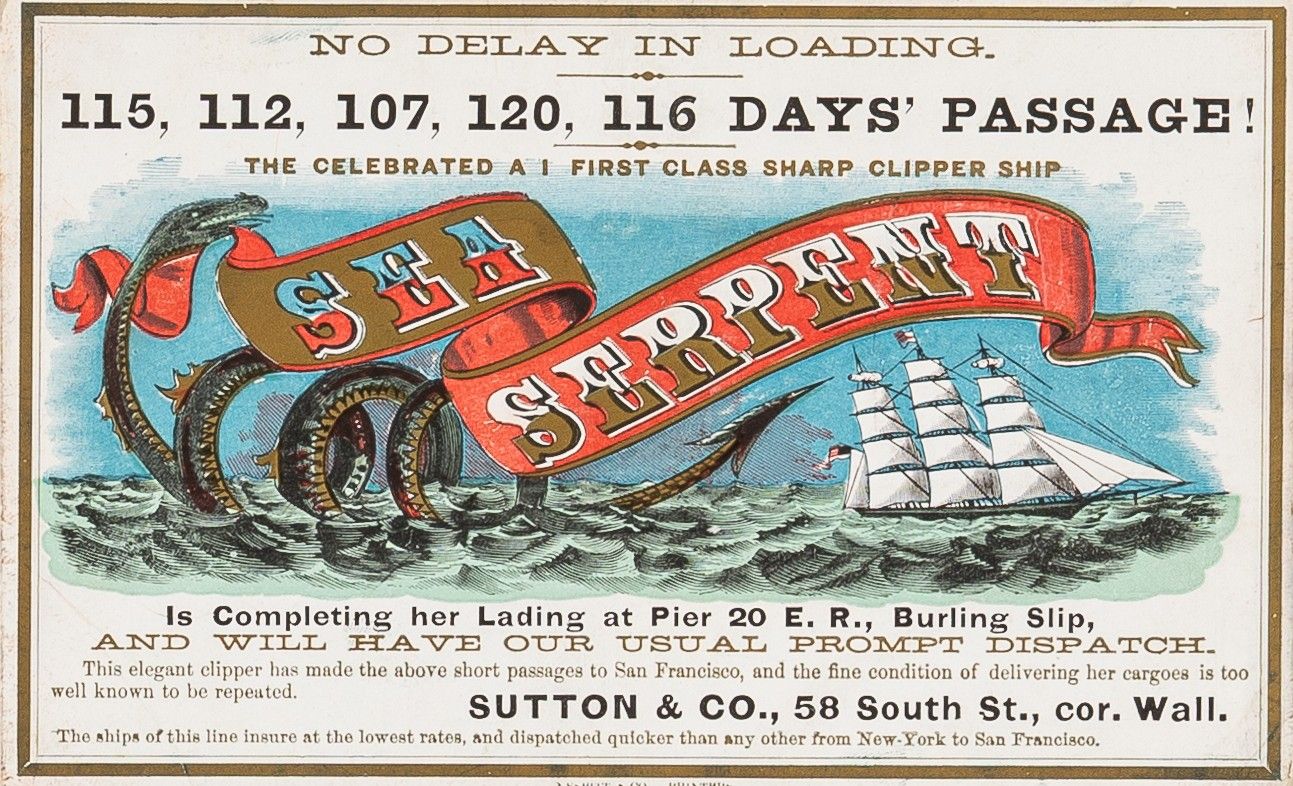
For example, during the Gold Rush in the mid-1800s, demand for transporting cargo and people from the eastern United States to the west coast grew dramatically. Since the transcontinental railroad had not yet been built, the quickest way to get from New York to California was to travel around South America by clipper ship. To fill their vessels, ship owners produced colorful advertising cards to promote their services, each claiming to be the best, fastest, most efficient, and cheapest. Shipping company employees handed these clipper ship cards out to merchants and exporters as soon as a ship’s schedule was set.
Typically printed on glossy, four-by-six-inch paper, the cards were rarely saved because they served no purpose after the departure date. But some have survived, including an eye-catching card from the late 1850s promoting a sleek ship named “Sea Serpent,” operated by Sutton & Company in New York. The card boasts that passage to San Francisco would take between 107
and 120 days, timing that seems unimaginable in today’s age of overnight cross-country shipping.
This clipper ship card is one of more than 18,000 pieces of eighteenth- and nineteenth-century ephemera the American Antiquarian Society received last year. Stephen Davies Paine (1932-1997) of Cambridge, MA, assembled the collection over several decades, and it was donated to AAS in his memory. “This gift is one of the largest in AAS’s 214-year history,” said Lauren Hewes, the Society’s vice president for collections. “It’s also a gift for future generations. Through his meticulously organized and maintained collection, Stephen Paine preserved an important record of American enterprise and the sweeping social, economic, and political changes that took place during the nineteenth century.”
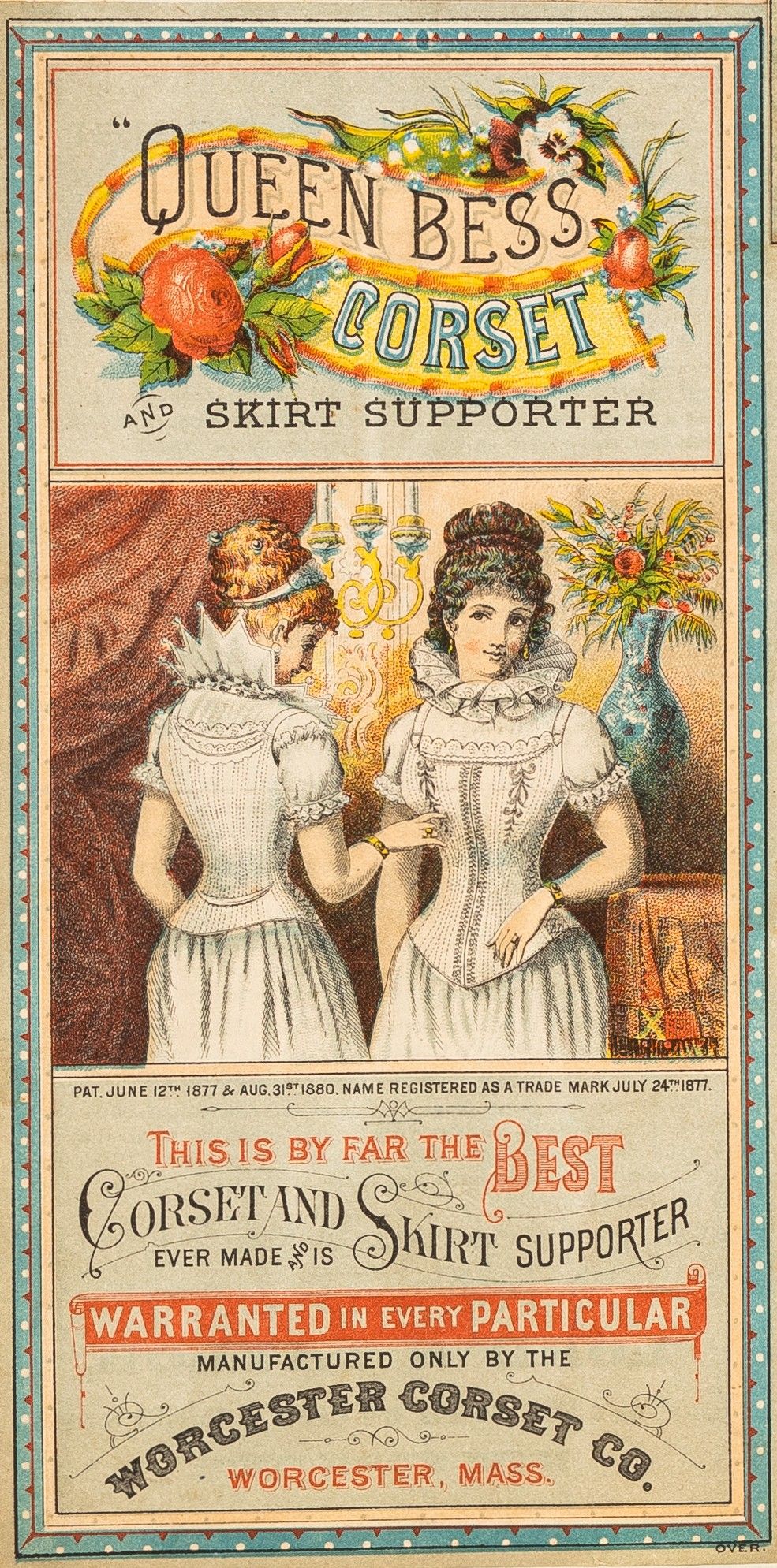
This wide-ranging ephemera collection includes materials close to home, such as a trade card advertising the Queen Bess Corset and Skirt Supporter, manufactured by the Worcester Corset Co., founded in 1861 by David Hale Fanning. First shown in 1876 at the United States Centennial Exhibition in Philadelphia, the patented undergarment featured shoulder straps to relieve some of the corset’s weight and a bustle roll to add volume to the back of a skirt or dress. The trade card shows two stylish women modeling the corset in a room with elegant furnishings. “The ad is clearly targeting ladies with the financial means to dress in the latest fashions,” Morris said.
In the 1800s, manufacturers like the Worcester Corset Co. used trade cards to promote their products. Company salesmen distributed the cards to shopkeepers, who passed them along to customers. “It was the beginning of modern advertising,” Morris said. “Women likely learned about the new Queen Bess Corset when they picked up a trade card at a local business.”
The Paine Collection at AAS includes 12,000 trade cards promoting everything from farm equipment to colored ink, as well as broadsides hawking household goods, barbed wire, and periodical subscriptions; shop receipts from grocers; catalogs listing seeds and plants, bird
cages, and taxidermy services; tickets for a wide variety of activities, from transportation to dances; labels for canned and packaged food; and more.
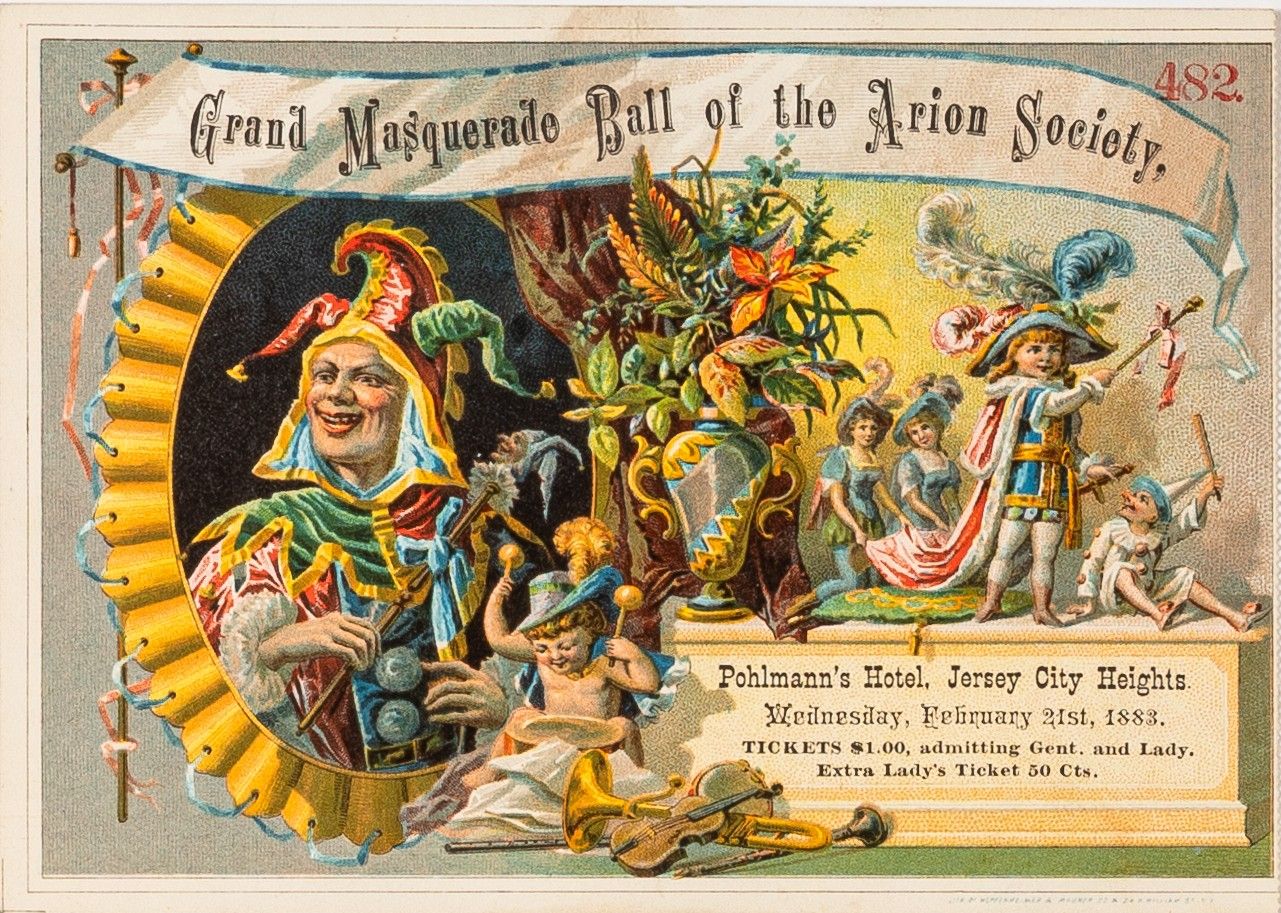
Tickets for social events, such as balls and concerts, give a glimpse into the cultural life and social norms of the time. One example is a festive masquerade ball ticket depicting jesters in elaborate costumes. It was printed for an event sponsored by the Arion Society at Pohlmann’s Hotel in Jersey City Heights, New Jersey, on Wednesday, February 21, 1883. The Arion Society was a prominent German American men’s singing group, and Pohlmann’s Hotel was a center for German cultural activity. Tickets to the ball cost $1.00 for a gentleman and lady, with an extra lady admitted for an additional 50 cents.
“This ticket reflects the manners of the late nineteenth-century. Women only attended such events accompanied by a man──perhaps a brother or family friend──and it was common to bring along a female friend or sister who did not have a male escort,” Morris explained.
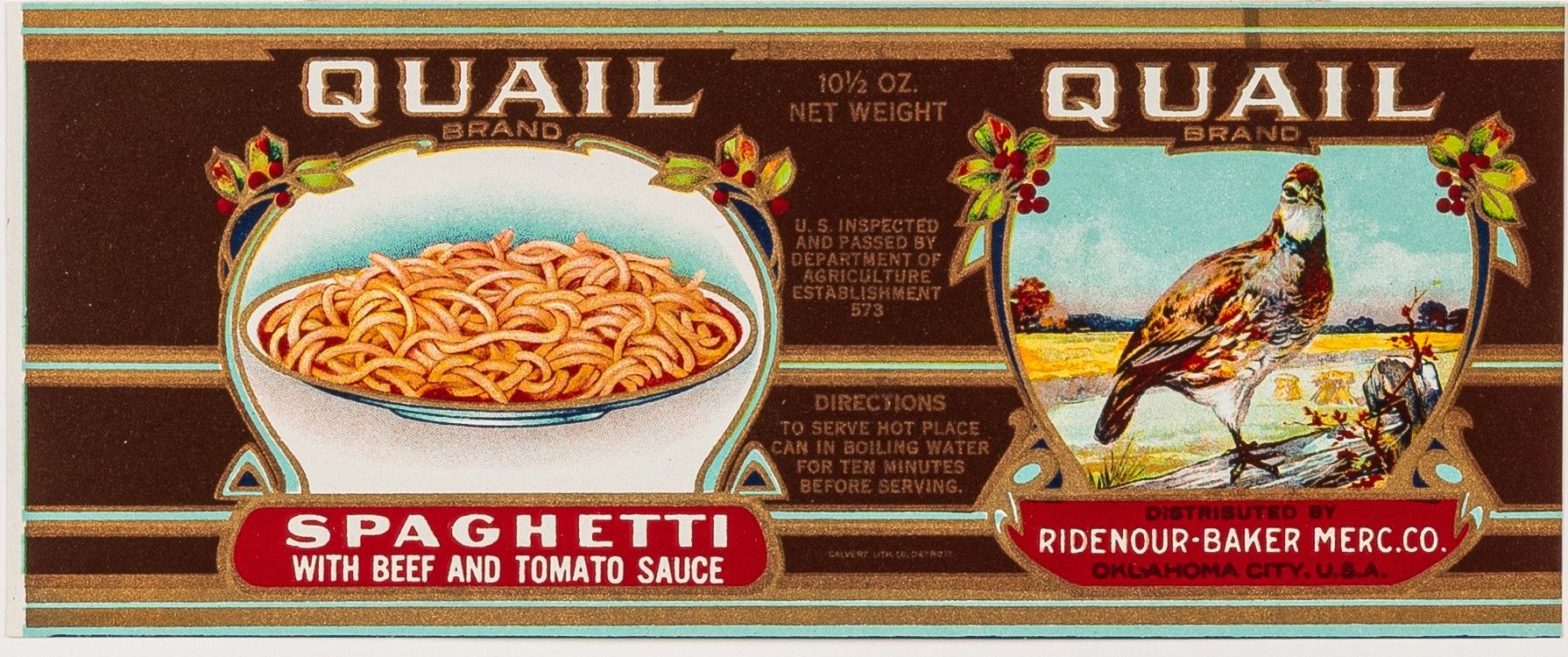
Labels for canned goods offer insight into food production throughout the nation, as well as cultural shifts. The first cannery in the United States opened in New York in 1812, and the availability of canned food played a crucial role in feeding Civil War soldiers. After the war, manufacturers began canning food in smaller sizes for the public. As the industry grew, so did the need for labeling.
One such label comes from a ten-and-a-half ounce can of Quail brand spaghetti with beef and tomato sauce, dating to about 1897. The label features an illustration of a bowl of cooked spaghetti, as well as directions to place the can in boiling water for ten minutes to serve the pasta hot. Additional text notes that the product was inspected and passed by the US Department of Agriculture and distributed by Ridenour-Baker Merc. Co., of Oklahoma City. “We can glean details about food production and consumption in America from labels like this, including how manufacturers adapted to new markets, such as Italian immigrants who brought their food traditions to the US,” Morris said.
According to Hewes, ephemera is in high demand among researchers studying nineteenth-century daily life and commerce. “One recent Fellow searched our collection for trade cards marketing novelty products──things like tools that were intended to make life easier or new toys and entertainments,” she explained. “Another scholar studied livestock trade cards, looking for animals that were imported from other countries, such as new breeds of poultry, to explore how this might have affected US ecology and agriculture.”
“These materials were once meant to be thrown away, yet they are now invaluable resources for studying the American past,” Hewes said. “They hold endless stories waiting to be discovered, and fortunately, future generations will be able to find them.”
This article is part of an ongoing, monthly series supplied by the American Antiquarian Society that focuses on the society’s collections and how they deepen the community’s understanding of Worcester’s–and the American–past. Through wide-ranging programs, community engagement, and research support for scholars and students, the AAS works to cultivate a broad community of inquiry―locally and nationally.
