
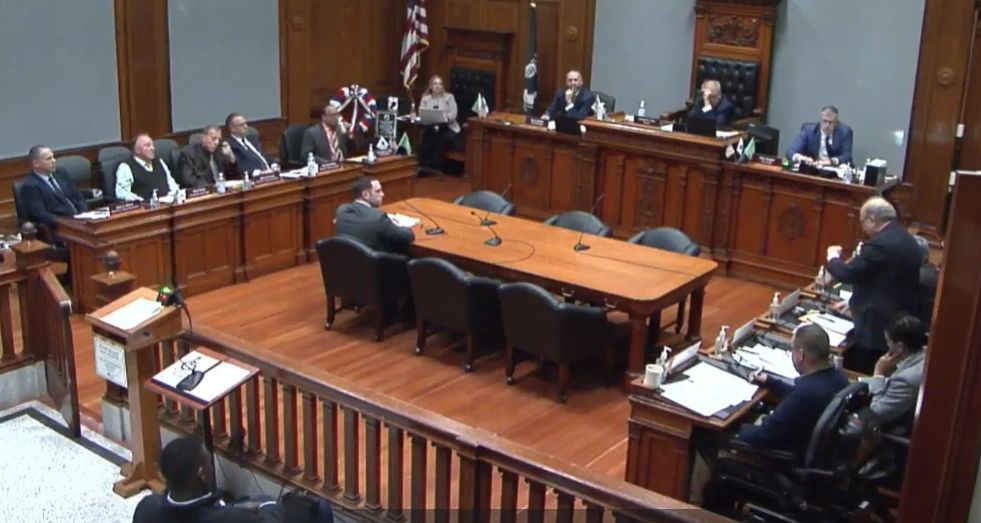
WORCESTER—Worcester city councilors return Tuesday with an agenda that blends the big picture and the painfully familiar: access to health care, the condition of city streets, downtown economic rules and how City Hall itself keeps track of the growing pile of requests it generates every week.
While there are no blockbuster votes on tap, several items hint at longer debates ahead—and at where councilors want to steer policy as the year gets underway. Plus, you never know what will erupt out of tabled items or public comment.
Health care’s on the list via a request from At-Large Councilor Gary Rosen that could put Worcester squarely in the middle of a statewide policy fight. Rosen is asking the council’s Public Health and Human Services Committee to hold a public hearing on whether the city should formally endorse a trio of bills known collectively as Primary Care for You.
Supporters say the legislation would eliminate copays and deductibles for primary care at participating practices, dramatically expanding access and reducing health disparities. The bills already carry endorsements from Worcester’s Board of Health, UMass Memorial Health and several major medical organizations.
Rosen is also bolstering a resolution urging the Board of Health to reconsider a 2023 rule that bars new tobacco retailers from opening within 500 feet of one another. Framed as an economic development issue, the request argues the buffer zone may be limiting opportunities for women- and minority-owned businesses and undercutting the city’s push for a more active, “18-hour” downtown. It reopens a debate that many assumed was settled—and one that pits public health priorities against business growth.
On the infrastructure front, District 1 Councilor Tony Economou is asking city officials to look beyond the usual cold-patch fixes for Worcester’s potholes. His order calls for a review of alternative repair methods, including infrared heating and emulsion-based repairs, with an eye toward durability and cost. The request dovetails with a broader push by At-Large Councilor Satya Mitra, who wants the city to adopt clearer, trackable performance goals — including how many potholes should realistically be fixed each month.
Mitra is also calling for more transparency inside City Hall, filing orders that would require clearer tracking of council requests as they move through the city manager’s office. He is seeking reports on how council orders are processed and prioritized, along with regular updates showing which directives are being acted on and which remain stalled.
The goal, Mitra argues, is to bring clarity to a system where orders often accumulate without clear public accounting—information that could help councilors make more strategic requests and give residents a better understanding of why some issues advance more quickly than others.
Other highlights on the agenda:
- Cracking down on illegal dumping: New District 2 Councilor Rob Bilotta is asking the city to get tougher on people who dump trash illegally in neighborhoods, proposing an increase in fines from $200 to $500 for a first offense and up to $1,000 for repeat violations. Illegal dumping has long been a sore spot, particularly in residential areas where cleanup falls to the city and neighbors alike.
- Is Union Station safe enough? Union Station’s role as a transportation hub and public gathering place comes under scrutiny in a request from Rosen, who wants the city to review whether current security measures are sufficient. The order looks for officials to think about bumping up police presence and expanding outreach services, acknowledging that safety concerns often overlap with social service needs.
- Let seniors work off their tax bills: At-Large Councilor Morris Bergman is proposing an expansion of Worcester’s Senior Work-Off Abatement Program, which allows residents age 60 and older to volunteer city services in exchange for a reduction in their property taxes. The idea taps into two pressures at once: rising tax burdens for seniors on fixed incomes and the city’s ongoing need for help with basic services. If expanded, the program could offer a modest but meaningful form of relief — and a way for older residents to stay engaged in city life.
Worcester City Council meets Tuesday, Jan. 20, at City Hall in the Esther Howland (south) at 6:30 p.m. It is also livestreamed on the city’s website.
Have news, tips, or a story worth telling? Reach Editor Charlene Arsenault at carsenault@theworcesterguardian.org—because good stories (and great scoops) deserve to be shared.
