
WORCESTER—In its first meeting since last week’s municipal election, the Worcester City Council returns Tuesday with a stacked agenda that blends long-running debates with several new policy pushes.
While the newly elected council won’t be seated until January, the current body is staring down a full slate, from animal-welfare proposals to drone-program reviews to the annual deep dive into the city’s tax-classification package.
The council gets its initial look at Worcester’s fiscal 2026 tax-classification materials, a yearly prelude to one of the city’s most closely watched public hearings. The administration present the full data ahead of the formal tax-rate hearing on Nov. 25. Worcester’s total assessed value for FY26 stands at $25.332 billion, a 4.12 percent increase over FY25. The valuation represents all taxable property as of Jan. 1, 2025, and has received preliminary approval from the state Department of Revenue.
The FY26 packet shows a projected single tax rate of $16.67 per $1,000 of value, with the residential factor set at 79.905 percent based on the state-allowed maximum shift. New growth came in at $10.37 million, well ahead of estimates, with another $1.5 million carried over from last year.
Growth was recorded across all property classes, including significant gains tied to utility work and large-scale residential development. The city must raise $422.4 million through the levy, well below its maximum capacity of $448.2 million, leaving roughly $25.8 million in unused buffer. Batista said maintaining that margin helps absorb state-aid dips, address recurring grant shortfalls and support school-spending needs.
The packet also includes historical tax-rate comparisons, top-taxpayer data and Worcester’s position among other Massachusetts communities. National Grid again leads the city’s taxpayer list, with an FY25 valuation of $582.7 million and more than $16.6 million in taxes paid, accounting for 4.17 percent of the levy. The council takes its formal vote at the Nov. 25 hearing.
Councilors also receive a detailed update on the status of roadway, sidewalk and capital-construction work across Worcester. The monthly report, compiled by Transportation & Mobility Commissioner Stephen Rolle and DPW Commissioner John Westerling, outlines progress on more than 100 active or upcoming projects.
The briefing reflects the city’s pavement-management framework launched in 2025, which divides work into six categories ranging from major corridor rebuilds to pavement preservation to standalone sidewalk and safety improvements. The report highlights various projects in design or nearing completion, including mill-and-overlay work on Burncoat Street, Stafford Street, Park Avenue and portions of Chandler Street, as well as intersection and safety upgrades across several neighborhoods. The report also includes information on the new interactive pavement-condition maps and project-status tools now available to the public.
Animal-welfare rules are also in focus, too, this week. Councilor Khrystian King is asking for a draft ordinance that would prohibit the use of pain-inflicting tools and techniques at rodeos or rodeo-related events in Worcester. King’s request calls for clearly defined enforcement mechanisms, a ban on electric prods and flank straps, and a blanket prohibition on any practice likely to cause injury, distress or suffering to animals.
Another high-interest item returning to the agenda is the debate over drones. The Public Safety Committee is seeking two reports: one from the fire chief on the operational value of small unmanned aircraft systems used for police overwatch, including how data is handled and what training is required; and a second from the police chief comparing Worcester’s drone usage to that of similarly sized New England cities. Both questions have been recurring points of inquiry since the council’s earlier discussions around expanding sUAS capabilities.
Other highlights on the agenda:
• Reconsideration of UCH-TIF vote: Mayor Joseph Petty is requesting reconsideration of the council’s Oct. 21 vote related to the city’s participation in the Urban Center Housing Tax Increment Financing program. The program offers partial real-estate tax exemptions tied to development and can be paired with state and federal incentives. The reconsideration would reopen discussion on the resolution previously before the council.
• Appointments and reappointments: A series of appointments are up for acknowledgment, including four constable appointments (Angel Santana, Carmen De La Cruz, Juan De La Cruz and Kevin Derry), along with Jeffrey Burnett to the Historical Commission. The administration is also reappointing Thuha Le and Roxana Vargas Gomez to the Elder Affairs Commission.
• Salary-ordinance updates: Human Resources is submitting two proposed salary-ordinance changes. One aligns pay structures with the FY26 budget and updated table of organization for the Department of Innovation and Technology. The other regrades the records access officer classification to match expanded supervisory responsibilities.
• Property and development items: Economic development is seeking approval of a YWCA mural easement and conservation restriction at 115 Northeast Cutoff. The department also has a jurisdiction and disposition order for council review.
• Grants and donations: The council is being asked to accept multiple donations and grants, including $200 for senior center veterans programs, $7,500 from Fiesta Shows, $10,000 from the Greater Worcester Community Foundation’s Creative Intersections program, $236,500 from the Massachusetts Cultural Council, nearly $65,000 from the Executive Office of Public Safety and Security and several smaller donations benefiting the Worcester Public Library and other city programs.
• Fire-safety communications and translation access: The Public Safety Committee is requesting that the fire chief’s recommended residential-fire-safety protocols be published on the city’s website following concerns about misleading online ads. Additional requests seek a report on language-translation tools available to the Worcester Fire Department, and a list of schools that received fire-safety outreach over the past two years.
• Sober-home regulations and effectiveness: Councilor Luis Ojeda is requesting a comprehensive report on sober homes in Worcester, covering density rules, services offered and any available data on effectiveness.
• Food-waste initiatives: Ojeda is also requesting a two-year funding plan to partner with schools, supermarkets and local organizations to redirect food waste to combat food insecurity. A related Public Works order asks for a study quantifying cafeteria food waste in the Worcester Public Schools.
• Zoning and affordable housing: Councilor Etel Haxhiaj is requesting a recommendation on creating a citywide Affordable Housing Overlay that would offer density bonuses and streamlined permitting for projects that are 100 percent affordable.
• E-mobility and pedestrian safety: Councilor Kate Toomey is requesting a draft policy aimed at improving pedestrian safety around the use of e-scooters, e-bikes, e-unicycles and other alternative mobility devices.
• Accessibility at City Hall: King is requesting a full accessibility audit of City Hall, covering physical access, digital services, meeting-room layouts, staff-support needs and timelines for compliance with state and federal standards.
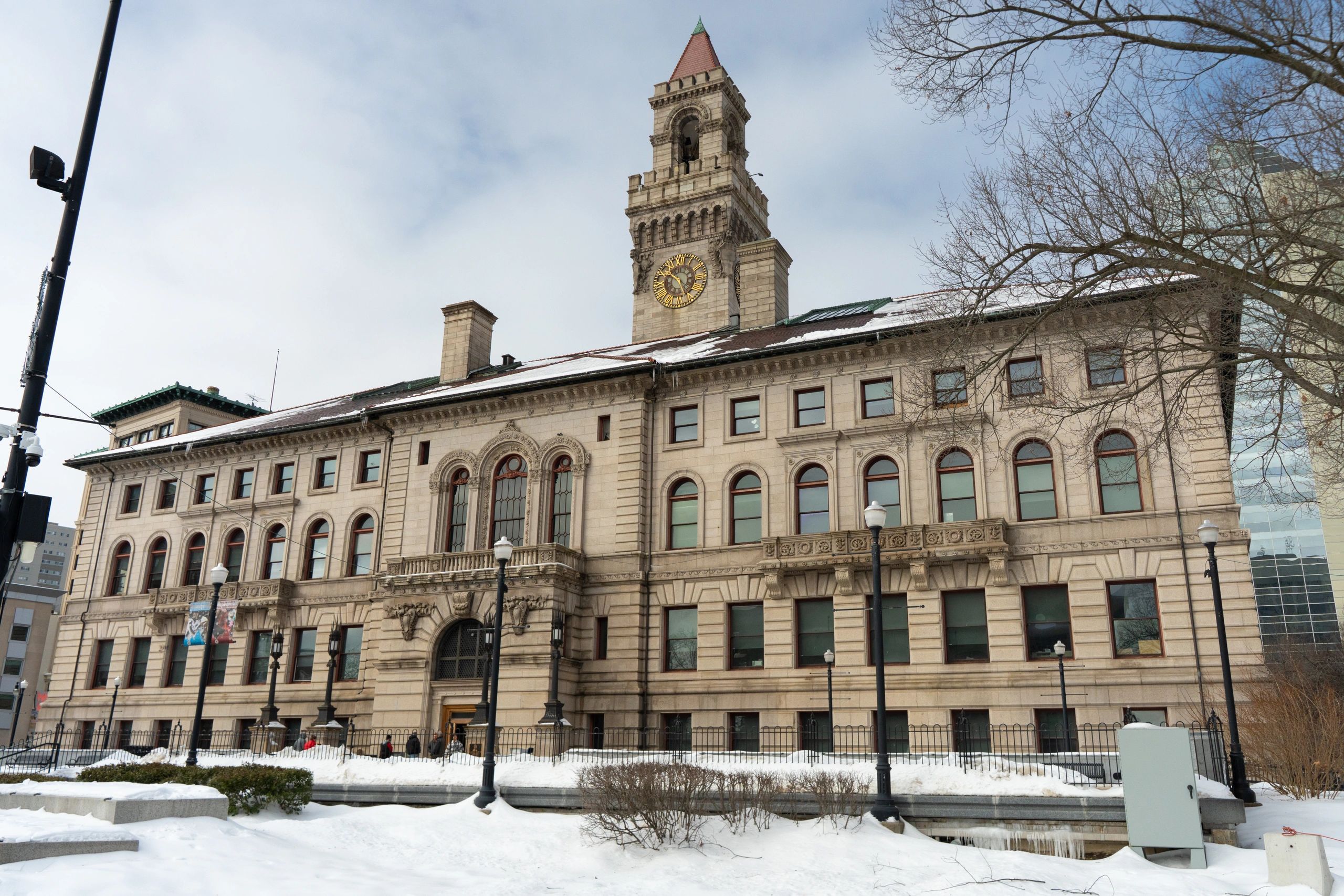
Worcester City Council meets Tuesday, Nov. 18, at City Hall in the Esther Howland (south) at 6:30 p.m. It is also live streamed on the city’s website.
Have news, tips, or a story worth telling? Reach Editor Charlene Arsenault at carsenault@theworcesterguardian.org—because good stories (and great scoops) deserve to be shared.
The Worcester Guardian is an independent nonprofit news organization. Support local journalism by making a DONATION today.