
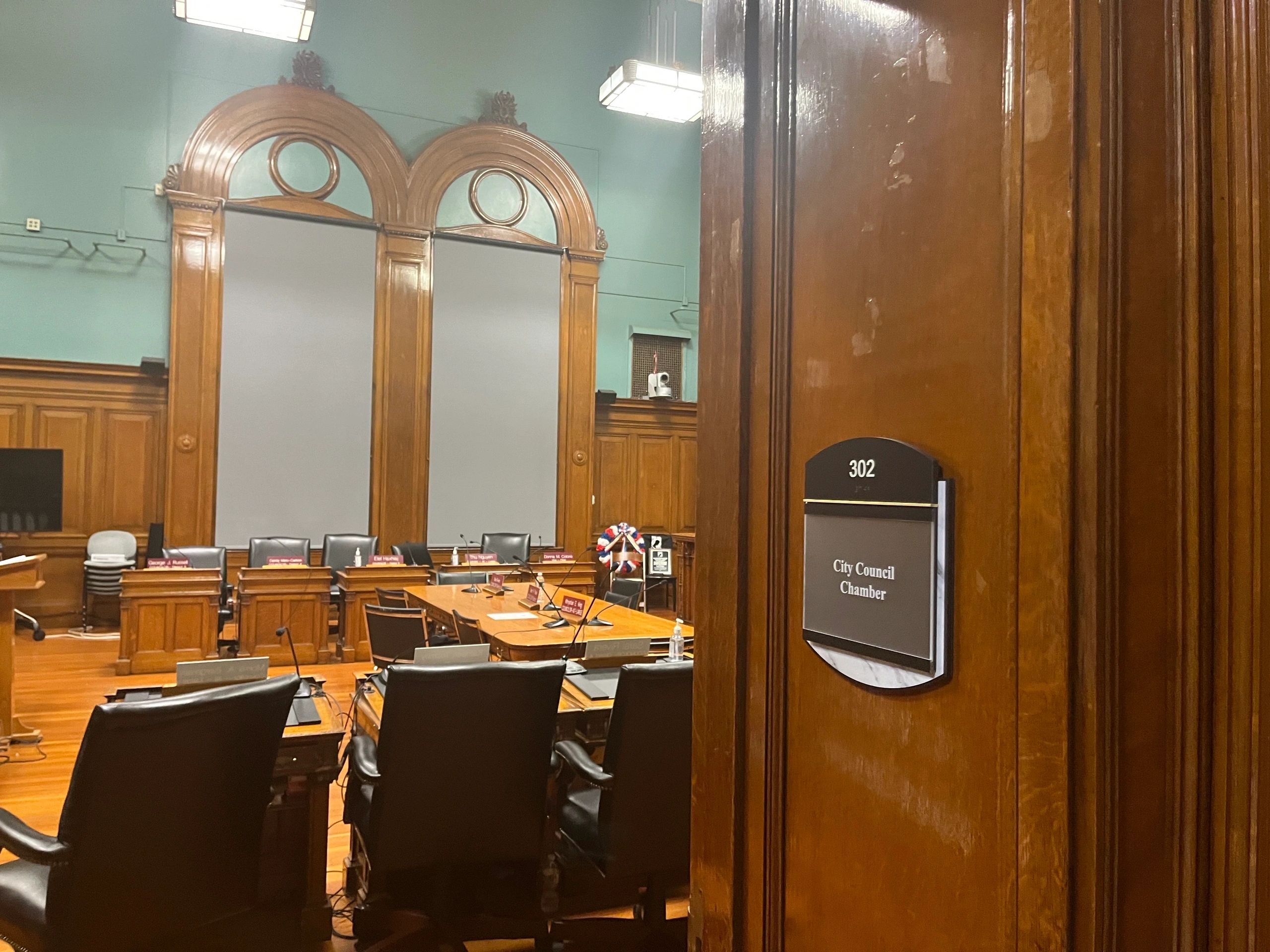
WORCESTER—While the city has implemented some of the best programs available to address the opioid crisis, Dr. Mattie Castiel told the Worcester City Council Tuesday that there is still a huge problem.
The city’s commissioner of Health and Human Services attended the council meeting Tuesday to provide it with an update on the city’s opioid overdose strategic plan.
From 2018 to 2022, the state saw opioid-related fatalities increase by 15.7 percent, with Worcester itself seeing a 17.8 percent growth rate during that period, according to data from the Massachusetts Department of Public Health.
In response to Castiel’s report, District 5 Councilor Etel Haxhiaj asked for another report on the feasibility and benefits of establishing overdose prevention centers in the city.
Haxhiaj specifically asked for the report to include data from OnPoint NYC, which is an organization that has two overdose prevention centers that Haxhiaj said have saved lives, reduced crime, and addressed other quality-of-life issues.
Castiel visited one of the two overdose prevention centers, also known as safe injection sites, operated by OnPoint NYC in April 2023, the Worcester Telegram and Gazette reported.
After her visit, Castiel told the newspaper, “This is truly something that needs to happen in our state.”
The sites in New York City were the first safe injection sites to open in the country. The sites are still illegal in Massachusetts, though state legislature is currently considering a bill that would create a 10-year pilot program for overdose prevention centers at which people would be able to use drugs they obtained outside of the center while being monitored by professionals to prevent overdoses, the Springfield Republican reported.
During Tuesday’s meeting, District 3 Councilor George Russell asked for the report from Health and Human Services to include what alternative services to the overdose prevention centers would be and “if there are plenty of other services, healthcare agencies that are providing some kind of outreach.”
Russell said he has some major reservations about the establishment of overdose prevention centers in the city and asked that the report look at how the surrounding community is impacted by the site, not just those who have substance abuse issues.
Castiel pointed out to Russell that a lot of the work the city has been doing to address the opioid epidemic was presented in the report on the strategic plan she shared Tuesday night.
The city has worked with UMass Memorial to bring Road to Care into the community, a mobile care van that provides medical care as well as addiction and mental health treatment, according to Castiel. There is also a mobile methadone van that goes out into the community and provides around 120 clients a day with methadone care and Castiel’s department has worked with the city’s Emergency Medical Services to get them licensed to provide suboxone in ambulances, according to Castiel. Suboxone and methadone are both medications used to treat opioid dependence.
Having an overdose prevention center would just be another tool to address the crisis.
Having the physical building with all of the services in one place is a way to get rid of the stigma associated with substance abuse, according to Castiel. It will also allow service providers to establish relationships with people and help get them into treatment.
Noting the increase Worcester has seen in opioid-related deaths, Councilor At-Large Donna Colorio asked for a report on what in the city’s response is not working and what it should be doing better.
Councilor At-Large Thu Nguyen also made their own motion related to the report, requesting that the city manager allocate funds to support increasing the city’s partnerships with organizations working to respond to the opioid crisis and community education. They raised the question of if funds the city received through opioid-related lawsuits could go toward that funding.
At the end of December, WBUR reported that Worcester is one of the few municipalities that spent all of the payments it received from the state in FY23, the first year the state began distributing the payments it received from settling opioid-related lawsuits.
The city received $845,000 in FY23, spending $500,000 for a mobile crisis team to help respond to 911 calls involving mental health and substance abuse and the rest going to staff that provides outreach for people struggling with homelessness and substance abuse, the outlet reported.
Castiel’s report and all of the motions were sent to the council’s committee on public health.
Councilor At-Large and Council Vice Chairman Khrystian King, who chaired the meeting Tuesday due to the absence of Mayor Joseph Petty, said he was “very happy to hear that clearly we as a body are looking to do things differently…and trying to work on this collectively.”
Kiernan Dunlop is an award-winning journalist who has spent the past five years reporting in Worcester, New Bedford and Antigua and Barbuda. She’s been published in Bloomberg, USA Today, Canary Media, MassLive and the New Bedford Standard Times, among other outlets. She can be contacted at kdunlop@theworcesterguardian.org