
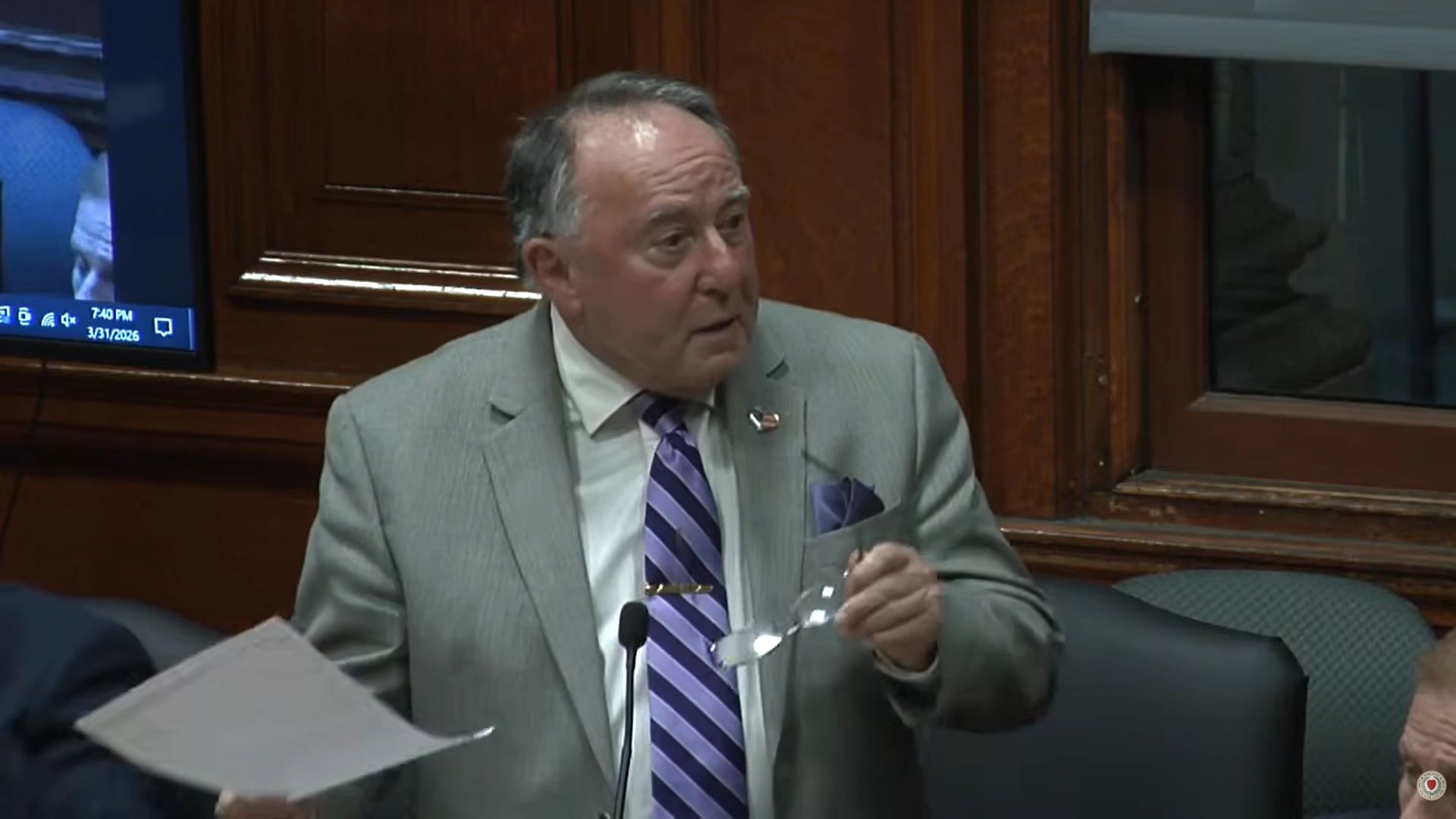
The Worcester City Council has requested a report on all of the city’s PILOT (payments in lieu of taxes) agreements with colleges and universities.
An order from Councilman Gary Rosen — who said he has pursued the issue since early in his political career — calls for a review of whether the payments reflect the level of city services the institutions use.
“Our colleges and universities use police protection that all of us — our residents, our commercial taxpayers — pay for,” Rosen said. “Fire protection — we all pay for it. Public health protection — we all pay for it. They don’t.”
Rosen said Worcester Polytechnic Institute pays the most of any school, at approximately $800,000 per year. While universities are not required to pay taxes under the law and PILOT contributions are voluntary, he said Worcester should negotiate more aggressively.
According to Rosen, there are large disparities between Worcester’s PILOT revenue and what other cities receive. He cited Northeastern University, which is paying Boston more than $49 million over five years, as well as agreements in smaller New England cities.
“I bet you if we had Northeastern in Worcester, we wouldn’t be getting $49 million, would we?” Rosen said. “Because we’re not aggressive. We don’t even send colleges and universities an invoice at tax season saying, ‘Here’s what you would pay if you weren’t a nonprofit.’”
Rosen also pointed to Providence, which recently negotiated a 20-year agreement with Brown University, the Rhode Island School of Design, Providence College and Johnson & Wales University totaling $177 million in voluntary payments, with Brown contributing an additional $46 million.
Dartmouth College pays $2 million annually to Hanover, New Hampshire. Tufts University pays $1.7 million annually, and Yale University has committed $230 million to New Haven over seven years.
“What we get from our colleges and universities is nowhere near what other cities and towns get,” Rosen said. “I’d like to know what we get from our eight colleges and universities, in cash and community benefits, and whether any earmarked funds are actually going where they should.”
WPI’s PILOT payments are intended to support the Worcester Public Library and Institute Park, Rosen said.
“I don’t know if Institute Park is getting $400,000 every year to maintain and improve it,” he said. “Does it all go to the library and Institute Park? Maybe it does. If it does, that’s great. I just think maybe it doesn’t.”
Councilman Morris Bergman said he would like more information on the history of WPI’s PILOT agreement and how those funds are incorporated into the city budget.
“We budget for both of those,” Bergman said. “We have a parks budget and a library budget. If we’re going to receive PILOT payments, and I think we should — and that there should be more — that money should be used to offset the tax burden on residents.”
City Manager Eric Batista said most PILOT agreements with Worcester’s colleges began around 2009. Many are 20-year agreements, some of which have been extended through 2031 to 2036.
Batista said WPI’s payments are being used as intended, with $400,000 going annually to both the library and Institute Park to offset debt, maintenance and construction costs. Clark University has a similar arrangement, with funds split between University Park and the library.
However, Batista said increasing payments from institutions with existing agreements is complex.
“Any effort to expand these PILOT agreements would require universities to reopen existing contracts and negotiate new terms,” he said, adding that the city is currently in discussions with some schools.
The College of the Holy Cross does not have a PILOT agreement, Batista said, but it pays taxes on several residential properties it owns.
“There are other institutions where we are currently at the table in discussions, and I’m hopeful we will reach solutions and establish new PILOT agreements,” he said.
Councilor Kate Toomey added an amendment requesting a report from the state on options for PILOT agreements.
Rosen argued that local colleges have the financial capacity to contribute more.
“If you combine the endowments of our eight private colleges and universities, it totals close to $4 billion,” he said. “We should have a PILOT program with each one.”
He also referenced a nonbinding ballot question in 2025 that asked whether colleges should contribute 0.5% of their endowments. About 75% of voters approved.
“Why did they support that? Because colleges should be contributing more,” Rosen said. “We have to send that message — and maybe apply a little pressure — to help the city.”