
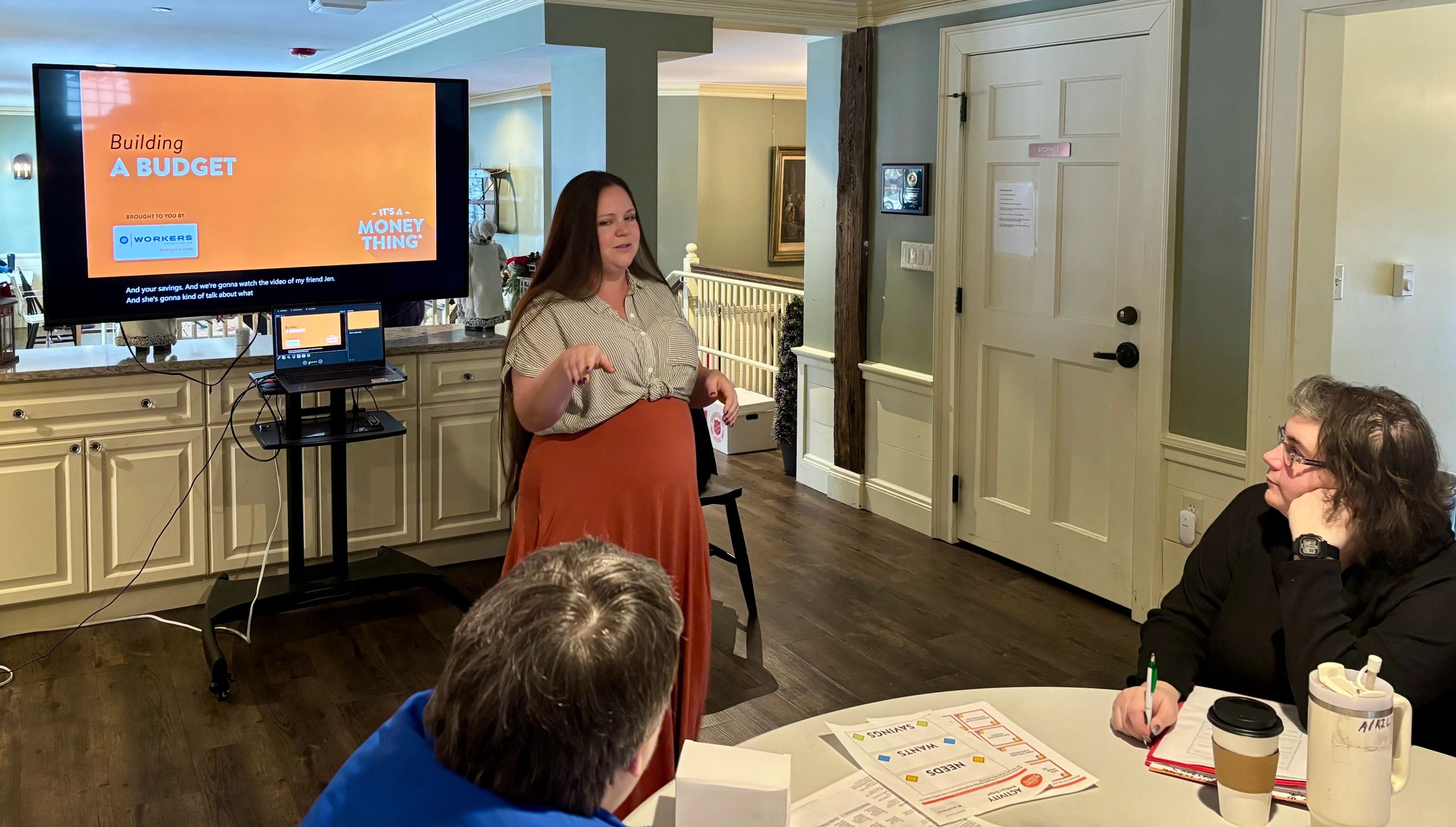
WORCESTER—April Leblanc had never felt comfortable going to the bank.
“I always get nervous every time,” she said.
After taking a personal finance skills class on Thursday, she said she’ll be much more confident the next time she makes a deposit.
Leblanc, 45, of Worcester was one of 10 neurodiverse people ranging in age from 23 to 62 who attended the class offered at Stearns Tavern by Workers Credit Union and Seven Hills Foundation to boost their independence and confidence in managing their finances.
Leblanc has attention-deficit hyperactivity disorder and frontal lobe damage and she lives with a family in Worcester.
“They treat me as their own,” she said. “They don’t treat me as someone with special needs. They treat me like a daughter.”
She works twice a week at Stearns Tavern, the city-owned historic building located at 140 Mill St. and managed and operated by Seven Hills. The building is open to the public, has a gift shop and hosts birthday and holiday parties and other community events.

The first-year financial literacy program is offered at no charge to students who live with such conditions as autism, Down syndrome and cerebral palsy. The program consists of five classes that take place from Oct. 16 through Dec. 18 at Stearns Tavern. After a final class that teaches interview skills, the students receive certificates at the Jan. 8 graduation at the Workers Credit Union branch, 301 Grove St.
In other classes, students learn about saving, budgeting and protecting themselves from scams, including not signing and mailing back fraudulent checks without routing numbers.
Another class instructed which items are important to keep or toss. For instance, keep birth certificates, ATM withdrawal slips and bank statements, but toss those week-old Dunkin’ receipts and gift card receipts containing your personal information.
Leblanc said she’s also learned how to sign a check and that she finds the classes invaluable.
“I think it’s good because you can get more experience and more help,” Leblanc said.
Calla Flannery, WCU assistant vice president of community and business development, teaches the hour-long classes. Asked why WCU and Seven Hills offer the classes, she replied, “Because financial education should be for everyone.”
Flannery formed the literacy program with Timothy Johnson, Seven Hills Foundation vice president of ASPiRE!, an affiliate of Seven Hills, and she’s thrilled that they did.
“Honestly, it’s the best part of my job,” Flannery said. “As cheesy as that sounds, it’s the best part of my job. I always say, whenever I bring guests here, you’re not going to leave without a smile. You’re going to be amazed at what you learn, but also the reaction the students have and the give and take. You see the knowledge. The light bulb comes on and they say, ‘Oh my God. I can do this at home.’ It’s such a positive impact on your heart.”
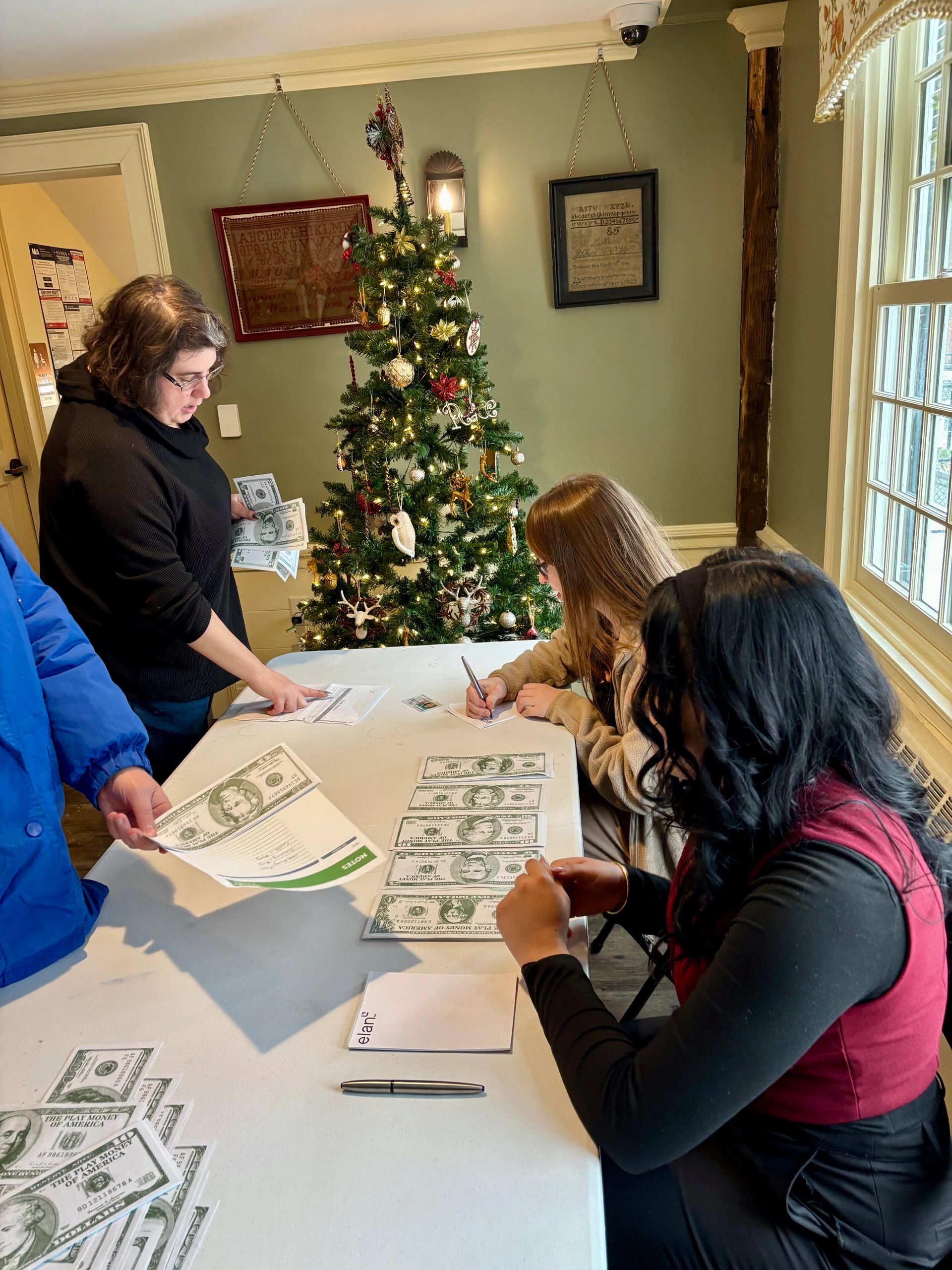
On Thursday, Flannery taught the basics of budgeting and conducted a mock teller experience for the students. She showed slides and videos and she instructed the students how to handle themselves when talking to bank tellers. The students were told to say “hello” and ask “How are you today?” Then they were taught to have their ID or bank card ready, to fill out a deposit slip and to check their receipt to make sure it was correct.
Finally, the students practiced making deposits with play money with WCU tellers Jayde Monroe and Illianna Ramos, who sat behind a table in the back of the room.
“My goal is that they can go and be financially independent just a little bit more, have another step forward toward independence,” Flannery said. “Whether that is they don’t need to rely on a guardian fully. Maybe they can live on their own. Just giving them the skills to read their own paycheck is really the purpose.”
“We see it out there now,” Johnson said. “People are engaged, they’re looking forward to the class every week and it’s helping people to build confidence in their own financial awareness.”
ASPiRE serves about 600 adults with developmental and intellectual disabilities in Central Mass. Johnson said about 250 of them are involved in Department of Developmental Services funded programs which require them to be on a path to employment. The financial literacy classes represent a step in that direction
“Feedback from the participants and the staff,” Johnson said, “and from the folks at Workers is very positive. We always look for opportunities to connect the people we serve to the community in meaningful ways.”
“It’s gone really well so far,” Flannery said.
Flannery also teaches a class of neurodiverse students aged 18-22 at Nashoba Regional High School in Bolton and she has taught financial seminars for police academy cadets at Fitchburg State University and for students at Mount Wachusett Community College in Gardner who are enrolled in high school and college at the same time.
Bill Doyle has been a professional journalist for 47 years, most of them as a sports writer for the Telegram & Gazette. He covered the Boston Celtics for 25 years and has written extensively about golf, boxing and local high school and college sports. He also worked for the campus newspaper when he attended UMass-Amherst. He can be reached at billdoyle1515@gmail.com