
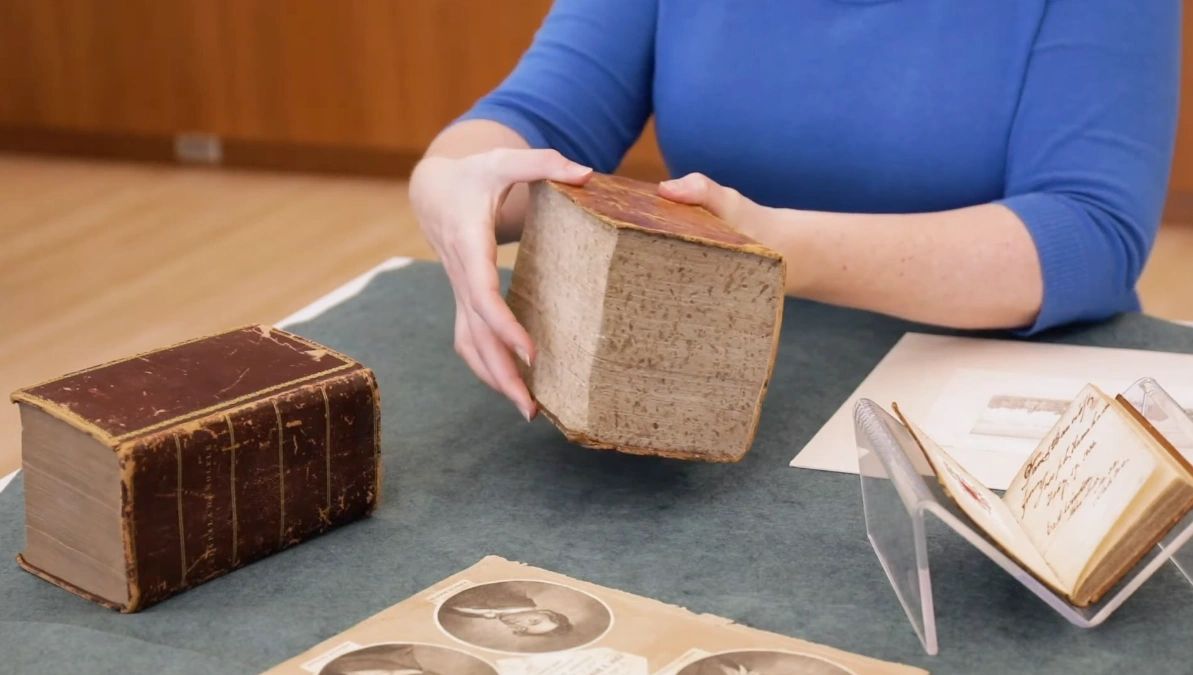
WORCESTER—If you had to guess where in the world you would find one of the largest collections of early Hawaiian printing outside of Hawaii, Worcester might not be the first place you think of. Yet, Worcester would be the correct guess. Thousands of items printed in Hawaii or in the Hawaiian language during the nineteenth century reside right here in central Massachusetts at the American Antiquarian Society (AAS).
The importance of preserving these historic materials came into stark focus in August 2023 when wildfires largely destroyed Lahaina and other parts of Maui. “Tragically, many cultural treasures were lost during the fires.
It highlighted just how vulnerable historic artifacts are to natural disasters,” said Elizabeth Watts Pope, curator of books and digital collections at the Society. “But one of the benefits of print is that there are multiple copies, and thousands of original Hawaiian books, newspapers, and other printed items are preserved here at AAS, as well as on the Islands.”
The first printing in Hawaii took place one morning in early January 1822 when a Native Hawaiian, a young printer’s apprentice/missionary from New York, and a sailor from Massachusetts gathered around a second-hand Ramage printing press in Honolulu. The missionary, the sailor, and the press had all arrived in Hawaii in 1820 aboard a ship from Boston carrying the first missionaries to the Islands―a group that also included Native Hawaiians who had been living in New England. In a hale pili, or grass thatched house, the three men took turns pulling the bar of the press and produced the first printed impressions on the Hawaiian Islands. In the decades that followed, presses on the Islands produced over thirty million pages in the Hawaiian language.
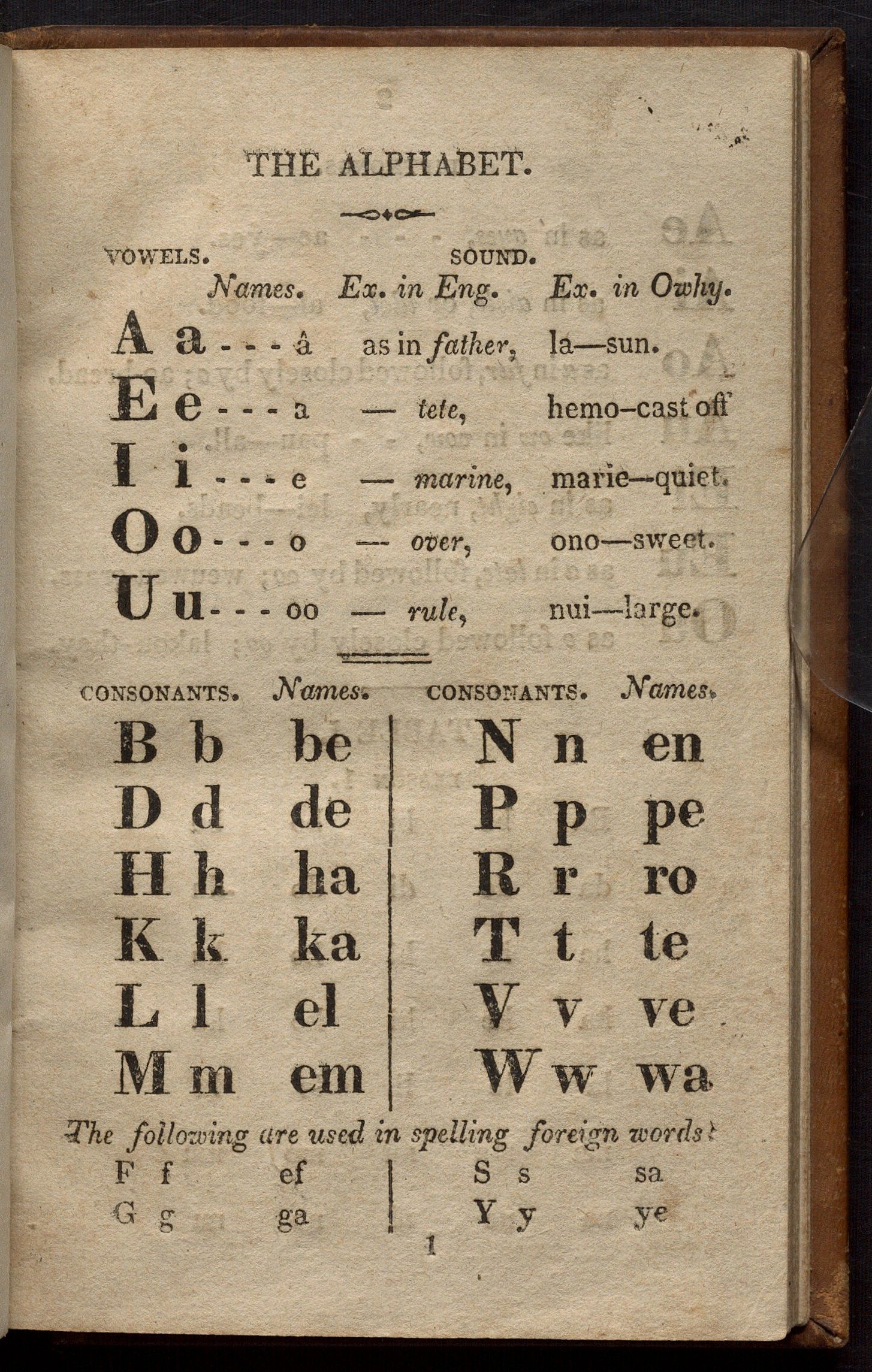
The earliest surviving publication is The Alphabet (1822), a copy of which is at AAS. The sixteen-page book includes the five vowels and twelve consonants that made up the Hawaiian alphabet at that time, as well as pronunciation guides. According to Pope, most of the earliest printing on the Islands was educational, such as readers, alphabets, and catechisms. “Native Hawaiian leaders were committed to spreading their printed language, and this fit right in with the
missionaries’ goal to spread the Christian message. With these two groups working together, the Hawaiian Islands achieved one of the world’s highest literacy rates in just one generation.”
Before printing could even begin, however, there had to be a written language. “Hawaiian’s rich oral tradition has continued for more than a millennium to today, but Native Hawaiians didn’t start writing it down until after contact with Europeans in the late 1700s,” said Pope.
“In the early 1800s, New England-educated Hawaiians worked with the missionaries to represent Hawaiian in the Roman alphabet. The spelling then became standardized as they set the type in the presses,” said Pope, who has spent more than a decade helping researchers access Hawaiian language materials at AAS.
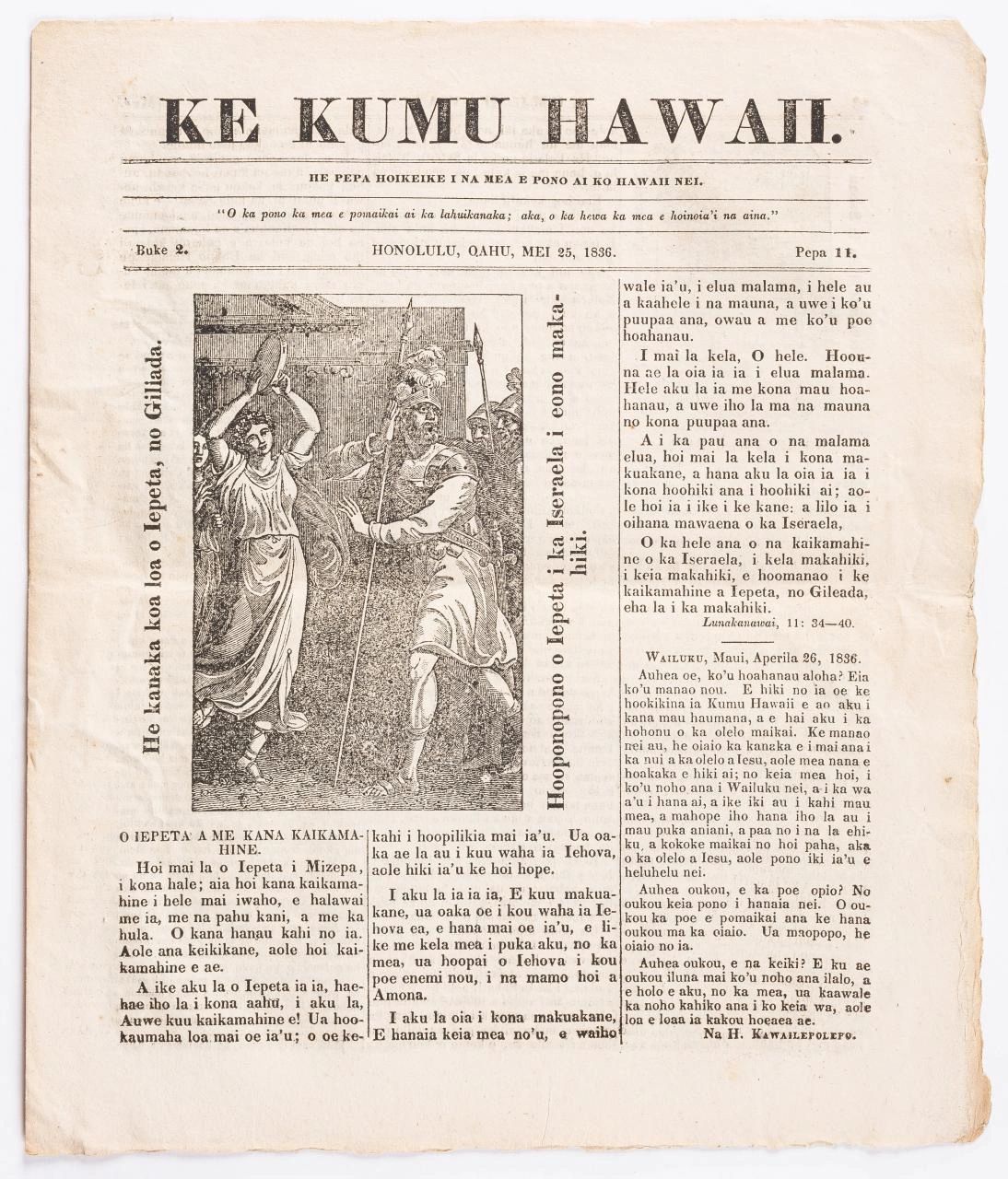
The Lahainaluna Seminary on Maui became a center for Hawaiian language printing and in February 1834, students there began publishing Ka Lama Hawaii (The Hawaiian Lama), the first newspaper printed west of the Rocky Mountains in what is now the United States. Later that year, missionaries in Honolulu launched Ke Kumu Hawaii (The Hawaiian Teacher), the first newspaper intended for broader readership. Today, Hawaiian language newspapers make up one of the largest Indigenous language primary sources from the 1800s, with about 2,000 issues of these periodicals in the AAS collection.
One of the most unusual publications produced in Hawaiian is a Bible that must have been an extraordinary challenge for those early printers. Completed in 1838 and published under the title, Ka Palapala Hemolele (The Scriptures), the book contains 2,331 pages and is approximately seven and a half inches tall by five inches wide, and an astonishing five and a half inches thick.
“Due to its extraordinary thickness, Native Hawaiians referred to the book as Ka Buke Poepoe (the rotund or fat book),” Pope said. The Bible was printed and distributed in sections over the course of two years. The translation work alone took more than a decade.
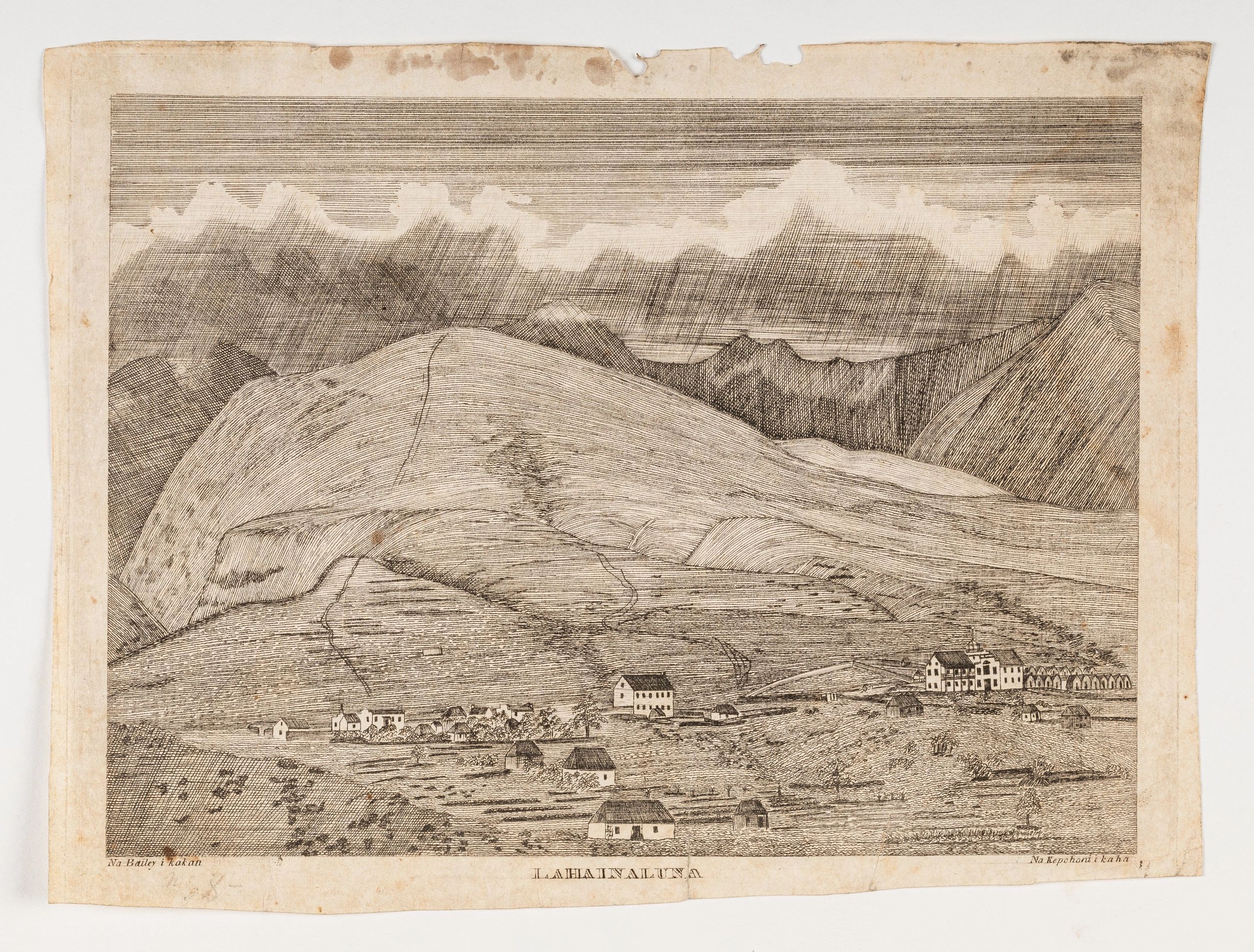
At about the same time, Native Hawaiian and missionary printers expanded their output further by learning copperplate engraving, using the process to create maps and images of the islands. Coincidentally, however, one of the first engravings made on the Islands is of Holden, Massachusetts, the hometown of missionary Edward Bailey. While teaching at the Lahainaluna Seminary, Bailey sketched Holden’s Main Street from memory. George Kapeau, a Native Hawaiian student at the Seminary, engraved the image in copper in 1838.
According to Pope, Worcester become a hub of Hawaiiana because of the New England missionaries who traveled to the Islands in the 1800s. “When they returned home, missionaries, as well as sailors and others, brought with them printed materials, like books, engravings, maps, and newspapers. Over time, descendants of those early collectors gave many of these items to
AAS,” she said. The collection grew substantially in 1938 when AAS purchased the library of Hiram Bingham, one of the first missionaries on the Islands. Donations from the Hunnewell family, descendants of an officer on the first missionary vessel to arrive in Hawaii, continue to this day.
For nearly a century, these historic materials have been available in the Society’s library on Salisbury Street for anyone interested in learning about the history of the Hawaiian Islands. A recent grant from The Pine Tree Foundation of New York has allowed AAS to make the collection even more accessible. During the past year, staff updated and improved catalog entries, gave conservation treatment to items that needed it, and digitized more than a hundred books, engravings, lithographs, and newspapers. These records and images are now freely available on the Society’s website.
“We’re honored to help maintain the long-standing connections between Massachusetts and the Islands,” said Pope. “And we’re thrilled that Hawaiian language speakers, whether they’re in Lahaina, Worcester, or anywhere else, can read these original sources.”
This article is part of an ongoing, bi-monthly series supplied by the American Antiquarian Society that focuses on the society’s collections and how they deepen the community’s understanding of Worcester’s–and the American–past. Through wide-ranging programs, community engagement, and research support for scholars and students, the AAS works to cultivate a broad community of inquiry―locally and nationally.
