
WORCESTER—The world may be dealing with food shortages and housing shortages but it has lots of balls.
You have your traditional ones such as base, basket, foot, volley, hand, power, etc. Then there are the new wave ones such as pickle and sewer.
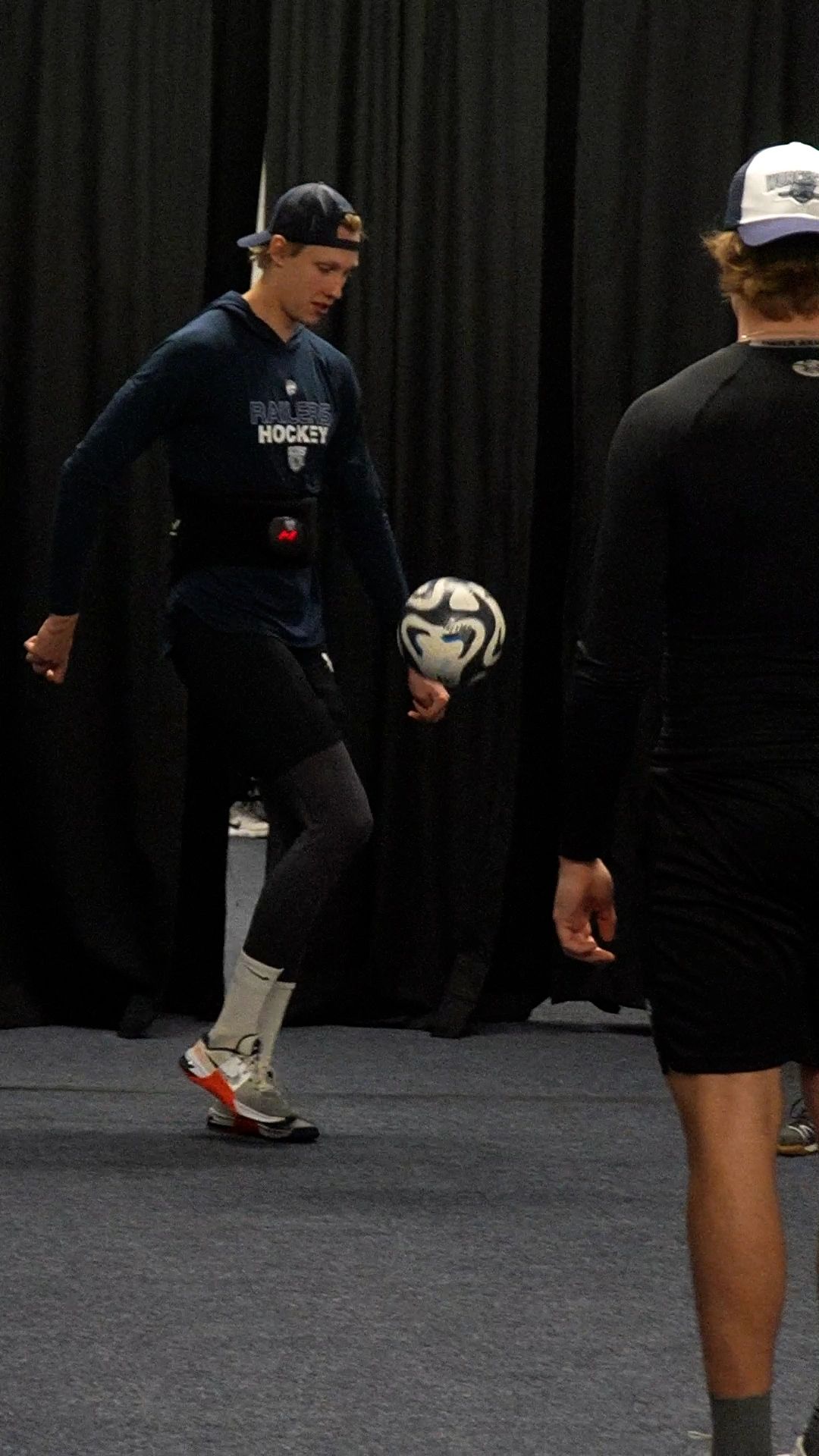
Almost everyone, it seems, is playing pickleball. Sewerball is much more of niche sport, almost anonymous. It it is what hockey players do as part of their pre-game preparation for the opening faceoff.
Fans who get to the rink early can hear sewerball being played if they listen closely. Those exclamations of success and victory are not because somebody won Megabucks or, even better, got called up. They are from the thrill of sewerball.
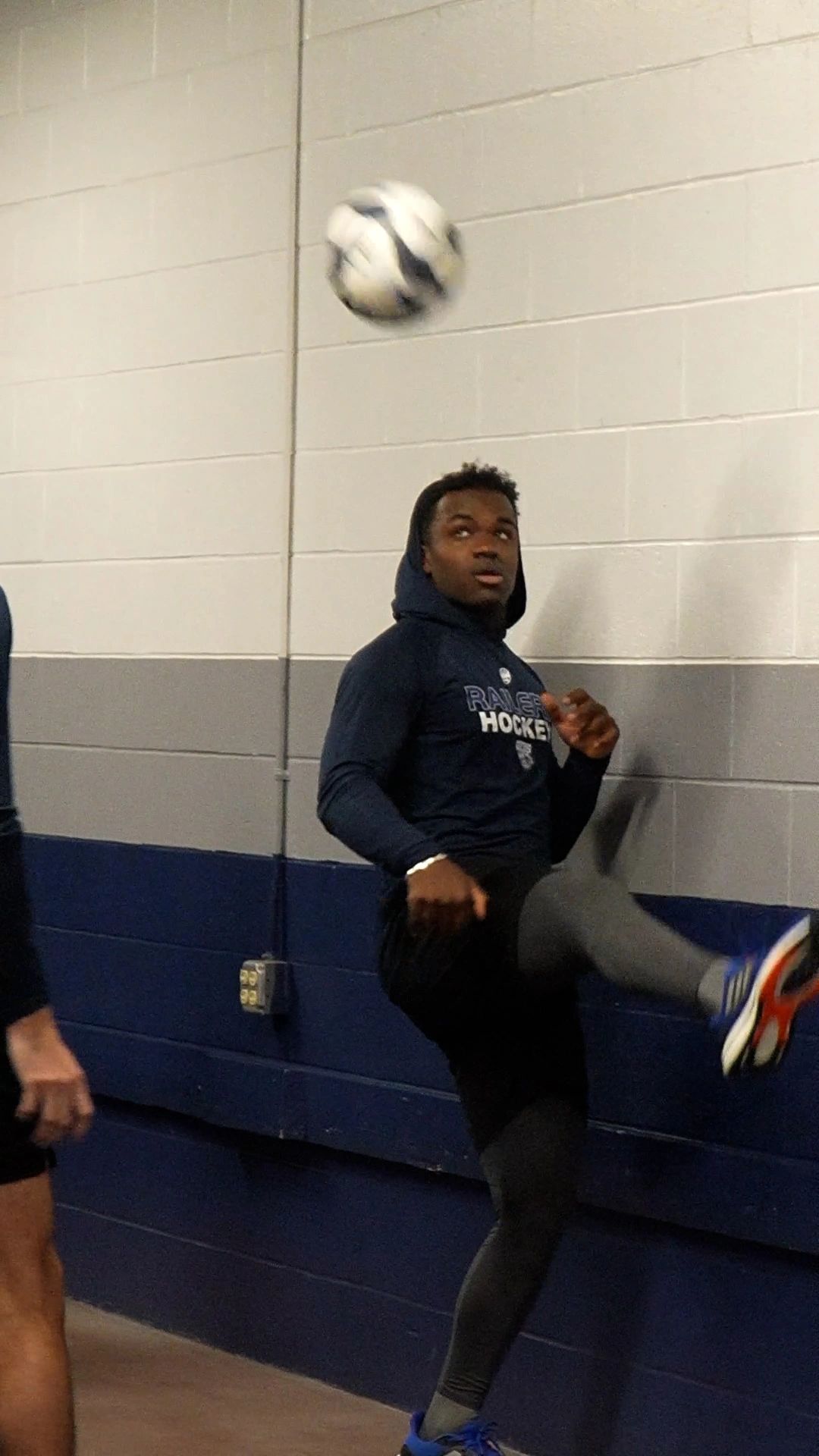
Sewerball is a son of soccer. It is generally played within the narrow corridors outside the dressing room. Players kick around a soccer ball and when somebody fails to keep it in the air, he is out of the game. The last one standing is the winner.
The Trois-Rivieres Lions are at the DCU Center Friday and Saturday nights. No doubt that both they and the Railers will be playing sewerball before Saturday’s game, a doubleheader of sorts with the original game as it will be International Soccer Night.
The New England Revolution are taking over the building as the Railers celebrate the upcoming 2026 FIFA World Cup. Members of the Revolution will be on hand.
Fans can ask them the eternal question, one once posed by Wayne Gretzky — “Do soccer players play hockey before their games?”
Sewerball is not brand new, but is mostly a 21st Century development. The 1994-95 IceCats, the city’s first pro team, did not do sewerball. In fact, if coach Jim Roberts had seen anyone kicking around a soccer ball outside the dressing room, he would have chased him out of the rink and into a real sewer.
Sewerball has no known inventor, or date of invention. Theories are that Europeans introduced it to North America, but there is no record that Columbus’ sailors played it on the Nina, Pinta or Santa Maria.
Defenseman Brendan Buckley, now coaching at Boston College, played for both the IceCats and Sharks.
“I don’t remember when it first started,” he said. “I don’t know if we did it with the IceCats, but I know we did it with the Sharks. I didn’t do it in college.”
There is usually a lot of time, generally two hours, between when players arrive at the rink and the puck gets dropped. Sewerball beats having a cigarette or two, which happened a lot in the olden days, and is more than just a way to kill time.
“It’s good for coordination,” Railers coach Nick Tuzzolino said, “and it gets you loose, it’s fun, it promotes teamwork. It also gets guys to think with their skates. You’ll see them knock down pucks with their skates, something they might not have done before.”
Assistant coach Chris Rumble has been a player and a referee and was asked if officials play sewerball.
“Some do,” he said, “but not that many. Some of them aren’t such good athletes.”
Sharks standout John McCarthy, now coaching the AHL San Jose Barracuda, remembers the Sharks doing it but was not really into sewerball.
“I got a groin strain playing it,” he recalled, “and I knew somebody who broke his foot. He tried to kick the ball, missed, and kicked a wall instead. So it has a downside.”
McCarthy’s players do it, though.
“It’s a good warmup, a way to stretch and a good team activity.”
Railers captain Anthony Repaci was asked who the best sewerball player on the team is.
“You’re looking at him,” was the response. “With me getting older, I changed my pre-game routine and decided to retire from sewerball after last year. But with the way this season started, I figured I’d go back to it and see what happened.
“So far I’m undefeated. Three games, three wins.”
Repaci played a lot of soccer growing up outside Toronto.
“Of course. I’m Italian. It’s in my genes,” he said.
Teammate Riley Piercey was not quite so quick to anoint the team’s sewerball MVP.
“It goes hot and cold,” he said. “On any given night it can be someone different.” Piercey can definitely see the European connection, with the Railers having had three Finnish players on the roster this season.
“The Finns? Oh yeah, they are very good,” he said.
Fans who recall Buckley remember him as an old-school defenseman, so he sort of has an old-school outlook on sewerball even though it is part of the modern game.
“Not everybody does it,” he said, “and you know, you could turn your ankle or something. Imagine getting hurt messing around with a soccer ball? But it’s a way to get loose, good for team bonding.
“Guys get into routines and that’s important, but I don’t think it really does that much to get you ready.”
The DCU Center is one of the ECHL’s best sewerball rinks because of all the space, although most of it is on the visitor’s side of the dressing rooms. When the exhibition hall is vacant, a team could play a regulation soccer game over there.
Railers COO Mike Myers has been part of the city’s hockey scene almost forever. Like most hockey people, the origins of sewerball are a bit fuzzy to him.
“I don’t remember an on-off switch,” he said. “I know we did it for at least almost all of the Sharks years, and I know it’s a dynamic warmup, a communal sport that checks off a lot of boxes.”
Not penalty boxes, though. Sewerball is all about elimination, not penalization, no matter where, when or how it started.
Bill Ballou covered the Red Sox for the Worcester Telegram from 1997 through 2018. He has covered pro hockey in Worcester since 1994 and currently does a weekly column for the Worcester Red Sox. Ballou can be reached at vetgoalie@aol.com