
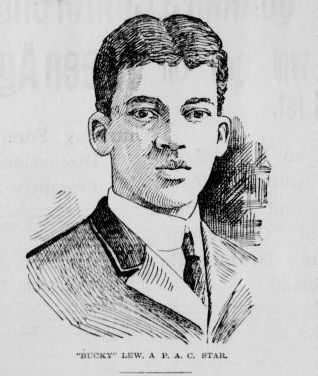
WORCESTER—Chris Boucher believes Harry “Bucky” Lew deserves to be inducted into the Naismith Basketball Hall of Fame in Springfield.
You’re probably now wondering, “well, who the heck is Bucky Lew?” Boucher fills you in when he talks about Lew from 6:30-7:30 p.m. Tuesday, Feb. 24, in the Saxe Room at the main branch of the Worcester Public Library. From Major Taylor to the Major Leagues: Worcester, Bucky Lew,& the Ultimate Integration of Pro Sports is free and open to the public.
Lew was the first Black player, coach, manager, referee and franchise owner in professional basketball. He made his pro debut as a player in 1902 in his hometown of Lowell.
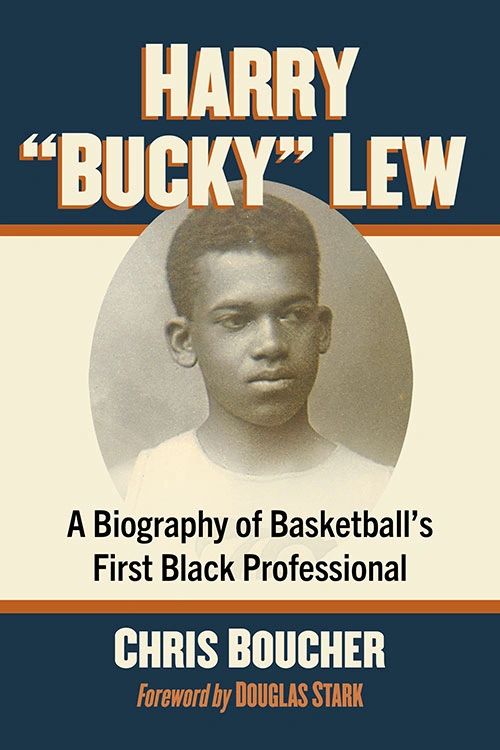
Boucher, 55, of Lowell has written two books about Lew. The young adult novel, “The Original Bucky Lew,” was published in 2023 and the non-fiction “Harry ‘Bucky’ Lew: A Biography of Basketball’s First Black Professional” was published last month.
“He’s not in the Basketball Hall of Fame and I think the ultimate goal would be to get him there,” Boucher said, “because I think he deserves to be there, but we’ll see. It’s not my decision. The most I can do is write about him and talk about him. Hopefully, that helps.”
In 1928, Lew moved to Springfield. He died in 1963 at age 79 and he’s buried about a mile and half from the hall of fame.
After Lew led the YMCA team in Lowell to four consecutive state championships, the press pressured the Lowell team in the New England Professional Basketball League to sign him in 1902 as the first Black player. The team did sign him, but he was told not to expect to play.
At a game in Marlborough, Lowell lost a starter to injury. Lew was the only reserve with the team, but the coach played only four players against Marlborough’s five for a while. The Lowell fans at the game voiced their displeasure so the coach finally inserted Lew. The 5-foot-7 Lew went on to become a valuable addition who was known for his ballhandling, passing and defense. Unfortunately, he had to defend himself against racism as well.
“One newspaper called him his manager’s ‘colored valet,’” Boucher said. “On the road, crowds sometimes tried to shout him off the floor.”
A couple of years later, Harry Hough, the best scorer in the league, led his team in boycotting a game against Lew.
Boucher discovered that once or twice Lew was not allowed to stay overnight with the team on the road.
Lew suffered from a number of injuries and he said later in his life that he was treated rougher than anyone else early on in his career until he proved he could take the punishment.
In 1903, Lew played in the NEPBL and coached at the Lowell Textile Institute, which later became UMass Lowell. Lew played for various teams in New England over the years and in 1915 he became owner of a professional Lowell team. In 1923, he served as head referee in the Lowell City Pro League.
On Tuesday during Black History Month, Boucher discusses Lew and his connections to Worcester and his books will be available for purchase.
Marshall Walter “Major” Taylor, a Worcester resident known as the “Worcester Whirlwind,” set several world records in cycling in the late 1800s and won the 1-mile sprint at the 1899 world track championships to become the first Black American to capture a world title in any sport and the second Black athlete to do so from any country. Canadian boxer George Dixon was the first in 1890.
The Major Taylor statue was erected outside the Worcester Public Library in 2008.
Lew cycled before focusing on basketball and he was inspired as a Black athlete by Taylor. Lew’s hometown paper in Lowell described him as “Harry Lew, the Major Taylor of this city.”

Boucher pointed out that Taylor and Lew both trained at their local YMCAs at a time when most other YMCAs were segregated.
By the way, Lew’s coach at the Lowell YMCA was Worcester native Victor Meister.
Louis Sockalexis, who played baseball at Holy Cross, was another source of inspiration for Lew. Sockalexis became the first Native American to play Major League Baseball when he roamed the outfield for the Cleveland Spiders from 1897-1899. In 1902, he played in the minor leagues for the Lowell Tigers.
That same year, Lew made his pro debut with the Lowell team in the NEPB. Worcester also had a team in the league, but only for two weeks before it moved to Maynard.
In 1915, Lew was awarded ownership of a Lowell team in the new Massachusetts Central Basketball League during a league meeting that was held in Worcester. Lew became player-owner.
Boucher has unearthed information about Lew at the UMass Lowell Library and in old newspaper stories. His latest book cites 600 references and involved years of research. On Dec. 10, 1915, the Lowell Sun published the boxscore from the night before when Lowell lost, 34-22, in Worcester against the Worcester K of C. Lew scored two baskets in the game.
Boucher makes the point that Lew helped pave the way for the Brooklyn Dodgers to integrate Major League Baseball. In 1947 with the Brooklyn Dodgers, Jackie Robinson became the first African American player in Major League Baseball since the 1880s. When Robinson played in 1946 with the Dodgers farm club in Montreal, the Dodgers also started an integrated lower minor league team in Nashua, N.H. Don Newcombe and Roy Campanella, both also Black and who would later both join Robinson in the National Baseball Hall of Fame, played in Nashua that year.
Other cities in the New England League in 1946 had refused to accept Black players, but Nashua Telegraph editor Fred Dobens told the Dodgers that they’d be welcomed in Nashua.
“You might wonder how he knew that,” Boucher said, “Well because in high school he was a basketball star and he played during halftime of Bucky Lew’s games in the city. So he had witnessed firsthand how beloved a figure Bucky Lew was both as a player and as a leader.”
Boucher, 55, and his wife Erica have three sons and one grandson. He is a lifelong basketball fan, but he had never heard of Lew until five years ago. His grandparents moved from Quebec in the 1920s to Pawtucketville, a French-Canadian section of Lowell. After reading a book about the early days of basketball, Boucher researched to find that Pawtucketville long ago had a French-Canadian team. He also discovered that Lew made his pro debut with the Pawtucketville Athletic Club in 1902. Not much had been written about Lew so Boucher, an instructional designer by trade, decided to take on that challenge as a hobby.
The NBA didn’t have any Black players until 1950. That year, the Boston Celtics became the first NBA team to draft an African-American player when it selected Chuck Cooper out of Duquesne. Cooper roomed with fellow rookie Bob Cousy, who has lived in Worcester since he graduated from Holy Cross in 1950.
Boucher credits Lew with taking the first step toward integrating all professional sports.
“He doesn’t get recognized for that,” Boucher said. “He’s treated as more of a footnote than anything else. I’m hoping that changes as a result of my book and what I’m trying to do to promote him because I think he’s way more than a footnote.”
Bill Doyle has been a professional journalist for 47 years, most of them as a sports writer for the Telegram & Gazette. He covered the Boston Celtics for 25 years and has written extensively about golf, boxing and local high school and college sports. He also worked for the campus newspaper when he attended UMass-Amherst. He can be reached at billdoyle1515@gmail.com