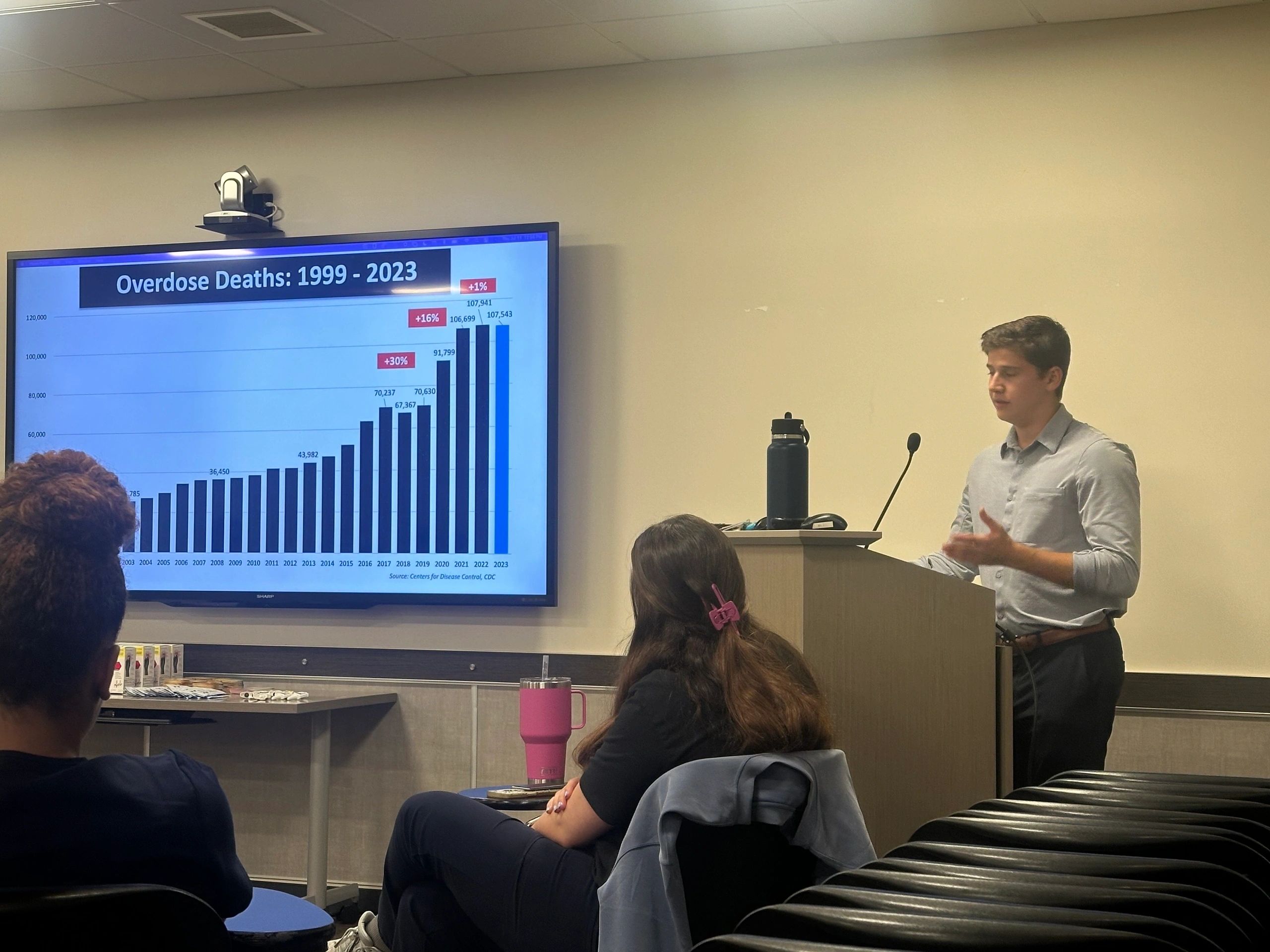
WORCESTER—Massachusetts recorded a 10 percent decrease in opioid-related overdose deaths in 2023 – the most significant single-year decline since 2009-2010.
According to preliminary data from the Massachusetts Department of Public Health, fatal opioid-related overdoses dropped from a record high of 2,357 in 2022 to 2,125 in 2023, with the death rate falling from 33.5 to 30.2 per 100,000 people.
While this reduction represents progress, Dr. Traci Green, a prominent researcher in drug policy and professor and director of the Opioid Policy Research Collaborative at Brandeis University, said: “I’m delighted to see a 10% reduction in overdose deaths, but 10% still puts us over 2,000 in this beautiful Commonwealth. It’s also still very different by race and geography which is not acceptable.”
Green has led a collaborative research effort examining opioid policies and epidemiological patterns, focusing particularly on understanding the evolving drug supply landscape. The complexity of modern drug challenges has necessitated innovative approaches to harm reduction.
“We help support community drug checking,” Green continued. “Many harm reduction organizations, health clinics, and other community organizations are learning to embrace this. This initiative has become increasingly crucial as the drug supply becomes more unpredictable. “The drug supply is toxic, unregulated, and changing a lot. It’s responsive to weather extremes and to changes in supply internationally and locally.”
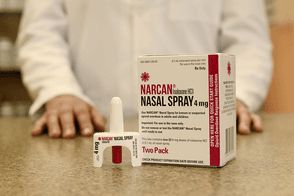
Dr. Matilde Castiel, MD, commissioner of Worcester’s Health and Human Services, explained that the city’s HHS and Division of Public Health are registered naloxone distribution programs. So far, 23 Naloxboxes have been distributed to local community organizations and agencies, and Narcan is resupplied as needed.
A Naloxbox is also located in the back of City Hall for anyone to use, and the city has led training programs on how to use Narcan, as well as works with other agencies on trainings.
Castiel said even with the advancements, there are several areas that could use improvement.
“There is a need for more respite beds for people who are homeless and have medical issues, including addiction,” she told the Worcester Guardian. “Respite beds are an important option for individuals to heal and recover after being discharged from a hospital and are necessary for people who are unhoused and do not have a safe space to recover. There is a need for more shelter beds for both sober and non-sober people. We also need more harm reduction management in shelters and in our community.”
Castiel added that improved access to medical and behavior healthcare for all is necessary, and that these days, the wait for a primary care provider can be up to a year in some cases. The insurance costs, too, have increased dramatically.
“The city is consistently working on partnering with the state and developers to create more affordable and permanent supportive housing,” she added, “but due to rising costs and supply chain issues, developments have been delayed.”
In Worcester, the situation has grown more complex with the emergence of non-opioid substances. Green revealed that “the drug supplies become more complex with other non-opioids, such as sedating drugs like Medetomidine, a veterinary sedative. This means that people aren’t responsive in the same way to Naloxone after they have taken a drug like this.”
“The state has done a great job in this arena in the past several years,” said Domenic Corey, director of operations at Brewster Ambulance. “We’ve seen a lot of progress, so we need to keep up the momentum. Narcan is more accessible, sold over the counter now, and people can get it outside of just a pharmacy.”
Corey said that Brewster partners with communities and offers community education “focused on everything,” including Narcan access and use.
“When we respond to calls that involve overdoses,” he said, “we not only help to manage the patient, but we have conversations with the patient’s family, friends, or bystanders.”
Jamie Sanislow, who founded Northeastern University’s Naloxone Outreach and Education Initiative (NOEI) with close friends Skylar Kohn and Yotam Saban, added, “Reducing the stigmas is important. People that know someone who has struggled with addiction know what it’s like and know what that person becomes. When we talk about people solely by their addictions, it ends up creating more barriers to seek treatment.”
Innovation in treatment delivery has emerged as a crucial component of the state’s response. Brittany Chapman, associate director of the Overdose Prevention Fund at UMass Memorial Health, described their evolving mobile service: “We have a mobile addiction service called Road to Care which has been generously funded by the Bureau of Substance Addiction Service and the Kraft family foundation. We’ve been able to engage people who due to previous adverse experiences in a hospital-based setting, we can more easily engage them in care.”
According to Chapman, the initiative has recently expanded its reach. “We just got a big grant for a hospital-based substance use disorder program. It will allow us to expand our touchpoints with patients who present to our hospitals with substance use disorders,” Chapman added.
Local organizations including AIDS Project Worcester, UMass Memorial’s mobile van, and Spectrum have formed crucial partnerships to enhance treatment accessibility. Green noted that universities and transportation hubs could play additional roles in expanding access to life-saving resources.
Despite these advances, challenges remain. Green pointed out that “in Worcester, syringe access is only available to the city and not to the rest of the county, which is a real point of contention for the community organizations that end up collecting syringes outside of Worcester city but can’t provide them back.”
However, the overall trajectory shows promise, according to health officials and researchers. “The natural progress of addiction is that people recover,” said Chapman. “They get better. Naloxone gives us more time. Even though some people view it as enabling, it gives people time so they can recover.”
This sentiment was echoed by Sanislow: “If you don’t act in a critical situation and give Narcan, that person is probably going to die. It’s an amazing thing to see when you rescue someone by using Narcan. People don’t always do things that are in their best interest. But just by putting more Narcan in the hands of everyone, whether that be someone who’s going to a party, someone on the street, whatever it may be, it will be beneficial.”