
Worcester’s first proposed $1 billion budget moved one step closer to approval Tuesday night, but not before city councilors signaled they want far more scrutiny over how that money will be spent.
After several hours of discussion, the city council voted to file one agenda item and advance the city’s major budget measures into the next phase of the annual budget process, referring them to the Finance Committee for review and public hearings in the weeks ahead.
The proposed FY27 budget represents a historic financial milestone for Worcester, with projected revenues and expenditures totaling approximately $1 billion for the first time in city history. City officials framed the spending plan as both a reflection of Worcester’s continued growth and a response to mounting costs tied to education, infrastructure and city services.
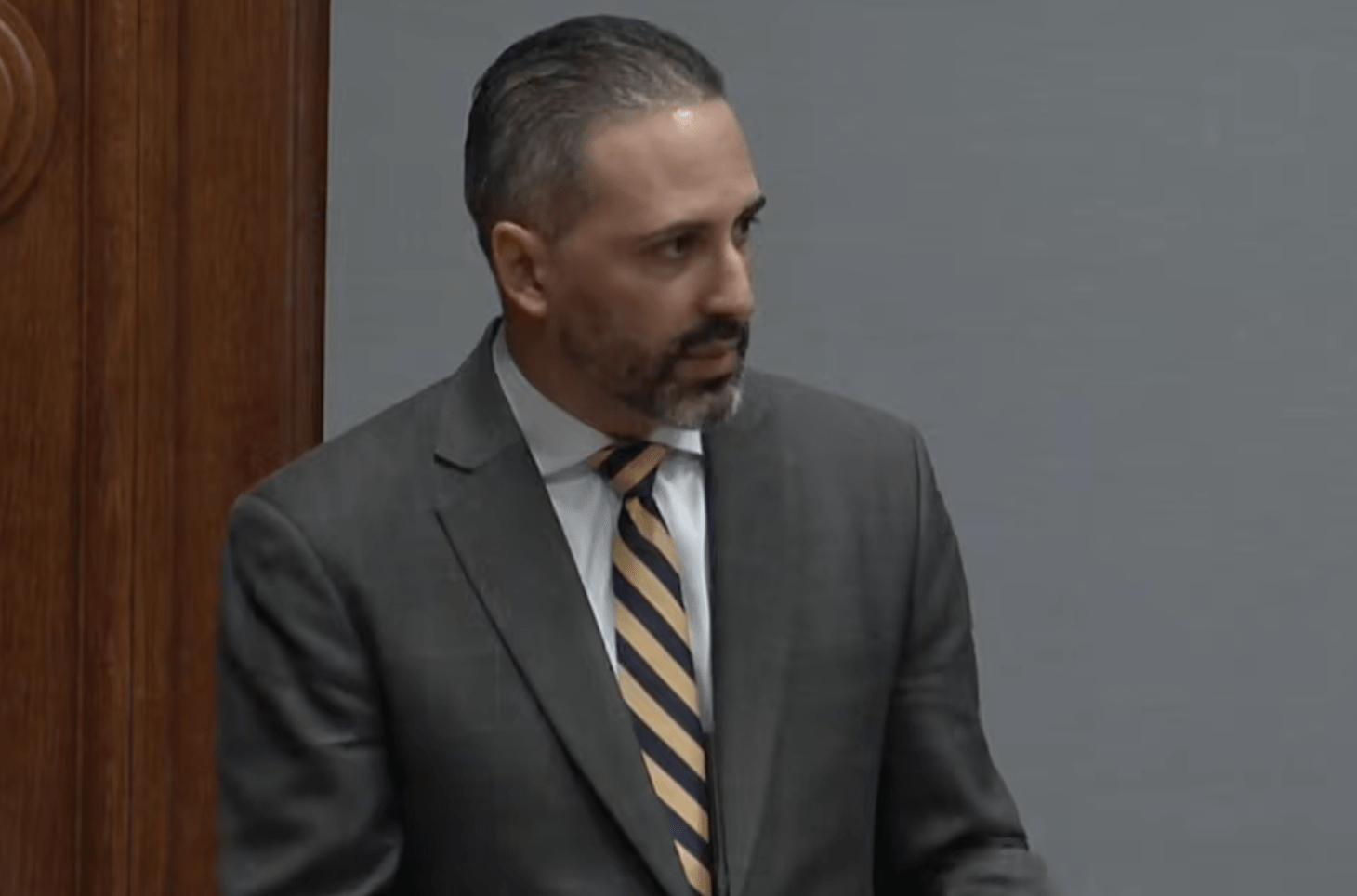
City Manager Eric Batista emphasized that despite the scale of the proposal, Massachusetts law requires municipalities to maintain balanced budgets every year.
“The budget is broken down in three components,” Batista said. “It’s important for everyone to know that every municipality across the entire state of Massachusetts is required to provide and present a balanced budget, which means your revenues and expenses, they have to even out every single year. This year we have a 4.5% increase of those revenues.”
Those revenues are driven primarily by property taxes, state aid and local receipts, with state education funding playing a central role in the overall increase. Batista pointed to a 6.3% increase in state education aid—about $26 million—as a major factor shaping the budget, along with more modest gains in local aid.
Much of that revenue growth flows directly into education spending, which continues to dominate the city’s budget. The proposed $612 million education allocation accounts for more than 61% of total spending, a figure Batista said reflects both state requirements and local priorities.
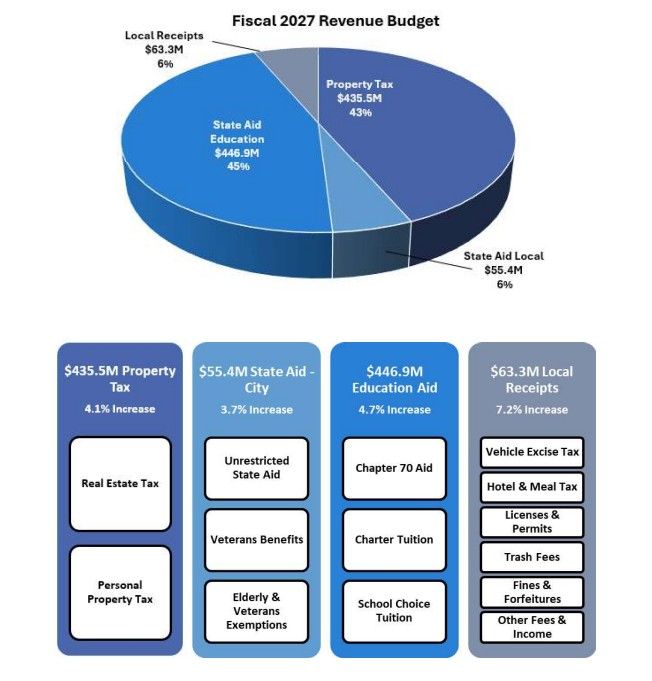
“The biggest impact and the biggest increase is the general fund for the Worcester Public Schools, which is $31.7 million, that’s 6%,” Batista said. “However, it is important to note … this is the last year of the Student Opportunity Act … which will now create the base of that budget moving forward for the municipality.”
That tension — a budget shaped by both opportunity and constraint — carried through much of the council’s discussion.
Councilor Gary Rosen questioned whether the city has adequately explored reducing spending, pointing to the overall scale of the budget.
“Year after year, I don’t even remember a city council cutting the budget,” Rosen said. “This is a thousand times a million dollars. What would happen if we cut the budget by a million dollars?”
Others stressed the need to balance competing priorities rather than focus solely on cuts. Councilor Satya Mitra described the process as inherently collaborative, while tying it to broader ambitions for the city.
“Budget is a matter of compromise in my mind,” Mitra said. “We like to see that the money is used for what is best for our city, for the residents.”
Mitra added that the budget should ultimately support Worcester’s long-term trajectory.
“It may be second largest city [in the Commonwealth],” he said, “but we could be the best by creating a culture, by making this city safer, making this city affordable, making this city more comfortable, and making this city so attractive that we can fetch in many business owners… and making this city to be having more jobs. And that’s the ultimate goal.”
Education funding, despite its size, remained a focal point of concern.
Councilor and Vice Chairman Khrystian King said he has heard from educators and families who believe more investment is needed.
“I heard representation from the administration that there’s around 30 or so million dollar increases for Worcester public schools through the last phasing of the state legislation,” King said. “I received a number of emails from educators asking for more funding from the city of Worcester.”
He added that the funding levels could have real consequences for students.
“I will say it will have an impact on these young folks … and there will be a loss.”
Councilor Robert Bilotta raised a more specific concern regarding a relatively small increase tied to special education.
“Talking about the $30,000 increase for special education, I find this to be a very small number. It’s very concerning,” Bilotta said.
Chief Financial Officer Timothy McGourthy clarified the figure reflects a statewide assessment, not local program spending.
“These are numbers that come from the state. It’s not reflective of special ed costs here within the city of Worcester, but is an assessment against the city of Worcester for its share of special ed transportation costs. … The overall budget statewide is only about $3 million for this special ed cost.”
Beyond education, the administration pointed to economic development as a key area of focus. Batista highlighted the addition of a new position aimed at supporting small businesses, describing it as part of a broader effort to strengthen Worcester’s economic base.
“To reinforce and support our renewed focus on small business support, we’re adding a targeted position in economic development to support our small businesses,” Batista said. “This has been an important position that’s been discussed in this council body… and in conversations with the business community as well.”
Councilor Tony Economou supported the move.
“Adding that position in economic development for small businesses, I think this is the perfect opportunity for our city to become a leader in shepherding small businesses back into the city,” Economou said. “I think a position of that type would benefit us in the long run… and just stabilize the overall economy.”
While the operating budget drew most of the discussion, the council also referred the city’s proposed $43.47 million loan order tied to the FY27 capital budget. That plan includes major investments in infrastructure, public safety facilities and schools, reflecting a broader push to address long-standing needs while preparing for future growth.
The referrals now move Worcester’s proposed operating and capital budgets into the city’s annual finance committee hearing process, where councilors spend the coming weeks reviewing departmental spending plans, capital projects and revenue assumptions before final adoption.
For now, Worcester’s $1 billion budget remains under review—shaped by competing priorities, rising costs and the understanding that the most consequential decisions will likely come in the weeks ahead.
Matt Olszewski can be reached at mattoskier@gmail.com
