
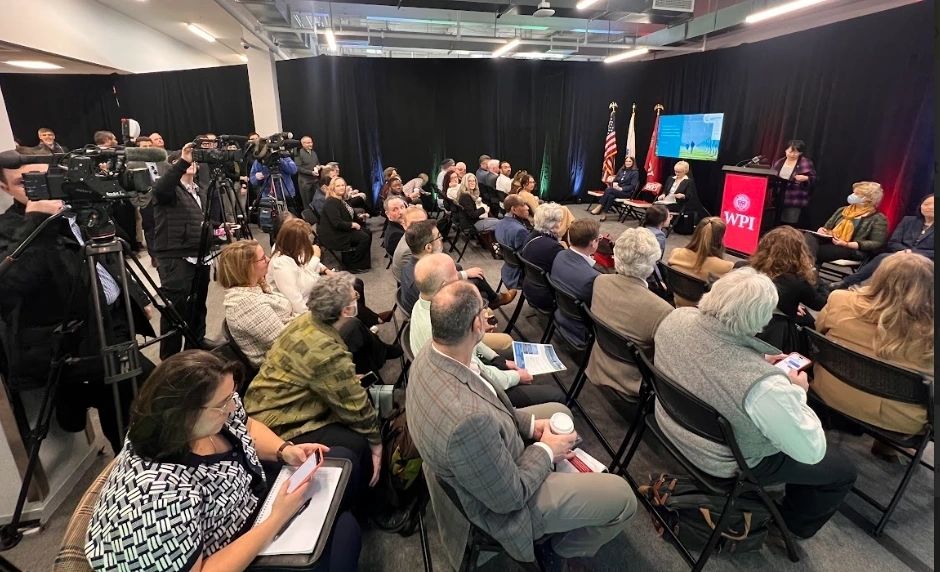
WORCESTER— Massachusetts—and Worcester in particular—is taking bold steps to cement its position as a global leader in climatetech innovation. The Massachusetts Clean Energy Center (MassCEC) just unleashed a comprehensive economic development strategy outlining a 10-year roadmap to grow the state’s climatetech sector, create thousands of jobs, and drive equitable economic expansion across all regions.
Announced Tuesday at Worcester Polytechnic Institute’s Sagamore Labs, the Massachusetts Climatetech Economic Development Strategy & Implementation Plan was developed in collaboration with the Executive Office of Economic Development and is supported by the recently enacted Mass Leads Act.
The plan builds on Massachusetts’ reputation as the nation’s top state for climatetech startups per capita and its standing as the second-largest climatetech hub in the country.
“Our economic development bill provides historic funding to make Massachusetts the climate innovation lab for the world,” said Governor Maura Healey in the announcement. “MassCEC’s climatetech economic development plan is our roadmap to achieve this goal by investing in cutting-edge technologies, tapping into regional strengths, and attracting world-class talent.”
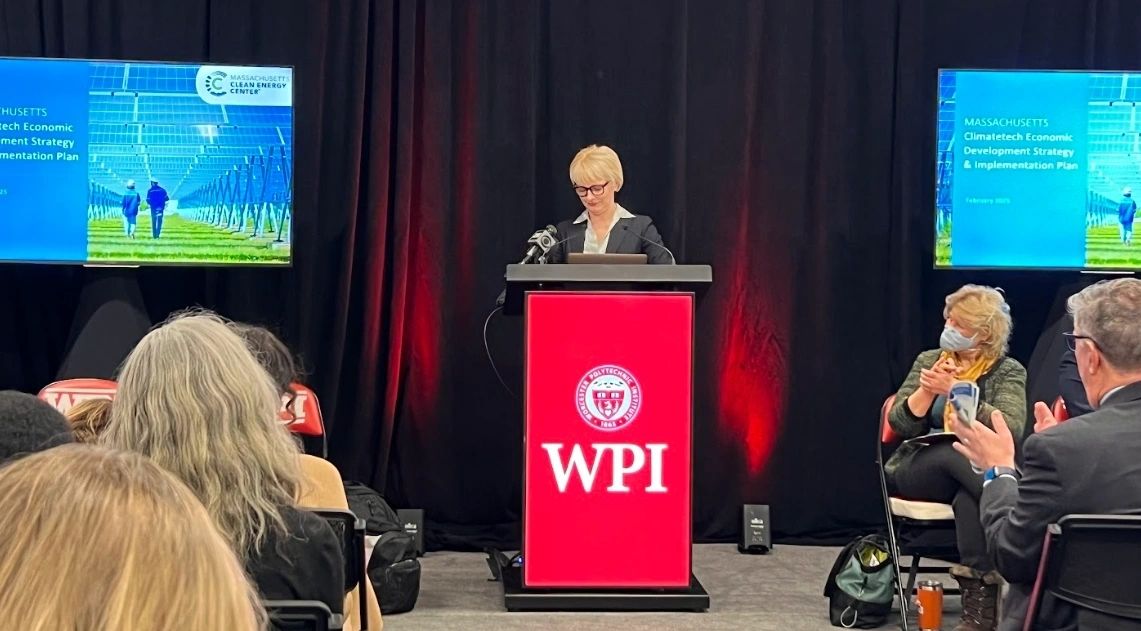
The strategy emphasizes Massachusetts’ unique opportunity to accelerate the commercialization of climate solutions, as 34% of the emissions reductions required to achieve global net-zero goals depend on technologies not yet widely available. If successfully implemented, the plan projects Massachusetts could support over 1,300 climatetech companies, create 35,000 jobs, and train 25,000 workers over the next decade.
Regional climate corridor
A key component of the strategy is the creation of a statewide Climate Corridor to leverage the strengths of different regions:
- Berkshires: AgTech leadership and climatetech supply chain contributions.
- Pioneer Valley: Industrial climatetech manufacturing, benefiting from affordable renewable energy and strong workforce.
- Central Massachusetts: Innovation hub for energy storage, biomanufacturing, and industrial decarbonization.
- Northeast Massachusetts: Advanced climatetech manufacturing and offshore wind supply chain.
- Greater Boston: R&D epicenter for climatetech innovation and startup development.
- Southeast Massachusetts and Cape Cod: Offshore wind and ocean innovation economy.
“Massachusetts is home to a dynamic innovation ecosystem with expertise in the commercialization of new technologies and is already a recognized leader in climatetech,” said Massachusetts Climate Chief Melissa Hoffer in the announcement.
Key actions
The plan outlines several initiatives to support Massachusetts’ climatetech ambitions:
- Business support: Connecting climatetech companies with resources to scale operations.
- Investment growth: Expanding funding opportunities, grants, and tax incentives.
- Infrastructure development: Creating a statewide testing and demonstration network.
- Market-building: Stimulating demand for emerging technologies and supporting green procurement.
- Workforce training: Expanding career pathways through targeted programs.
- Strategic promotion: Raising Massachusetts’ profile as a global climatetech leader.
MassCEC CEO Emily Reichert highlighted the significance of the plan, calling it a blueprint for maintaining Massachusetts’ leadership in climate innovation. “With its focus on fostering regional collaboration, scaling innovation, and ensuring equitable access to economic opportunities, this plan will solidify the Commonwealth as a leader in tackling the world’s most pressing climate challenges,” Reichert said in the release.
State leaders, including Secretary of Economic Development Yvonne Hao and Secretary of Energy and Environmental Affairs Rebecca Tepper, echoed the plan’s potential to strengthen Massachusetts’ economy while advancing climate goals.
For more information and to access the full strategy, visit MassCEC’s website.
