
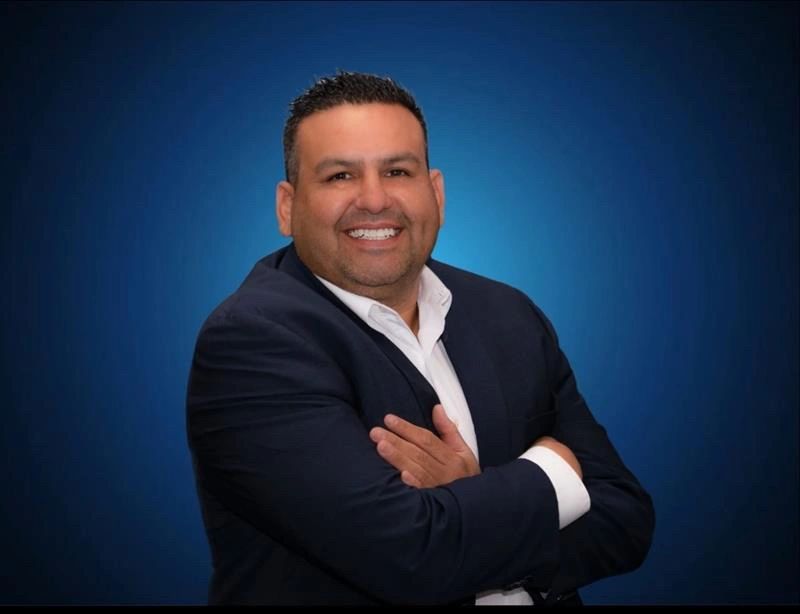
WORCESTER—When Alejandro “Alex” Guardiola Jr. looks back on his time on the Worcester School Committee, he points to transparency and accountability as his proudest accomplishments.
“I’m most proud of bringing more transparency and accountability to the district’s decision-making,” Guardiola told the Worcester Guardian. “For example, I pressed the administration for more detailed reporting on staff absences, because families and taxpayers deserve to know how often classrooms are being covered and whether students are receiving consistent instruction. That kind of detailed data wasn’t being shared before and by pushing for it, we’ve opened the door to identifying patterns and developing solutions. To me, that’s what public service is about, making sure decisions are rooted in facts and that we’re accountable to the community.”
A lifelong Worcester resident and product of the city’s public schools, Guardiola won the District D school committee seat in 2023 (when he also ran unopposed). He balances the committee role with leadership positions in government affairs and nonprofit organizations, most recently founding his own strategic consulting firm Guardiola Strategic Group. His professional experience has shaped his approach to education policy, he said.
“My professional background has taught me how to navigate complex policy issues, balance budgets and build coalitions,” he said. “On the school committee, I use that same approach: ask tough questions, analyze budgets carefully and make sure decisions are guided by both data and community input. That perspective allows me to balance vision with pragmatism, which is essential when you’re dealing with something as critical and complex as public education.”
>>>>>More election coverage here: Worcester’s 2025 election
For Guardiola, the most pressing priorities in Worcester schools remain academic excellence and student well-being. “We’re still feeling the aftershocks of the pandemic, students struggling with learning loss, chronic absenteeism, removal of the MCAS as a graduation requirement and the social-emotional toll of the last few years,” he said. “My focus is on expanding evidence-based literacy programs, tutoring and mentoring opportunities, while also making sure students have access to counseling and wellness supports. If students aren’t healthy and supported, they can’t learn, and if they don’t have strong academics, they won’t thrive. Those two areas go hand in hand.”
He also highlighted closing opportunity gaps for students as a critical challenge. “Worcester is a diverse, vibrant city, but not every child has equal access to rigorous academics, enrichment opportunities, or career pathways,” Guardiola said. “One step I’d take is expanding career-connected learning. Whether a student is interested in STEM, health care, trades, or the arts, we should be offering pathways that prepare them for success after graduation. When students can see a direct connection between their education and their future, engagement goes up and achievement follows.”
Guardiola says he makes it a priority to engage directly with families, teachers and students. “I get out into the community, whether it’s PTO meetings, school concerts, sports events, or neighborhood gatherings,” he added. “Those informal conversations are often the most valuable, because people feel comfortable speaking candidly. I also keep open lines of communication through phone, email and social media, so families know they can reach me directly. And I think it’s especially important to hear from students themselves. I attend youth forums and meet with student leaders, because their perspective is often the clearest window into how our policies are playing out day to day in the classroom.”
On controversial decisions such as the school committee’s 8–1 vote to appoint Deputy Superintendent Brian Allen as superintendent without a formal search, Guardiola defended the choice, noting the importance of timing and continuity.
“Brian Allen brings decades of experience in Worcester,” he said, “and he has a deep understanding of both the operational side and the academic priorities of our schools. That kind of institutional knowledge is invaluable and it gave me confidence that he could step into the role seamlessly and provide stability when our students and staff needed it most.”
As a first-generation Latino and single-parent family member, Guardiola said his commitment to education hits at a deeply personal level.
“My mother worked hard to give my brother and I as many opportunities as possible, and she instilled in us the belief that education is the great equalizer,” he said. “That belief has guided my entire career, whether in civic leadership, nonprofit work, or public service. I decided to run for the school committee in 2023 because I wanted to give back to the community that gave me so much, and to make sure every child in Worcester has the same chance to succeed that I did. That passion still holds true and why I am running for reelection this year. Public service, for me, isn’t about titles, it’s about lifting people up and building a stronger city for the next generation.”
This article is part of the Worcester Guardian’s 2025 election coverage. As part of our ongoing series, we are publishing individual candidate profiles and stories related to key issues facing the city ahead of the Nov. 4 municipal election. We have reached out—or are in the process of reaching out—to every candidate running for Worcester City Council and School Committee. If you are a certified candidate and would like to ensure you are included, please contact us at carsenault@theworcesterguardian.org.