
WORCESTER—With one of the most competitive rental markets in the country, Worcester is pushing forward on several major housing developments aimed at addressing a citywide affordability crisis.
In February 2025, Worcester home prices were up 6.5% from the previous year, with a median sales price of $453,000, according to Redfin. Homes are selling faster, too, lasting an average of 23 days on the market compared to 27 days the year before. Meanwhile, the city’s rental vacancy rate has dropped to just 1.7%, with median rent now at $1,995.
To meet demand, city officials and developers are leaning into large-scale redevelopment projects that focus on affordability, accessibility and mixed-income housing.
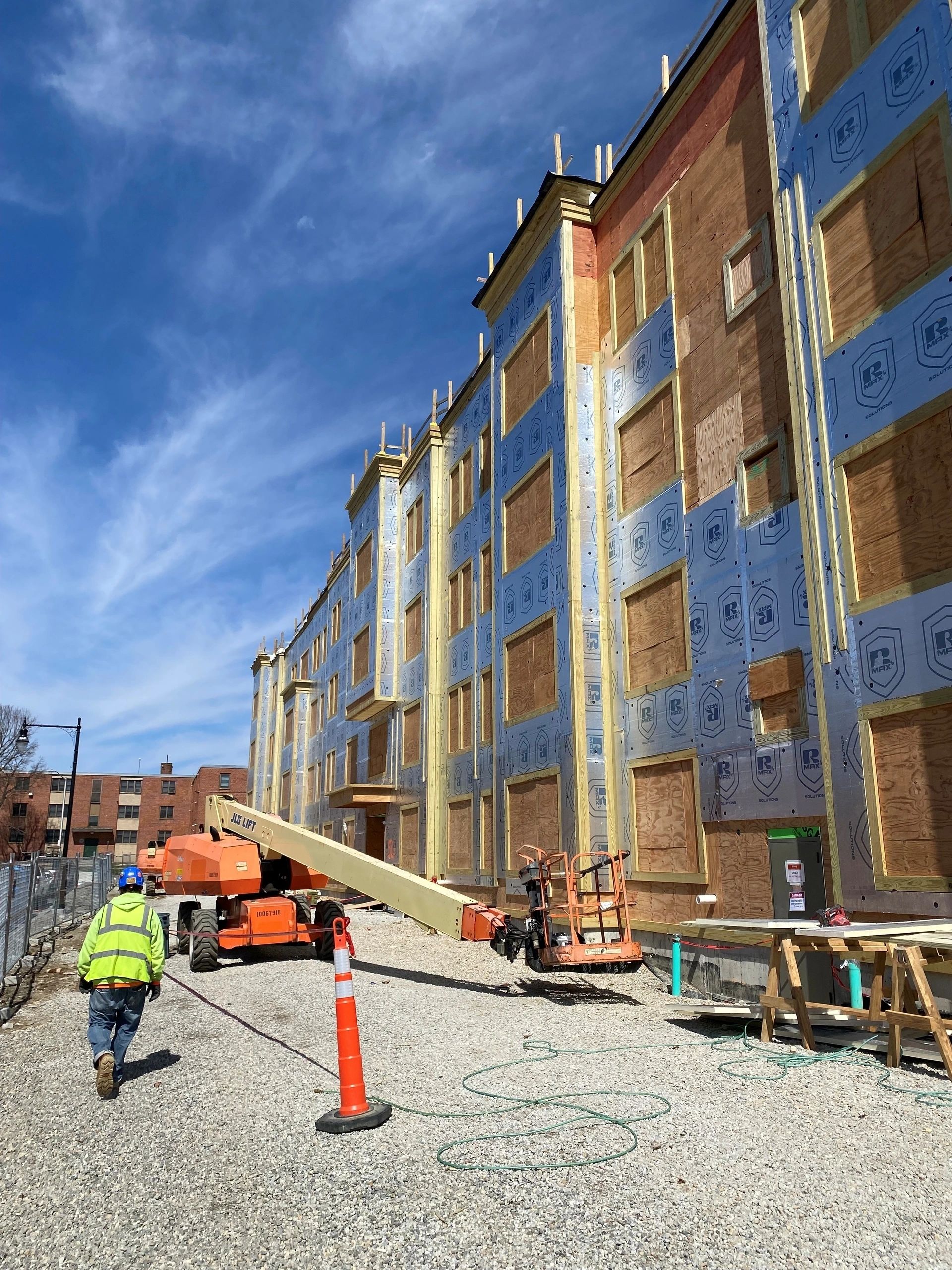
One of the largest projects underway is the redevelopment of the Curtis Apartments, a 1950s-era public housing complex being transformed by Trinity Financial into a modern, mixed-income community.
“We are right in the middle of construction on phase one, which is going great,” said Mike Lozano, vice president of development at Trinity Financial. “We’re getting close to topping off the first building, and the second building is right behind it.”
The $98 million first phase increases the total number of units from 372 to 527. It’s expected to wrap by late 2025, with future phases including affordable homeownership options.
At Lakeside Apartments, a separate redevelopment by the Worcester Housing Authority is also underway. The WHA plans to demolish and rebuild the aging 202-unit complex, replacing it with about 350 new units.
“Phase one consists of us demolishing 48 apartments and then we’re going to be constructing about 130 new apartments,” said WHA CEO Alex Corrales.
A top priority, Corrales said, is increasing accessibility. “There is a large need for more wheelchair accessibility. One of the things we’re going to be able to do is increase that to go from two to up to 30 to 35 wheelchair accessible units.”
Worcester resident Patricia Hobbs has pushed for even more focus on accessibility in new housing. “All of the buildings that are being designed to include retail space at street level should instead be dedicated to accessible housing — at least until the need levels are met,” she said. “Part of the Affordable Housing Trust Fund should be earmarked for Accessible Housing.”
Near Polar Park, the new District 120 apartment community is adding a mix of market-rate and affordable units. Rich Mazzocchi, principal at Tremont Development Partners LLC, credited the city’s policies. “The city does a very nice job of advocating for more affordable housing stock, and so we were very fortunate to have this.”
Still, developers are facing economic headwinds.
“Everybody knows that the economic world is in turmoil right now,” Lozano said. “It’s hard to predict where we are on a given day and where we’re going to be a year from now.”
Resident Maureen Schwab acknowledged the pressures but also pointed to labor practices. “Developers probably have little to no control over the price and availability of supplies and labor. They do have an obligation to practice fair labor policies and practices.”
Peter Dunn, the city’s chief development officer, noted ongoing policy work: “The policies and initiatives we have in place such as inclusionary zoning, deed-restricted affordable housing, and new tools for affordable housing investments like the Affordable Housing Trust Fund are helping to balance the development of housing opportunities for households of all income levels.”
A proposed state bill could bring even more change. The Massachusetts Housing Freedom Act, created by Newton resident Josh Lewis, aims to add 300,000 new units statewide over the next decade. It would assign specific production goals to each municipality and expand multifamily zoning near transit and colleges.
“Worcester would be assigned a housing production goal based on its population and its unmet housing need,” Lewis said. “It would essentially be mandated to produce those units.”
For Worcester, the requirements would allow four units on every lot, and permit higher-density housing near schools like WPI and Clark University, as well as commuter rail stations.
The bill also proposes streamlining permitting and limiting the use of historic or environmental reviews to block projects.
“Housing is more than a rented space — it is a home,” said Hobbs. “The strength of a city is measured by how many people put down roots and plan to stay.”
Matt Olszewski can be reached at mattoskier@gmail.com