
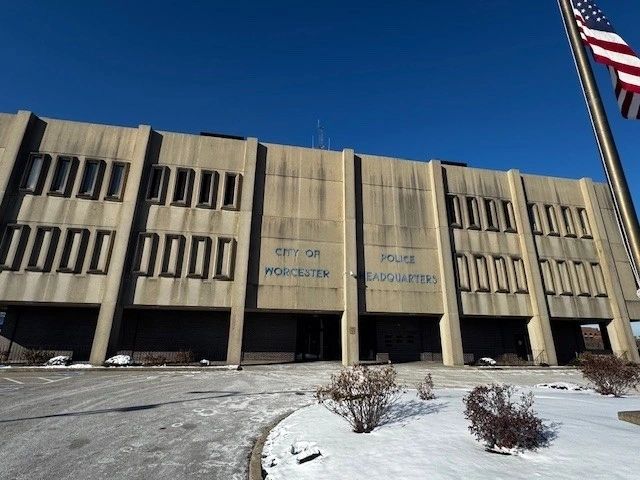
WORCESTER—Worcester is set to implement a significant change in its police leadership selection process following approval to exempt the chief and deputy chief positions from the civil service system. Effective March 1, 2025, the change marks a departure from the traditional hiring practices that have shaped police leadership appointments for decades.
This exemption, included in a $4 billion economic development package, grants Worcester greater autonomy in selecting its top police officials.
“Initiating this process was important to me because I am committed to taking realistic steps that will make meaningful and measurable change to city departments and ensure our government represents Worcester’s diverse community,” said City Manager Eric Batista. “Exempting the department’s top positions from civil service would allow me to select candidates who are the best suited for the positions and to serve the city based on their experience and leadership abilities, without the restrictions of civil service.”
The traditional civil service system relies heavily on standardized testing and state-managed eligibility lists for leadership appointments. While designed to ensure merit-based selection and prevent political influence, critics argue the system limits the candidate pool and fails to account for essential leadership qualities beyond test performance.
Paul Matthews, executive director and CEO of the Worcester Regional Research Bureau, highlighted the factors behind the change. “In terms of what went into this,” he said, “it included both in 2021 a recommendation from the Diversity and Inclusion Advisory Committee, and also in March 2024 the racial equity audit of the Worcester Police Department. As a result of these reforms, it’s expected that 24 municipalities, including Worcester, are going to be exempting such positions in their police and fire departments.”
Supporters of the change cite several benefits. The new system broadens the candidate pool by considering individuals from outside traditional civil service pathways, potentially increasing leadership diversity. It also offers flexibility to select leaders with skills suited to Worcester’s specific challenges. The shift aligns with recommendations from the racial equity audit, which identified systemic barriers to leadership advancement for officers of color.
“The racial equity factor is the driving force in the city manager’s decision and adds to the complication of the situation,” said Patricia Hobbs, a Worcester resident and former state employee at the Department of Transitional Assistance.
“If the pool of candidates is not diverse enough,” she continued, “perhaps requesting a special adjustment to the job description to expand for BIPOC candidates might be a better start rather than truncating the current system for the top two positions to be open to a nationwide search.”
However, the decision has also raised concerns among some stakeholders. Police unions have expressed mixed reactions, with some members worried about losing civil service protections against political influence.
Critics argue that the civil service system provides safeguards against favoritism and ensures a standardized evaluation process. The New England Police Benevolent Association Local 911, representing patrol officers, cautioned that exiting the civil service system entirely would require additional funding to develop new tests, hire more human resources employees, and negotiate with unions to preserve existing protections and grievance procedures.
“Police officers have a difficult job, and in all fairness to candidates, they should know what is expected of them, which in a way the exam explains,” said Maureen Schwab, a Worcester resident and friend of Hobbs. “Orientation and training of a candidate is probably a long, expensive process, and I would think you want candidates who are ready to make a commitment.”
The financial implications of the change remain uncertain. While the exemption currently applies only to two positions, any future expansion to other roles would require careful consideration of funding and union negotiations.
City officials have emphasized their commitment to maintaining transparency and fairness in hiring practices.
“The city is achieving significant progress,” Matthews noted. “I just learned that the 2024 police academy class had 45% people of color as members. So, the city is moving in the right direction, and this is part of the overall plan.”
As municipalities nationwide reassess their police department structures and hiring practices, Worcester’s approach may serve as a case study for other cities considering similar changes.
The impact of the new system will become clearer after March 2025, as the city makes its first appointments under the revised hiring process. The success or challenges that emerge could influence other Massachusetts municipalities contemplating civil service exemptions for police leadership positions.
While representing a significant shift in police administration, the change affects only top leadership roles, leaving most department positions under civil service regulations. Any broader modifications would require further discussion and stakeholder input.
Matt Olszewski is a freelance content and news writer based in Boston, MA. In his free time, Matt enjoys running, hiking or skiing. Matt just graduated with his MPH from Tufts University. He can be reached at mattoskier@gmail.com
- The Worcester Guardian is an independent nonprofit news organization. Support local journalism by making a DONATION today.