
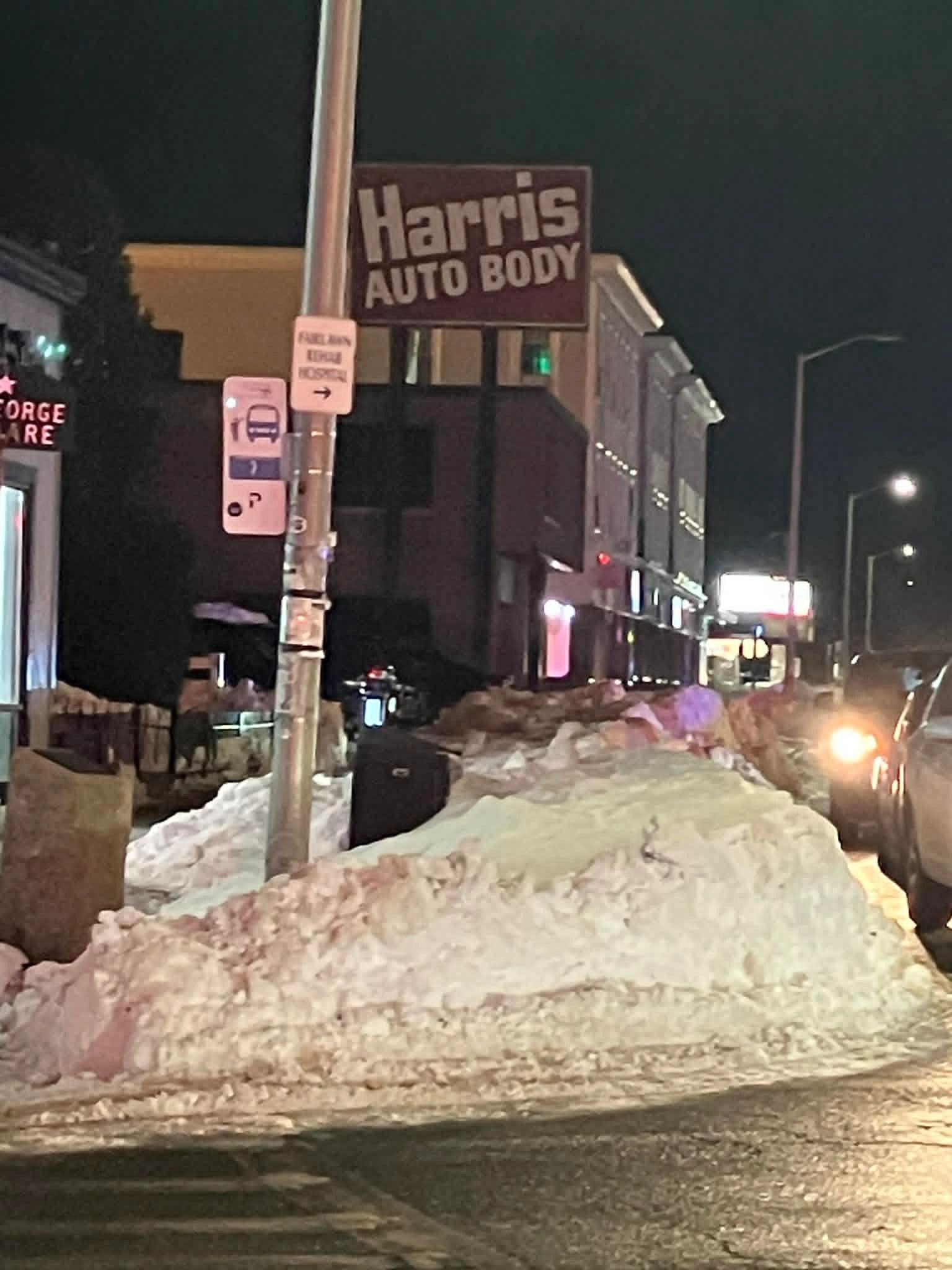
WORCESTER — Long after plows clear city streets, many Worcester residents say winter storms leave a quieter hazard: sidewalks and bus stops that remain buried, icy or impassable, forcing pedestrians into the street.
The issue drew renewed attention after January’s snowstorm, which dropped more than 22 inches and required days of continuous snow operations. While main roadways were eventually widened and treated, advocates and residents say sidewalk clearance — particularly near bus stops and curb cuts — has lagged, creating safety and accessibility challenges.
William Talbot is an associate planner at the Central Massachusetts Regional Planning Commission and leader of Strong Towns Worcester, a nonpartisan volunteer movement focused on building a resilient, walkable city. He said sidewalks and bus stops should be treated as essential infrastructure.
“All the parts of them that are owned by the city are part of the city’s responsibility, and in the public interest to continue to maintain,” he said.
Talbot added that while property owners clear sidewalks abutting their properties, the city has a role where pedestrian access intersects with public transit.
City officials say the challenges are compounded by staffing and resources. According to city reports and recent City Council coverage, Worcester’s $6 million snow removal budget allocates $5.5 million to operations and about $500,000 for capital upgrades, including 10 new pieces of equipment purchased in the past year. The city also relies on more than 300 private contractors, compensated at rates reported between $115 and $185 an hour during major storms.
In a memo to the council, City Manager Eric Batista detailed the scale of Worcester’s winter operations during the Jan. 23-26 storm, one of the largest snow events in city history. The Department of Public Works deployed 72 municipal plows alongside 290 private contractor plows and six MassDOT units, with crews working approximately 32 continuous hours at the storm’s peak.
The memo said operations prioritized main roads for emergency vehicles and transit before addressing secondary streets. It also cited limited staffing, prolonged subfreezing temperatures that reduce deicing effectiveness, winter parking violations and snow shoveled back into streets by residents as factors affecting post-storm conditions.
Advocates say those challenges do not fully reflect pedestrian experiences, particularly for residents with limited mobility.
“People who need to go into work and people who need to get to work on time — it can be a bigger challenge,” Talbot said.
Residents echoed those concerns. John Yanczewski, a District 4 resident, said poorly cleared sidewalks can push pedestrians into unsafe situations.
“I see so many homes with sidewalks not shoveled or snowblowed. So you end up walking in the snow or in the street,” he said.
City fines for failing to clear sidewalks start at $75 and increase for continued noncompliance.
Nancy McMillan, a Worcester resident in her 70s, said unshoveled sidewalks pose a safety risk. “Snow and ice build-up make them dangerous,” she said, adding that she would like the city to enforce regulations more effectively and provide an easier way to report violations.
“While residents are required to clear sidewalks within 10 hours of a storm, enforcement is largely complaint-driven,” Batista said. “Fines start at $75 per violation, but with more than 1,000 vehicles violating winter parking bans during recent storms, consistent enforcement is difficult.”
Bus stops are a particular concern. Andrew Marsh said that even when streets are cleared, access to public transit can remain limited. “Sometimes bus stops that are directly adjacent to sidewalks aren’t shoveled at all, forcing riders to trudge through the snow banks to board,” he said.
The city manager’s memo did not provide specific data on sidewalk or bus stop clearance, but said the Department of Public Works continued post-storm operations for more than 10 days, including responding to 311 work orders and refreeze conditions. Staffing levels, trash collection duties and contractor availability also affect response times beyond primary roadway needs.
The City Council at its Feb. 10 meeting approved the transfer of $1 million to cover contractor costs tied to the January storm cleanup.
Talbot acknowledged operational limits but said priorities matter. “I do think a lot of the major roads for cars and buses are cleared decently well in the city. Some of the side roads aren’t as much.”
DPW Commissioner John Westerling said the city is evaluating other municipalities’ policies and ordinances to improve operations. He noted staffing concerns, saying inspectors were sometimes assigned to plows because of limited resources.
“The city has invested in new pretreatment equipment and is training staff to obtain commercial driver’s licenses to operate plows more efficiently,” Westerling said. “We’re evaluating other cities’ policies to improve our operations and address pedestrian and transit accessibility alongside street clearing.”
Matt Olszewski can be reached at mattoskier@gmail.com