
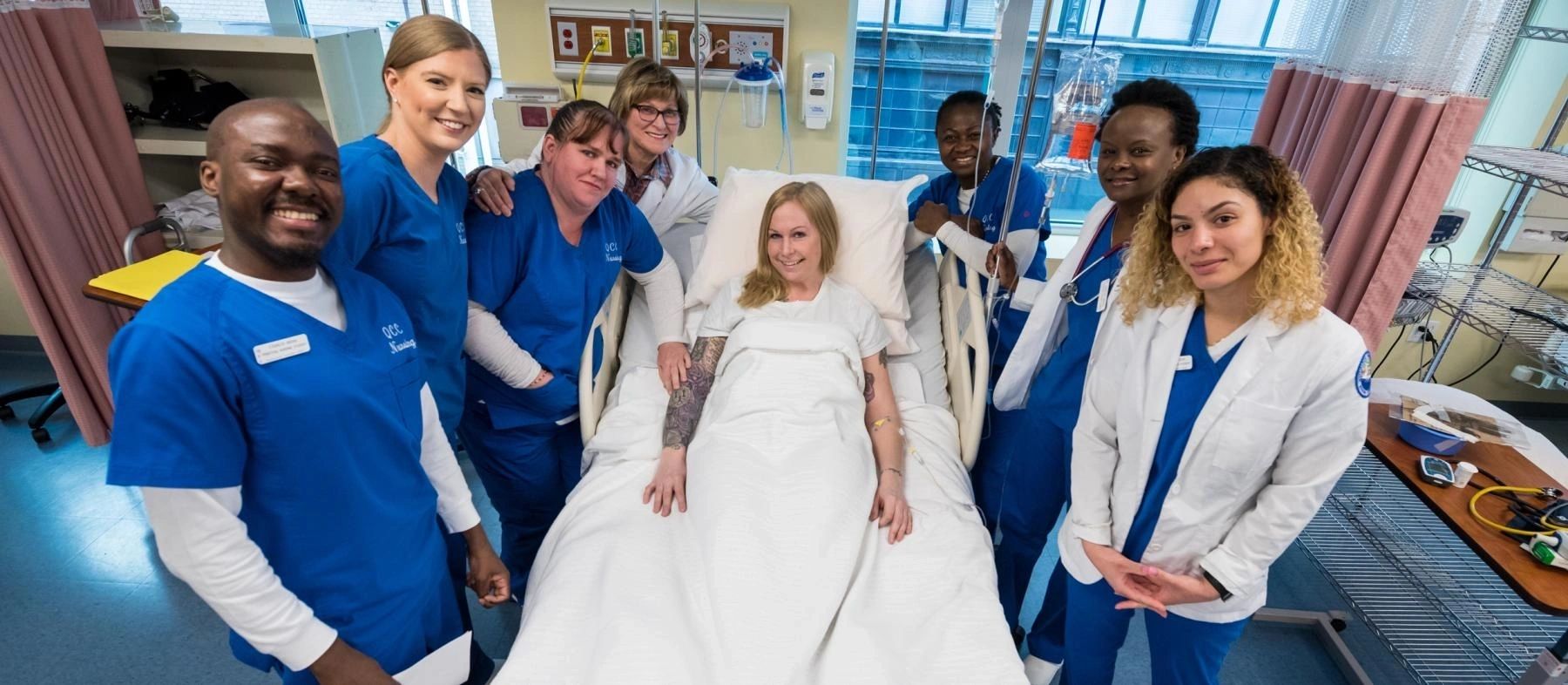
WORCESTER—Over the past year, nursing graduates from Quinsigamond Community College (QCC) achieved bigtime success on the National Council Licensure Examination (NCLEX), with near-perfect pass rates in both the Associate of Science in Nurse Education (ADN) and Practical Nursing Certificate programs.
According to QCC, 97.5% of its 2024 Practical Nursing graduates passed the NCLEX, while 97% of ADN graduates also succeeded. These results underscore the college’s commitment to preparing students for the demands of the nursing profession.
“Our faculty members are incredibly dedicated and continually align course learning outcomes with the resources we provide, ensuring that students benefit from all available supports,” said Pat Schmohl, dean of the School of Healthcare, in a statement.
QCC alum Pamela Lara, who passed the NCLEX in 2024 and is now employed as an RN at UMass Memorial Health, credited the program’s faculty for their guidance.
“I encourage people to look at QCC. They have been extra helpful and everyone works together,” Lara said. “There was constant communication, and they held us accountable.”
The diversity of QCC’s faculty plays a key role in the program’s success, according to chair of the Practical Nursing Program Margaret Yoder.
“Our faculty are multicultural, and their diversity is reflective of our student population,” Yoder said. “We have students from different countries, cultures and various socio-economic statuses, as well as single parents and many English language learners.”
Beyond instruction, QCC provides students with clinical learning opportunities through partnerships with healthcare facilities. Chair of Nurse Education Patricia Creelman emphasized the importance of these experiences, along with additional student resources such as tutoring, social service referrals, and counseling.
“These are highly motivated students who are actively seeking to improve their lives by entering this profession,” Creelman said.
With Massachusetts continuing to experience a nursing shortage, Yoder stressed the need for strong support systems to help students enter the workforce.
“Understaffing and burnout have caused undue stress on nurses, causing them to exit the workforce or seek jobs in different areas of healthcare,” she said. “It’s critical to support these students who are vital to the state’s healthcare system.”
News to share? Tips? An event? Idea for a feature story? Email carsenault@theworcesterguardian.org