
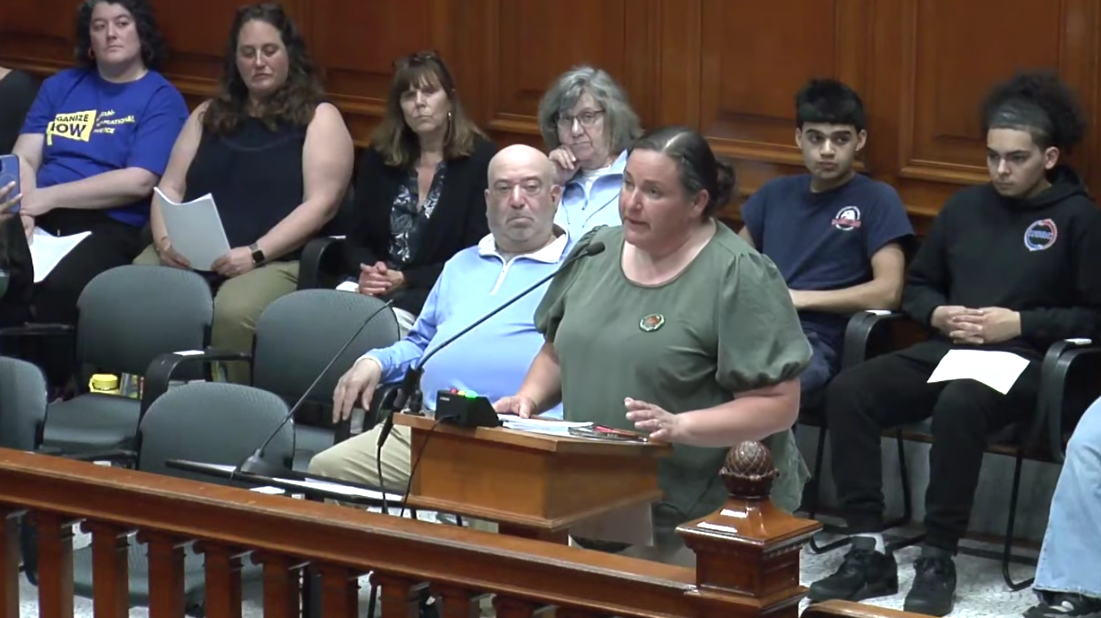
Community members, educators and parents sharply criticized the Worcester Public Schools’ decision to close three alternative schools during a tense School Committee meeting Thursday night, warning the move could destabilize some of the district’s most vulnerable students.
The backlash follows a May 1 announcement by Superintendent Brian Allen that the district plans to close the Academic Center for Transition (ACT), Worcester Alternative School and the New Citizens Center Secondary Program at the end of the school year.
District officials said the programs—which collectively serve 132 students, including English learners and students with Individualized Education Plans—are being closed because of long-term fiscal constraints and what Allen described as a need to “reduce duplication of services.”
Under the plan, students from ACT and Worcester Alternative School would transition to the Central Massachusetts Collaborative, while the New Citizens Center Secondary Program would move out of its standalone building and continue within the district’s traditional middle and high schools.
Much of Thursday’s public comment period focused on concerns that students who rely on the specialized programs could struggle in more traditional school settings. Speakers also criticized what they described as a lack of transparency surrounding the decision and questioned why the district has continued investing in technology initiatives while eliminating smaller, specialized programs.
Resident Angela Moore, who was among the many who spoke during the public speaking part of the meeting, said many students enrolled in the affected programs depend heavily on stability, routine and trusted relationships with staff.
“Many of them struggle with change of any kind,” said Moore. “Removing them from trusted staff and routine risks increasing emotional dysregulation, absenteeism, and behavior. Progress that has taken years to achieve will quickly be undone.”
Several petitions submitted to the school committee called for clearer answers about how the district plans to support students during the transition, particularly those with significant social, emotional and academic needs.
Melissa Verdier, president of the Educational Association of Worcester, said union members were frustrated by what they viewed as limited communication with staff and school leaders before the decision was announced.
“If these closings are indeed inevitable as the district administration is claiming, then at the very least all of the stakeholders connected to these successful and essential schools for special education students should have had more involvement in how this process was to occur,” Verdier said.
Allen did not directly address the criticism during the meeting. But Mayor Joe Petty, who chairs the school committee, said district leaders remain committed to supporting students affected by the changes.
“This administration is hyper-focused on insuring that students with specialized learnings needs that struggle with chronic absenteeism do not fall through the cracks,” Petty said.
Petty said he expects additional discussions with Allen about the closures as the School Committee begins deliberations on the district’s proposed $623 million fiscal 2027 budget.
The committee has scheduled a public hearing on the spending plan for May 28.
Jason Bleau can be reached at bleau.jason@yahoo.com