
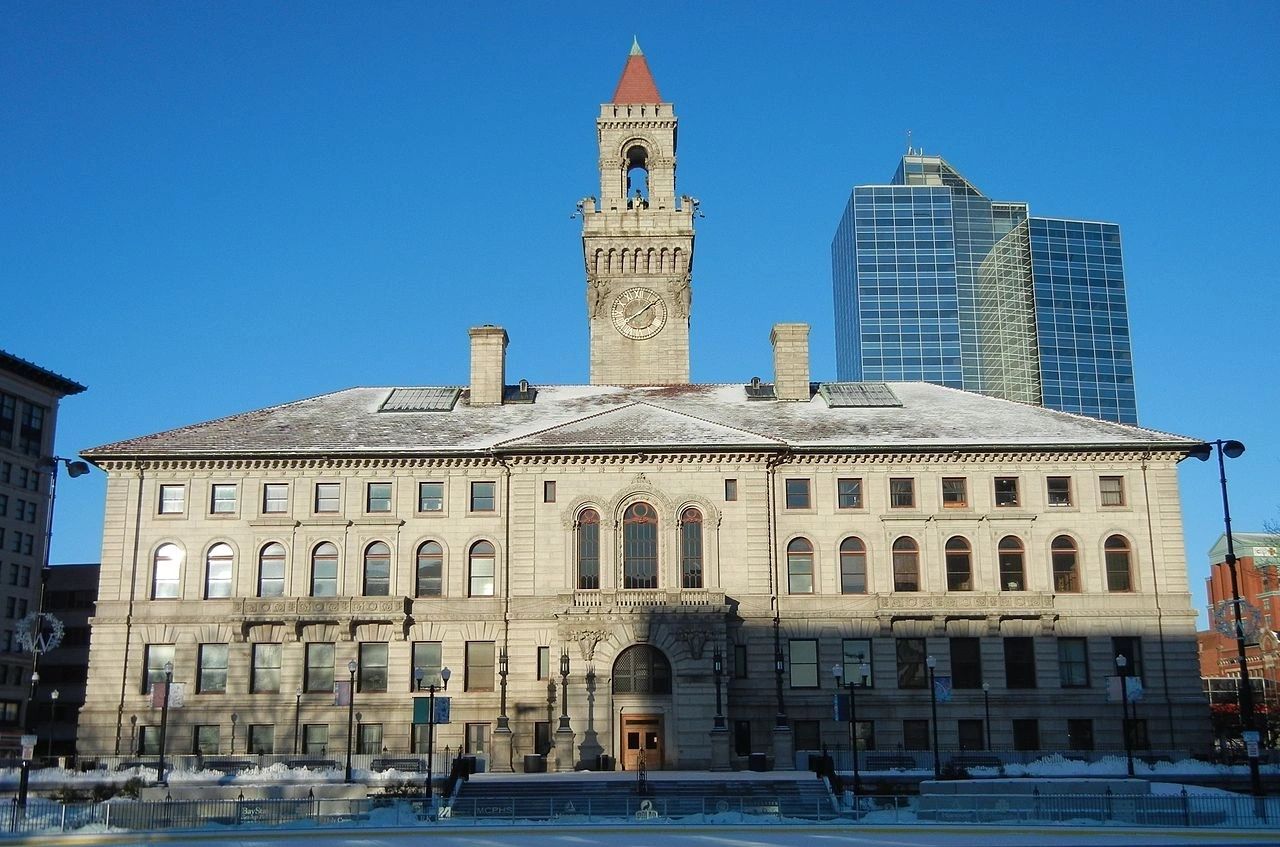
WORCESTER—A crime stat report, a looming multi-million-dollar legal liability and a proposed downtown housing tax incentive all dot Tuesday night’s Worcester City Council meeting, one of the most jam-packed in recent months.
According to the Worcester Police Department’s 2025 annual crime statistics report, homicides fell from 16 in 2024 to two last year—a decline city officials describe as significant and well below recent averages. Other violent crime categories also declined, including aggravated assaults, robberies, non-fatal shootings, stabbings and reported gunshots. Aggravated assaults dropped from 744 to 685, non-fatal shootings fell from 17 to 13, robberies declined from 200 to 147, the number of stabbings/slashings remained at 65, and reports of gunshots fell from 537 to 398.
Property crimes showed notable decreases as well. Breaking and entering incidents fell 43 percent year over year to 382, motor vehicle theft declined 20 percent to 376, vandalism dropped 30 percent to 978, and larceny from motor vehicles decreased 31 percent to 738. Traffic accidents decreased approximately 4 percent, while noise disturbances declined 13 percent in 2025.
Police Chief Paul Saucier credits the declines to community policing, technology investments and targeted gun-violence reduction strategies. Under the department’s Community Engagement Program, officers are now required to spend at least 30 minutes per shift outside their vehicles engaging with residents when not responding to calls. According to Saucier, the Real Time Crime Center and ShotSpotter technology have helped investigators respond faster and gather evidence efficiently, while the Crime Gun Intelligence Unit works with state and federal partners to recover illegal firearms, track repeat offenders, and connect shootings using the National Integrated Ballistic Information Network (NIBIN).
The WPD also pointed to youth-focused initiatives in its updates. Gang Unit detectives visit sixth-grade health classes to educate students on drug awareness and gang prevention, while programs such GANG Camp serve roughly 300 young people each summer. Patrol officers can also use the Massachusetts Youth Diversion Program referral form to connect juveniles with services rather than prosecution when appropriate.
City Manager Eric Batista, who sent the report to the council, noted that Worcester’s population continues to grow even as crime trends downward, reinforcing the city’s status as one of the safest mid-sized cities in the region. “Public health and safety continues to be a non-negotiable priority of my administration,” Batista wrote. “We will build on this momentum to ensure Worcester remains safe and welcoming for all.”
And how to pay that big bill to Holden
Later in the meeting, the council is expected to enter executive session to discuss litigation strategy in the long-running sewer dispute between Worcester and Holden. An appellate ruling upheld a prior judgment ordering the city to pay more than $26 million in damages, plus 12% annual post-judgment interest. With interest accruing, the total liability now exceeds $35 million, according to recent reporting. The state’s highest court declined to review the case earlier this month. The agenda states the council won’t reconvene in open session following the executive session.
Councilors also receive a midyear financial update for Fiscal Year 2026. As of Dec. 31, municipal revenues were at 48% of budgeted levels, while expenditures stood at 51%. Property tax collections are reported at 47% of projections, with city officials noting collections are typically weighted toward the latter half of the fiscal year.
However, Worcester’s final state aid allocation came in approximately $2.7 million lower than earlier estimates — roughly $500,000 less for general government and about $2 million less for Worcester Public Schools. Despite the reduction, city officials reported no current concerns with enterprise funds, including water, sewer and Green Hill Golf Course operations.
A roll-call vote is expected on a Housing Development Certified Project application and Tax Increment Exemption agreement for 401–409 Main St. The Washington, D.C.-based Menkiti Group has proposed converting underutilized upper-floor office space into 48 apartments. Five of the units would be reserved for households earning no more than 60% of area median income.
Under the proposed tax increment structure, the developer would receive temporary property tax relief on the increased assessed value to support the conversion.
Council is also expected to reappoint Niko Vangjeli as city clerk for a two-year term, from 2026 to 2028, in executive session.

Filling the cracks
Several councilors are also pressing for updated plans to address potholes as winter transitions into spring. Councilor Tony Economou wants some details on crew deployment, materials used and whether more permanent patching methods will be adopted. Councilors Satya Mitra and Khrystian King are seeking reports on the feasibility of vehicle-mounted LiDAR, predictive analytics and other roadway assessment technologies to modernize street maintenance planning.
In addition, councilors will consider legal opinions related to zoning and development enforcement, including a request concerning the potential impact of holding a proposed RL-7 zoning change in committee on parcels near Eskow Road, Southwest Cutoff and Massasoit Road.
Other highlights on the agenda
- CPA surcharge review: Economou asks for a report detailing how Community Preservation Act funds are collected and whether any duplicate payments have been made by property owners, either directly or through mortgage escrow accounts. The request also seeks clarification on refund procedures and whether a public list of affected property owners could be made available.
- City Hall accessibility audit update: King is asking for a progress report on a previously adopted order to conduct a full accessibility audit of City Hall. The audit is intended to assess physical, digital and operational barriers, including entrances, elevators, meeting rooms, council chambers and technology accessibility.
- Advisory commissions formalized: The council is expected to consider ordinances formally incorporating advisory commissions on African American and Black Affairs and LGBTQIA+ affairs into the city’s organizational structure under the revised ordinances. The ordinance states that among the many functions of the Commission on African American and Black Affairs is to “encourage, promote and monitor policies and practices in the city to ensure that members of the African American community and members of the Black community enjoy the equal protection of the law, equal access to all public services and the full enjoyment and exercise of their civil rights.”
- Warming and cooling centers report: A report detailing the use of emergency warming and cooling centers over the past two years will be placed on file, giving councilors data on how the seasonal shelters have been performing and operating.
- Responsible development ordinance enforcement: A committee order seeks a legal opinion on what additional measures could strengthen enforcement of the city’s responsible development ordinance, with a report requested by March 10.
- Zero Waste Master Plan access review: Councilors are requesting a feasibility study on expanding hours and access at the Residential Drop-Off Center, including potential cost impacts and alignment with the city’s Zero Waste planning goals.
- World War II recognition: Councilor Morris Bergman is requesting that the city work with the Veterans’ Services Office to create a monument or plaque honoring Worcester residents who served in World War II but are not currently recognized.
Worcester City Council meets Tuesday, Feb. 24, at City Hall in the Esther Howland (south) at 6:30 p.m. It is also livestreamed on the city’s website. Virtual attendees can participate via Zoom.
Have news, tips, or a story worth telling? Reach Editor Charlene Arsenault at carsenault@theworcesterguardian.org—because good stories (and great scoops) deserve to be shared.
