
WORCESTER—Late on the night of April 20, 1775, a man on horseback arrived in Worcester, exhausted from his long journey from Boston and the events he had seen the day before. The man was Isaiah Thomas, a printer, patriot, member of the Sons of Liberty, and outspoken critic of the British.
His newspaper, The Massachusetts Spy, which had been in print since 1770 and had 3,500 subscribers across all thirteen British North American colonies, had played a key role in igniting the revolution unfolding before his eyes.
This was also a new beginning for Thomas. Four days earlier, he had smuggled his printing press out of Boston to keep it from British hands, and it was now safe in the basement of his friend Timothy Bigelow’s Worcester home. Thomas’s mind was filled with horrific scenes from the battles of Lexington and Concord that he had just witnessed. He was eager to set up his press and report what he had seen to his fellow citizens. However, he had a problem. He had moved his press and type to Worcester but had not brought any paper.
“Almost all the newspapers in North America at that time were in seaports where there was access to supplies, like paper, as well as to the news,” said Joseph M. Adelman, professor of history at Framingham State University and author of Revolutionary Networks: The Business and Politics of Printing the News, 1763–1789. Towns in the interior, like Worcester, would not have had newspapers, in part because paper would have been harder to come by there.
At that time, the best paper was from England, and much of the paper used in the colonies was imported, according to Adelman. But in 1774, the British had closed the port of Boston to all trade in retaliation for the Boston Tea Party the year before. There were several paper mills in the colonies, but they could not meet the growing demand. This created a challenge for colonial printers who needed a steady supply of paper to print and distribute the news.
Fortunately for Isaiah Thomas—and for the independence cause—patriot leader John Hancock passed through Worcester on April 24 on his way to the Continental Congress, set to begin in Philadelphia on May 10. Just a week earlier, Hancock had personally urged Thomas to move his press to Worcester. Upon learning that the printer had no paper, Hancock wrote to his contacts in the Provincial Congress in Boston, requesting that four reams be delivered to Worcester from a paper mill in Milton. This paper would allow Thomas to alert the colonies about the atrocities that had occurred in Concord and Lexington.
The paper arrived, and on May 3, Thomas published the first thing ever printed in Worcester: the latest issue of The Massachusetts Spy, now featuring a revised masthead and the bold words, Americans! Liberty or Death! Join or Die!, printed above it.
The issue included Thomas’s most famous article, his eyewitness account of the Battles of Lexington and Concord:
Americans! Forever bear in mind the BATTLE of LEXINGTON!—where British Troops, unmolested and unprovoked, wantonly, and in a most inhuman manner fired upon and killed a number of our countrymen, then robbed them of their provisions, ransacked, plundered and burnt their houses! Nor could the tears of defenseless women, some of whom were in the pains of childbirth, the cries of helpless babes, nor the prayers of old age, confined to beds of sickness, appease their thirst for blood!—or divert them from their DESIGN of MURDER and ROBBERY!

Thomas’s testimony included descriptions of events that could only have been observed in person. It became the most influential and widely copied version of the story and the first instance of American war correspondence. It had a profound effect on shaping public opinion about the unfolding events and on rousing people in central Massachusetts, many of whom were still British loyalists, according to Adelman.
“Getting that eyewitness account into the bloodstream of the conversation was really critical for changing people’s minds and convincing them,” he said.
What happened in the colonies during the next several years is widely known. In 2025 and 2026, Americans will commemorate the 250th anniversary of the many battles, events, and acts of heroism that led to independence and a new nation. Isaiah Thomas’s decision to move his press and printing business to Worcester in the nick of time and his reporting of the battles of Lexington and Concord contributed significantly to that successful outcome.
“The Massachusetts Spy of May 3, 1775, was one of the first artifacts I encountered that showed the impact of news on the American Revolution,” said Adelman. “Its existence and survival are a living demonstration of Isaiah Thomas’s enduring importance to Worcester and the United States.”
The public will be able to learn more about Isaiah Thomas and the American Antiquarian Society during an open house on Saturday, April 12, from noon to 4 p.m. The free event will commemorate 250 years since Isaiah Thomas brought his printing press and newspaper to Worcester―a move that helped shape the American Revolution.
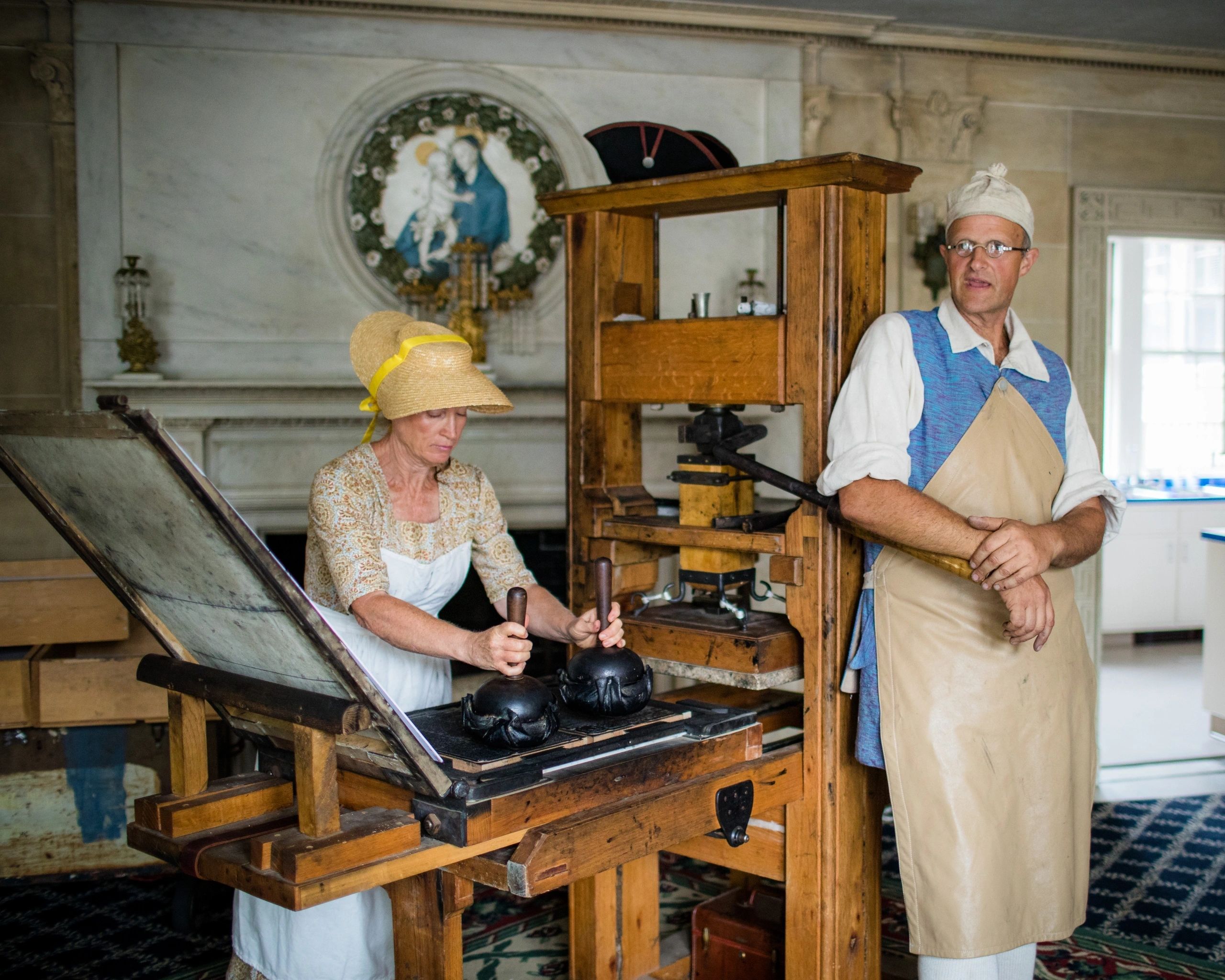
There will be activities for all ages, including operating a full-size replica of an eighteenth-century wooden printing press; chatting with curators and getting up close to a variety of original printed materials from the Revolutionary War; touching a variety of early publications in a paper petting zoo; and taking a guided, behind-the-scenes tour to see how AAS stores and preserves its vast collections.
This article is part of an ongoing, monthly series supplied by the American Antiquarian Society that focuses on the society’s collections and how they deepen the community’s understanding of Worcester’s–and the American–past. Through wide-ranging programs, community engagement, and research support for scholars and students, the AAS works to cultivate a broad community of inquiry―locally and nationally.
- The Worcester Guardian is an independent nonprofit news organization. Support local journalism by making a DONATION today.