
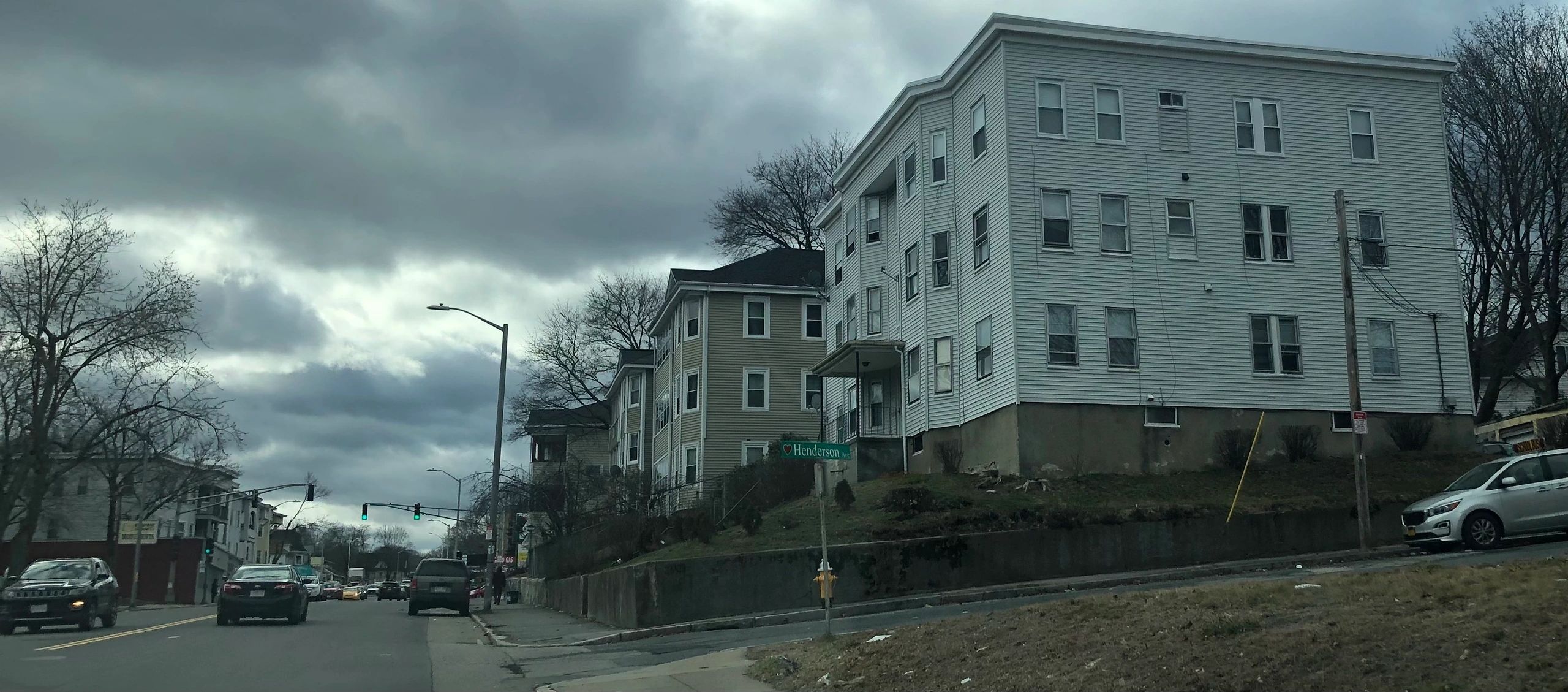
WORCESTER—Serenity Jones has lived in the Vernon Hill area of Worcester in a three-decker for seven years. About two years ago, her rent shot up by $200 a month, and in the past seven years, it has doubled.
About six months ago, Jones, who is in her 40s, took on a roommate for the first time. It was the only way she could figure out how to make the numbers work.
“It’s insane,” said Jones. “When taxes go up, the cost comes down on the renter. But, pay isn’t going up. There’s no cushion,” adding that one major car repair or a health snafu can ruin an already tenuous financial situation.
Jones loves Worcester, has no interest in leaving, and is frustrated that many of her friends and neighbors are no longer able to afford city living: “How about seniors on a fixed income? I feel like people who are the heart of Worcester are being pushed out.”
She’s far from alone. Social media is filled with pleas for assistance in finding affordable housing, frequently met with disheartening responses suggesting that securing anything for less than $2,500 a month is a daunting task.
It’s well known, it’s no joke and appears to be getting worse. Rents are up. Inventory is down. And while affordable housing projects are in the pipeline around Worcester, most will take years to complete. All of it is leaving many of the city’s renters in a crisis and with few solutions. To move is expensive, and to stay put is potentially more so.
“It’s incredibly impossible for people to find housing that is affordable,” said Jennifer Schanck-Bolwell, executive director of the Worcester Community Housing Resources, a nonprofit whose mission is to create and preserve affordable housing.
RentCafe, which monitors the rental market for the latest trends using data from the U.S. Census Bureau, U.S. Bureau of Labor Statistics, Yardi Matrix and others, just came out with its first competitiveness report of the year, which analyzes the hottest rental markets in the U.S. at the start of 2024.
In the report, the Worcester-Springfield market claimed the ninth spot among the hottest small rental hubs in the country in the early months of 2024.
“Its above-average lease renewal rate combined with a start lack of new housing resulted in fierce competition among renters,” said the report.
An average of 14 prospective renters competed for the same vacant rental in the Worcester-Springfield market, double the national average. Because of this, apartments are typically occupied within 41 days, according to the report, which also shows Worcester as having 96.5% of apartments already occupied, above the national average of 93%.
“With no new apartments opened recently in the Worcester-Springfield market, finding a place to call home continues to be a needle-in-a-haystack type of search,” the report reads.
Several affordable housing projects in Worcester are currently underway, but they aren’t going to be completed any time soon.
“It takes a long time,” said Schanck-Bolwell. Plus, she adds, the income level needed to comfortably afford a two-bedroom rental is no longer attainable for many.
The Out of Reach study, a collaboration between the National Low Income Housing Coalition and Central Massachusetts Housing Alliance, analyzes annually the disparity between local wages and rental costs. The most recent report (2023) for Worcester indicates that an average one-bedroom apartment demands $1,272, and a two-bedroom apartment commands $1,635, monthly.
“To afford these rents without spending more than 30% of household income (a federal standard), a household would need annual income of $50,880 for a one-bedroom and $65,400 for a two-bedroom,” Andrew Aurand, SVP of Research for NLIHC, told the Worcester Guardian. “One full-time worker working 40 hours per week would need to earn $24.46 per hour for a one-bedroom and $31.44 per hour for a two-bedroom.”
The NLIHC estimates that an individual would need to work 2.1 jobs at minimum wage to afford a two-bedroom at fair market value.
“An extremely low-income household has an annual income of no more than $36,600,” said Aurand. “The median renter household has an annual income of $50,211.”
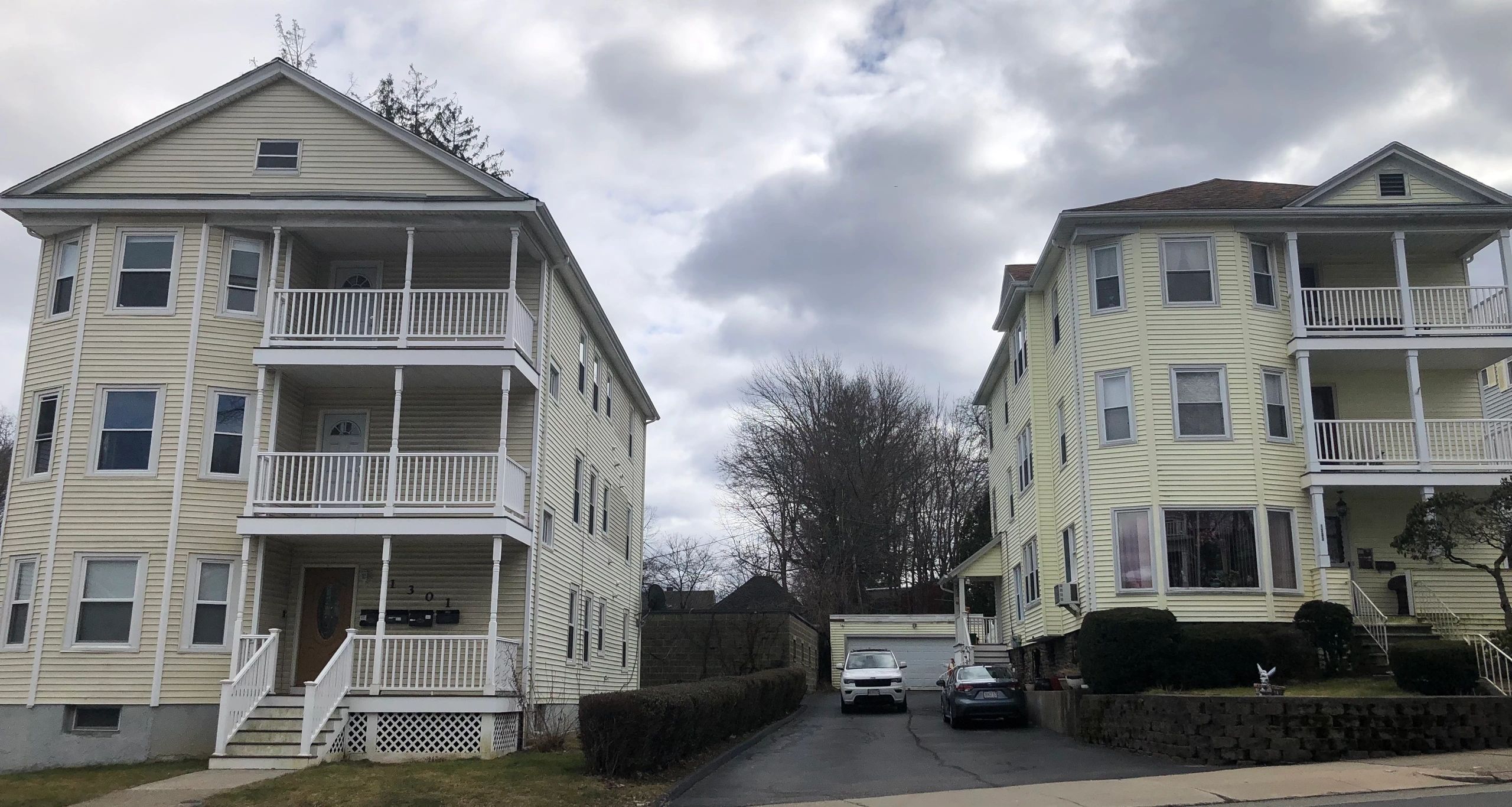
As Schanck-Bolwell points out, “Rents are rising and vacancy rates are incredibly low.” The tight economy, inflation, and rising costs of just about everything makes it hard enough for those who fall into the mid- to low-income range but, at the lowest income levels, rising rents can lead to dire circumstances.
And if an individual can’t afford rent as a single parent with a child — especially if that child requires additional support or whose circumstances require a parent to be at home — the rent doesn’t get paid, said Schanck-Bolwell. And that’s one reason the city is seeing an increase in women and children in shelters.
“Across all demographics, people are hurting,” said Sheri Linn, program director at In The Hour of Need Family Shelter, which offers housing for up to six families at a time. These days, Linn says the shelter receives about a dozen calls each day. And they’ve had 30 families show up looking for housing since this summer. “It’s an appalling situation.”
According to Linn, a family who recently moved in includes two parents, both of whom are working, and their children. Born and raised in Worcester, the couple ended up having to move out of their rental home, because it was contaminated with mold. The couple tried to work with the landlord, turned to the city for help and ultimately the unit was condemned. That left them without a place to go and unable to find an affordable rental.
“They have not been able to find anything,” Linn said.
Linn added that their shelter is maxed out, and when there is a vacancy, it fills within 24 hours. “From where we are standing, we aren’t seeing any motion or any way out,” Linn said, adding that rising rents are the cause of much of the crisis.
Typically, Linn said families seek a two-bedroom that they can afford at $1,200 per month in rent, but they are only finding rentals that are going for $2,000 or more. “It’s not feasible,” she said. “You can’t pull that out of the air.” To add to the stress, when someone moves into a shelter and is no longer paying rent they no longer qualify for certain benefits, most notably SNAP (Supplemental Nutritional Assistance Program) or food stamps.
The most recent Consumer Price Index (CPI) from the U.S. Bureau of Labor Statistics, unveiled in February 2024, further underscores the challenging housing conditions nationally. The index reveals a 0.2% increase in shelter costs nationwide from December to January, constituting over two-thirds of the overall monthly rise in all items. Additionally, food expenses experienced a 0.4% uptick. Simply put, things are getting pricier but wages aren’t matching those increases.
Leah Bradley, CEO of Central Mass Housing Alliance, said seniors are one of the populations most impacted by these rising rents. “How do we help people stay in their communities?” she asked.
With a vacancy rate of .5%, Bradley said Worcester “isn’t looking good.” She noted that a 5% vacancy rate is considered healthy. “We need private developers to build us out.”
Bradley’s group is working with seniors who don’t have the funds to repair their homes so that they can do some maintenance and remain in place.
“It’s a struggle,” said Jones, who works as a comedian and radio host. “No one is going to pull me out of this.”
Relief on the horizon?
While there’s no denying it’s bleak out there, city officials have been developing programs to help mitigate some of the crisis. To start, Peter Dunn, chief development officer for Worcester, said the city recently passed a zoning law change that permits accessory dwelling units. This could be a unit that is rented out or one used for a senior parent to move into. The initiative both adds units to the city’s inventory and provides seniors with an opportunity to stay in the city while moving into a more manageable, affordable situation.
The Rental Assistance Program, operating through three distinct agencies, is another crucial initiative. With a city commitment of $1 million, this program aims to address overdue rent or utilities, providing assistance for up to three months or a total of $7,000. Dunn emphasized the city’s proactive approach, aiming to assist renters before eviction notices are served to expedite the assistance process. As of the close of 2023, the program had already awarded $290,000 to eligible recipients.
Other initiatives help landlords with lead abatement and rehabbing houses that are in violation of housing codes. There are some stipulations and restrictions, and typically the city bids out the contracts for repairs, but the financial awards can be $15,000 to $30,000 per rental unit.
A pilot program has also been launched to incentivize landlords to stabilize rent, provide some predictability to renters, and still make repairs to their units. The city provides one-time funds of $15,000 or $25,000 per unit for these improvements in exchange for a deed restriction, which prevents a landlord – or future property owners – from increasing rents for either 10 or 15 years.
By the end of January, the program had been applied to six units.
Dunn said the city is working diligently to identify what he calls “naturally occurring affordable housing” rather than only putting hope in the new construction efforts. This includes units that exist but need to be rehabbed, auxiliary units and units that aren’t currently meeting a building code but could be affordable once violations are remedied. Dunn said residents can contact the Office of Economic Development to inquire about qualifying for one of the assistance programs.
“We are the second largest city in the state,” said Dunn. “We know we have a responsibility to address this crisis across the Commonwealth.”
Bridget Samburg is a freelance editor, reporter and ghostwriter. She has written for Boston Magazine, The Boston Globe and Yankee Magazine, among other outlets. She can be reached at bsamburg@comcast.net