
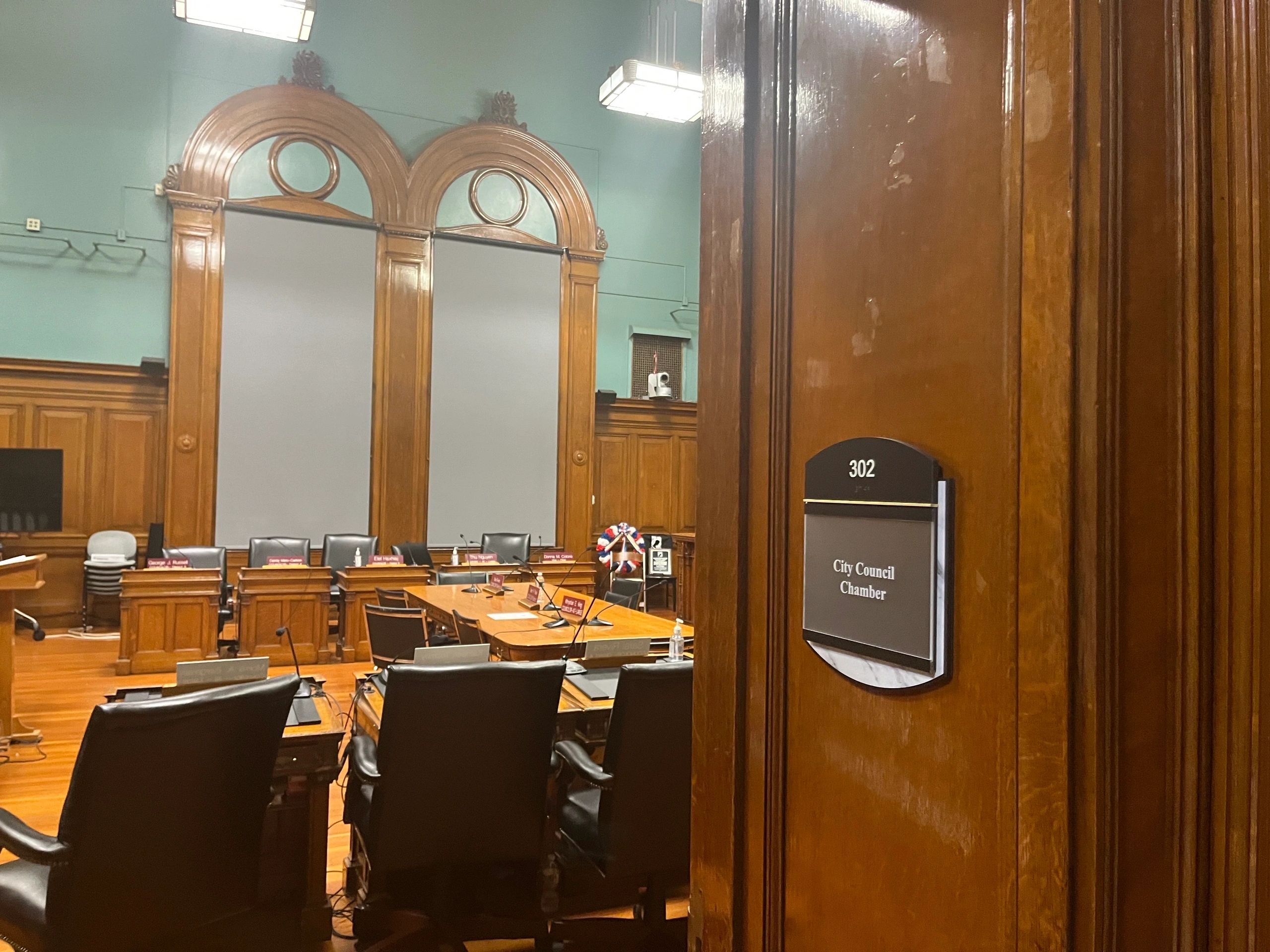
Worcester’s FY24 budget predicted growth of $6.5 million, but the city actually saw over $11.2 million in new taxable property. The city council will decide how to use the extra money during a tax classification hearing on Tuesday.
WORCESTER—A higher than expected amount of newly taxable property joined Worcester’s tax rolls in time for the FY24 tax classification hearing, giving the city council two options, according to a letter to the council from City Manager Eric Batista.
The first option is putting millions of dollars toward relieving the tax burden on residential and commercial properties, while the second option is relieving the tax burden and funding public schools and the fire department.
The city’s FY24 budget predicted new growth of $6.5 million, but the city actually saw over $11.2 million worth of newly taxable property added to the tax rolls, according to Batista.
“The additional new growth was across all classes, with notable growth in residential investment due to apartment construction throughout the city,” Batista wrote.
The increase marks a spike in new growth compared to fiscal 2023, which saw over $6.8 million in newly taxable property added to the rolls.
The additional new growth will help reduce the tax burden, according to Batista, and it will be up to the city council to decide how much of the additional over $4.7 million will be used to relieve the burden.
Two tax levy alternatives offered
His administration is offering the city council two tax levy alternatives at a tax classification hearing scheduled for Tuesday’s city council meeting.
The first tax levy alternative, over $379 million, would mean all the $4.7 million would be used to reduce the tax burden. The second tax levy alternative, close to $382 million, would use $2 million of the additional new growth to reduce the tax burden and proposes that $1 million go to the Fire Stabilization Fund, $1 million go to a new School Capital Maintenance Stabilization Fund, and over $700,000 go into the New High School Stabilization Fund.
The different tax levies would result in different single combined tax rates for fiscal 2024. In the first alternative, with all the additional new growth going toward relieving the burden, the single combined tax rate for fiscal 2024 would be $17.05 per $1,000 of assessed value. In the second alternative, with money going toward public schools and the fire department, the combined single tax rate would be $17.18 per $1,000.
Both are lower than the combined single tax rate for FY23 in the city, $17.87 per $1,000.
Residential vs. commercial tax rates
Worcester does not have a single tax rate, however, and in addition to voting on an alternative tax levy option, the city council will also have to decide the residential and commercial tax rates.
Last year the council voted for the lowest possible residential tax rate of $14.34 per $1,000 of assessed value, and a Commercial, Industrial, Personal Property Tax Rate of $31.26 per $1,000. Even with the lowest rate, the average residential property owner saw an increase of 9.6% or $431 in their 2023 tax bill.
The lowest possible residential tax rate for the first alternative tax levy, with all the new growth funds going toward the tax burden, is $13.65 per $1,000 of assessed value, with a commercial rate of $29.84 per $1,000. If the council voted for this option, the average residential tax bill would decrease by $140 and the average commercial tax bill would decrease by $65.
If the council voted for the highest possible residential tax rate for the first alternative tax levy, the single combined rate of $17.05 for both residential and commercial rates, the average residential tax bill would increase by $1,122 and the average commercial tax bill would decrease by $15,421.
If the council voted for the second alternative tax levy, opting to put money toward public schools and the fire department, the lowest possible residential tax rate would be $13.75 per $1,000 of assessed value with a commercial tax rate of $30.04 per $1,000. The average residential tax bill would decrease by $103 and the average commercial tax bill would increase by $175.
The highest possible residential tax rate the council could vote for if they chose the second alternative tax levy is $17.18 per $1,000 with an equal commercial rate of $17.18 per $1,000. With those rates the average residential bill would increase $1,170 and the average commercial bill would decrease $15,265.
Taxable property in Worcester continues to climb
The value of taxable property in Worcester continues to climb, increasing by $2.1 billion for FY24, but the rate of that climb has slowed despite the increase in newly taxable property.
The assessed value of taxable property in Worcester for fiscal 24 is $22.2 billion, according to data provided to the Worcester City Council by City Assessor Samuel Konieczny, a 9.4% increase over the fiscal 23 valuation of $20.3 billion.
While the value is still increasing, it’s not increasing at the same percentage as the last two fiscal years. Both fiscal 2022 and 2023 saw the value of Worcester taxable property increase by 13.3%.
The value of Worcester taxable property in the heart of the commonwealth has been on the rise since fiscal 2018, when the value increased by 4.1%. In fiscal 2019, it jumped by 6.0%, and the following two years saw similar increases with a jump of 8.3% in fiscal 2020 and 8.0% in 2021.
Kiernan Dunlop is an award-winning journalist who has spent the past five years reporting in Worcester, New Bedford and Antigua and Barbuda. She’s been published in Bloomberg, USA Today, Canary Media, MassLive, and the New Bedford Standard Times, among other outlets. She can be contacted at kdunlop@theworcesterguardian.org