
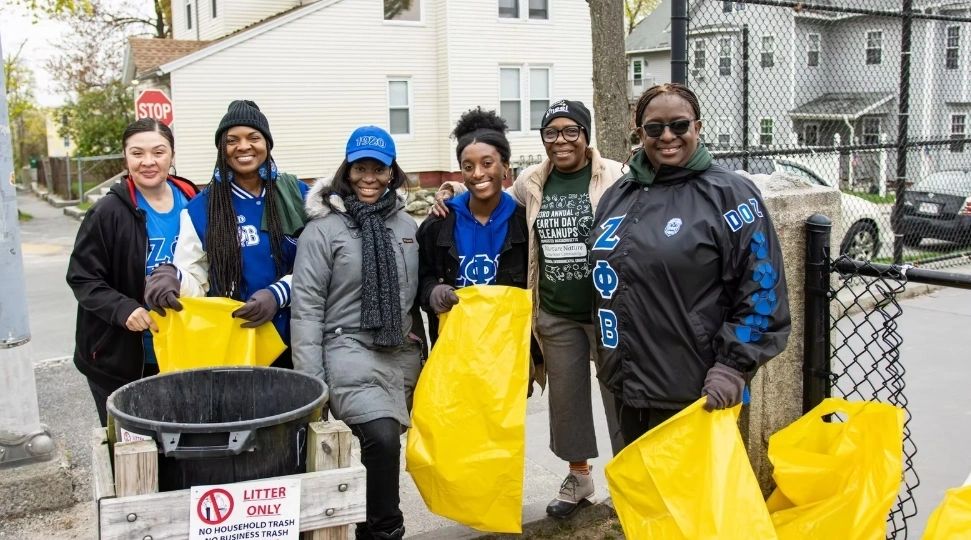
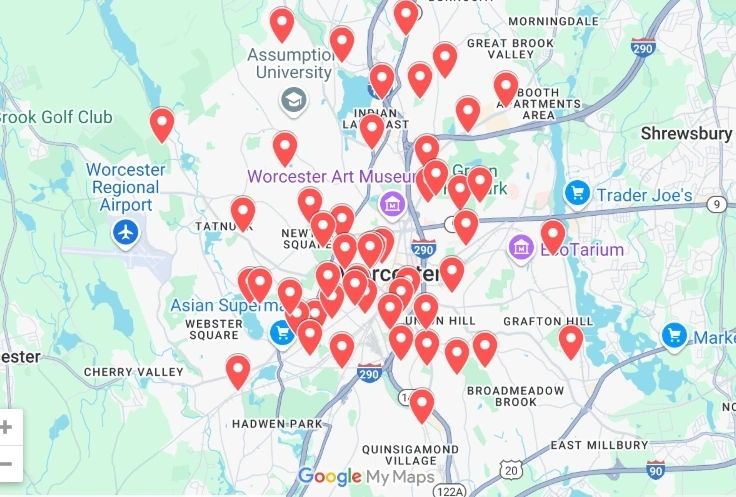
WORCESTER—Worcester’s largest annual volunteer cleanup effort returns for its 35th year on Saturday, April 26—and it’s shaping up to be the city’s biggest yet. More than 1,500 volunteers are expected to fan out across 75 sites for the Regional Environmental Council’s (REC) Earth Day Cleanups, a grassroots tradition that continues to grow three decades after its founding.
“It’s inspiring to witness neighborhoods, schools, businesses, and community groups across Worcester stepping up to care for our shared outdoor spaces in celebration of Earth Day,” Katie Flanagan, Earth Day team coordinator at the REC, told The Worcester Guardian. “Some volunteers have been involved for decades, while others are joining us for the first time—and all are playing a vital role in making this city cleaner, greener, and more connected.”
The citywide effort kicks off at 8 a.m. with a proclamation from Mayor Joe Petty at REC’s office at 42 Lagrange St. (around the back!). From there, volunteers trek to parks, playgrounds, sidewalks and vacant lots to clean up debris, with the support of the city’s Department of Public Works & Parks and lead sponsor National Grid.
This year’s turnout continues to reflect a strong post-pandemic rebound, as it did last year. “We had to cancel the event in 2020 and hosted a much smaller version the following year,” Flanagan said. “During that time, we heard from many residents that the absence of a citywide Earth Day cleanup was deeply felt. Since then, we’ve seen steady growth year after year.”
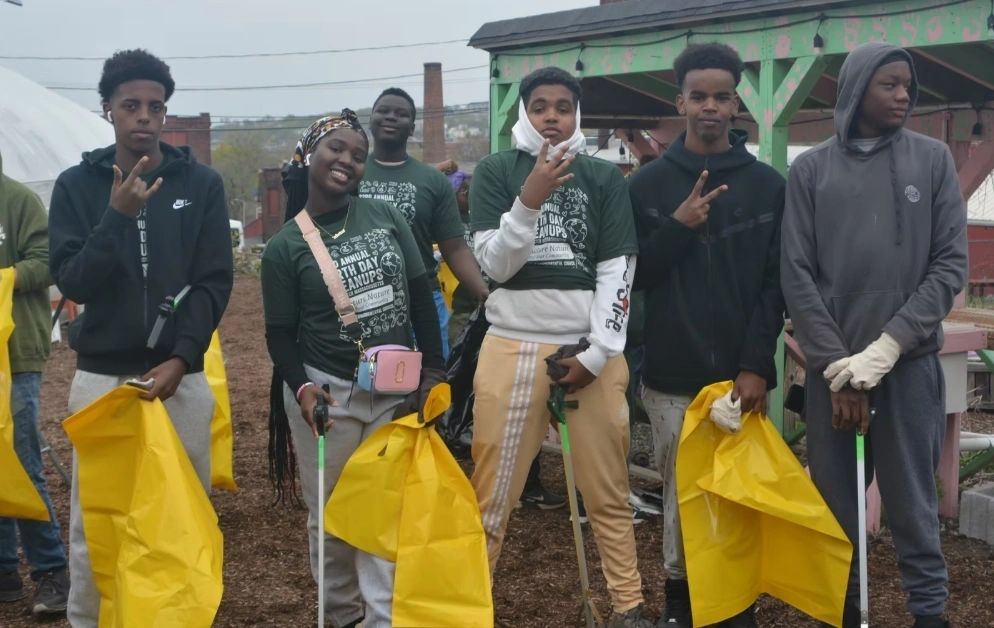
That growth includes an uptick in participation from youth groups and schools, including Worcester Dual Language Magnet School, Thorndyke Road School, Worcester DYO and YOU Inc., in addition to REC’s own YouthGROW program, which leads a cleanup in Main South. Interestingly, as the number of volunteers has increased, the amount of trash collected has decreased—a trend Flanagan views as a sign of progress. Two decades ago, the event would yield over 50 tons of trash. In recent years, that figure has dropped to roughly half.
“While the visual impact of the cleanups is immediate, they’re also part of a larger effort to reclaim and reimagine neglected urban spaces,” Flanagan noted. One example is REC’s YouthGROW Farm, located on a lot once plagued by illegal dumping. Today, it’s a hub for food justice and youth employment. “It’s encouraging to see our youngest community members care for our city,” she said.
Some locations remain persistent trouble spots, including God’s Acre off Swan Ave., where illegal dumping has long been an issue. “A few years ago, we were able to connect a resident of that neighborhood with WPI’s wrestling team,” said Flanagan, “and between the neighbors and student-athletes, they have been tackling this issue each year since.”
This year, the site coordinator for God’s Acre reported a remarkable improvement, estimating that only about 20% of last year’s trash volume remained. Flanagan attributes the change to both the sustained efforts of volunteers and the city’s targeted anti-dumping measures, including surveillance cameras at known hotspots.
In addition to ongoing community engagement, new city-led initiatives could play a role in long-term change. “The city recently announced a Zero Waste plan which intends to investigate and address ways Worcester can improve waste management, minimize waste, and reduce littering and dumping,” said Flanagan. She added that some residents have suggested increasing the number of public trash bins and offering bulk pickup services—not just drop-off options—as steps to help reduce barriers to responsible disposal.
Although REC’s primary mission has shifted in recent years toward food justice—through programs like community gardens, farmers markets and youth job training—the Earth Day cleanups remain a cornerstone of its work and a symbol of civic pride. “We’re proud to amplify the efforts of groups like Worcester Green Corps and everyday residents who care for their neighborhoods year-round,” Flanagan said. “We recognize this isn’t a total fix to the issues of littering and illegal dumping, but it’s one way we can support residents already doing this work.”
Anyone interested in volunteering can still sign up by visiting recworcester.org/earthday, where they’ll find a map of active sites and contact information for local coordinators. Volunteers will be provided with gloves, trash bags and a T-shirt; the City of Worcester and Superior Waste & Recycling will handle trash collection and disposal.
Flanagan, who first got involved with REC in 2017 as a college student volunteering at the YouthGROW Farm, has coordinated the cleanups since 2021. “I loved how the farm felt so vibrant and special in the middle of the city,” she said. “It’s been amazing to grow with the organization and to help others connect with the land and with each other.”
With another Earth Day ahead—and another 1,500 people ready to get to work—Worcester continues to demonstrate a long-standing commitment to environmental stewardship. “It says a lot about Worcester’s values,” said Flanagan. “This is a city that shows up.”
Have news, tips, or a story worth telling? Reach Editor Charlene Arsenault at carsenault@theworcesterguardian.org—because good stories (and great scoops) deserve to be shared.
The Worcester Guardian is an independent nonprofit news organization. Support local journalism by making a DONATION today.
