
WORCESTER—Worcester is earning national attention as one of the country’s top mid-sized metro areas for STEM professionals, thanks to strong wages, job density, and a growing number of science and tech establishments.
According to a new analysis from CoworkingCafe, Worcester ranks ninth overall among U.S. metro areas with populations between 200,000 and 499,999 (considered “mid-sized metros”). The ranking reflects a sharp rise in science, technology, engineering, and math-related jobs across the region—and impressive pay to match.
Worcester came in fifth in average annual STEM wages, at $111,069, well above the national average of $97,000. The city also ranked sixth for wage growth, with STEM salaries increasing nearly 24% between 2019 and 2024. During that same time, the area saw a 29.3% rise in STEM job density, which now stands at 145 STEM jobs per 1,000 total jobs, the seventh-highest rate among similarly sized cities.
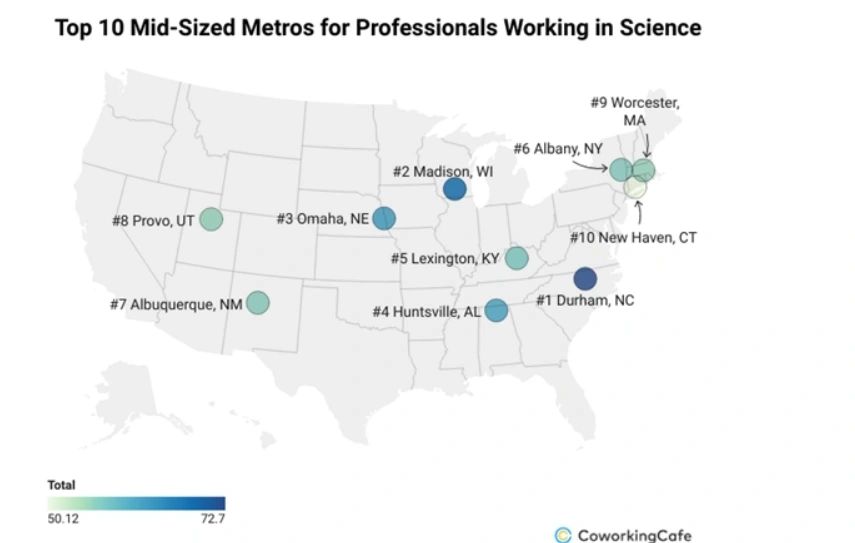
With 411 STEM establishments, Worcester also landed ninth in that category, thanks in part to the presence of local research universities and a growing biotech and biomanufacturing sector.
Local experts point to a thriving biotech corridor that underpins these numbers. One of the most prominent anchors is AbbVie Bioresearch Center, a 30‑year Worcester institution with roughly 700 employees focused on drug discovery, biologics, and immunology. The center is actively hiring scientists in fields like multispecific biologics and cell culture.
Smaller firms also play a key role. Mustang Bio, founded in 2015, has grown to 110 employees in Worcester with facilities for cell and gene therapy research. Meanwhile, Massachusetts Biomedical Initiatives (MBI) provides incubator space and bridges academia and biotech, helping students land internships across local life‑science startups.
CoworkingCafe’s report analyzed 138 metro areas across the U.S., breaking them down by size and evaluating factors like job growth, wages, affordability, and access to education. Only two other Massachusetts metros made the list: Boston, ranked second among large cities, and Springfield, which placed 18th among small metros.
NC State University Professor Aaron C. Clark, who contributed commentary to the report, emphasized the importance of long-term planning and investment by local leaders to attract and retain STEM talent. That includes bolstering K–12 STEM education, supporting workforce development, improving infrastructure, and investing in innovation hubs.
“Inclusive communities and relocation incentives are critical,” Clark said. “Cross-sector collaboration among government, industry, and education ensures alignment, while data-driven strategies help identify gaps and measure progress over time.”
The CoworkingCafe report highlights Worcester’s continued growth as a regional hub for science and innovation—and its potential to attract the next generation of researchers, engineers, and tech workers.
Have news, tips, or a story worth telling? Reach Editor Charlene Arsenault at carsenault@theworcesterguardian.org—because good stories (and great scoops) deserve to be shared.
- The Worcester Guardian is an independent nonprofit news organization. Support local journalism by making a DONATION today.
