
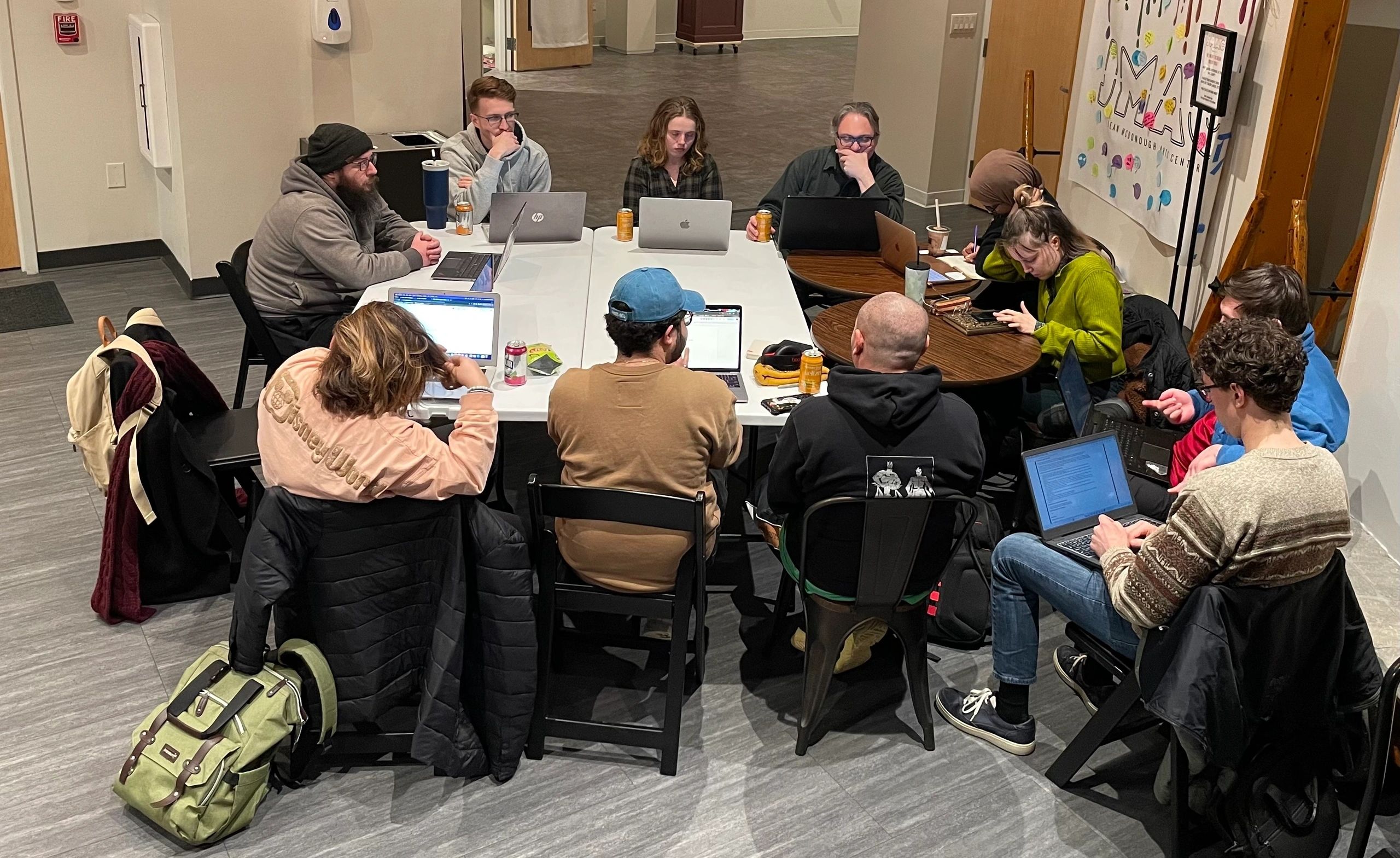
WORCESTER—If the Worcester Writers’ Collective (WWC) was a story unto itself, it might begin like this: Once upon a time, some students from Clark University wanted to get together and discuss their writing.
Over the months, and then years, the word got out to poets, playwrights, novelists, and songwriters; some established, some beginning. Writers from all over gathered weekly and discussed imagery, plot, and premise, and grew from a half-dozen into more than 20, in a renovated building that once housed a daily newspaper.
“It’s so much more than just a quiet space; it’s a great place to be and feel connected,” cofounder Brett Iarrobino said. “No one here is a licensed anything, but people get a lot out of it.”
The group meets every Tuesday from 6 to 9 p.m. at the Jean McDonough Arts Center, 20 Franklin St, in Worcester. The first hour consists of quiet writing time, and the next two hours are devoted to reading and critiquing one another’s work.
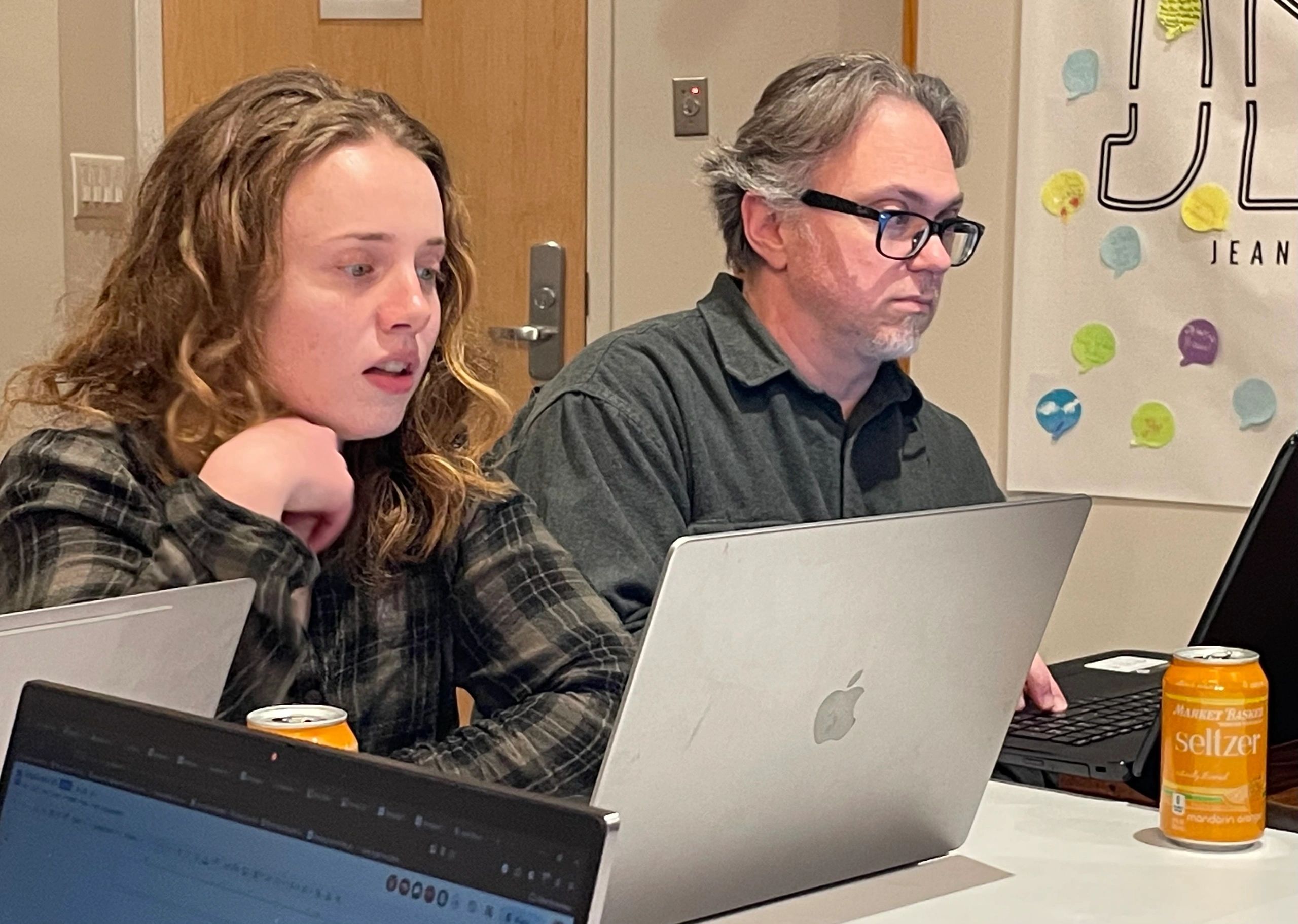
When the WWC began, Iarrobino said there were between 8 and 10 attendees, but now 20 to 25 writers usually show up. It’s grown so much that the group regularly splits into two groups, one focusing on poetry and shorter pieces, and one focusing on longer forms.
Iarrobino and another friend began the group in 2021.
“We were itching for a space dedicated to reading each other’s work and being serious about it,” he said. “We missed that about being an undergrad.”
After his friend moved out of state, Iarrobino held another session in 2022, and soon after, Emma Couillard became his co-chair.
“This coming summer will be our third,” Couillard said. “Brett and I were both at Clark, and we were looking for a writing activity that existed outside of academic writing. It was a group of our friends at first, five or six of us discussing our writing, and it stayed like that for the first couple of summers.”
But in January 2023, the group received a JMAC access grant, from Boston’s Barr Foundation.
“Money is what lets us feed the artists,” Iarrobino said, and though that money literally funds snacks and drinks for the meetings, it has led to much more. “It’s what lets us ultimately host the public in a space, whether it’s an open mic, or a table reading of a play. We can bring in artists to do programming. It’s given us a lot of professionalism. Part of why we’ve seen the uptick is because JMAC has our back.”
The current administrative board is Iarrobino, Couillard, and poet Irena Kaci. They are responsible for sending out the emails, responding to inquiries, and are working on setting the organization’s goals.
“We’re assessing what will make it the most accessible and welcoming,” Kaci said.
During her first meetings in 2022, Kaci found the other participants mostly recently college graduates, but now, she said, the group is more eclectic.
“It’s become a priority to have it be a space for everyone,” Kaci said. “I shared the first short story I attempted to write, and it was so helpful to me to have people near my age to give feedback on it.”
At a recent meeting, author Jonah Knight read his children’s book – his first time writing for youth — and asked for feedback. There was a lengthy discussion about the word “congratulations” – was it too advanced for a kindergarten student, or a good way to build vocabulary?
Poet Andres Lorenzana read two poems to the group. His work had Biblical themes and language, which led to a discussion of the imagery: Was it too vague? Or too obvious? And which was more powerful?
It is these specific exchanges, the writers say, that make the comments so useful.
“There’s such a critical mass of people, that everyone’s feedback is helpful,” Kaci said.
But it’s not only the feedback, the writers say, that keeps them coming each Tuesday night.
“For me, it’s about a few things, but it’s mostly about the community,” Couillard said. “Everyone has their own ways of writing, and their own tricks and hacks. There are different voices, too – it’s so clear to me there are so many people I wouldn’t have met if it hadn’t been for the group.”
Playwright Nick Baker, who has attended the group for nearly a year, agreed.
“There’s a sense of community that people have built,” he said. “Here’s a place I can come every week, and be reinvigorated. It’s really beautiful to be able to find community every week, people always being supportive, driving you, and interested in what you’re doing.”
Debbie Huard is working on a novel and said the group has helped her be confident in her work.
“I tend to compare myself to everyone else, and it’s helped me to realize that everyone’s in a different space and I don’t have to be like anyone else,” she said.
The idea that there is dedicated quiet time to write, in a safe space, is a big draw as well.
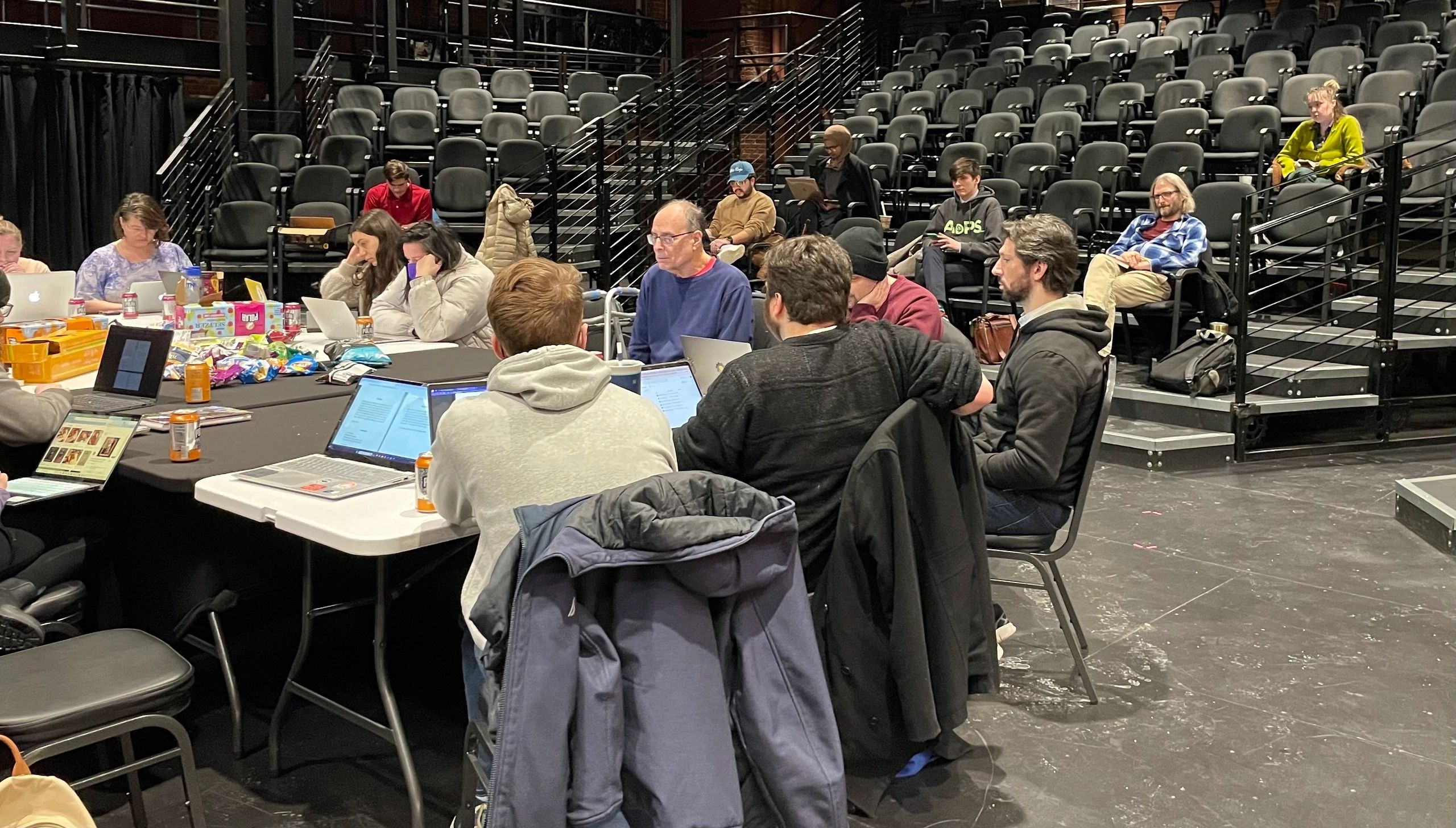
“It’s a space to have energy and headspace, free of distractions and responsibilities,” Huard said. “That, and the awesome friends I’ve made.”
“It makes me more accountable to my writing practice,” Baker added. “It makes me want to write more – if I want to share something, I have to finish it.”
Kaci said she’d been looking for something like the WWC for a long time.
“One main reason I keep coming is because I am a local writer, and I’ve always wanted a place in the community to workshop my work, that was accessible and not financially prohibitive,” she said. “I think there’s a need in Worcester. There’s certainly a need for me.”
There are no requirements for membership; writers are free to attend when they can, and share their work when they wish. The group is open to all, but it’s asked that members under 18 bring a parent or guardian to their first meeting.
With new members dropping in almost every week, the group continues to thrive.
“We are super grassroots but our ground game is strong,” Iarrobino said.
Christine M. Quirk is the former editor of MotherTown and has written for the Telegram & Gazette, Bay State Parent and Times & Courier. She is a novelist and educator and lives with her family in West Boylston. She can be reached at cmqwriter@gmail.com