
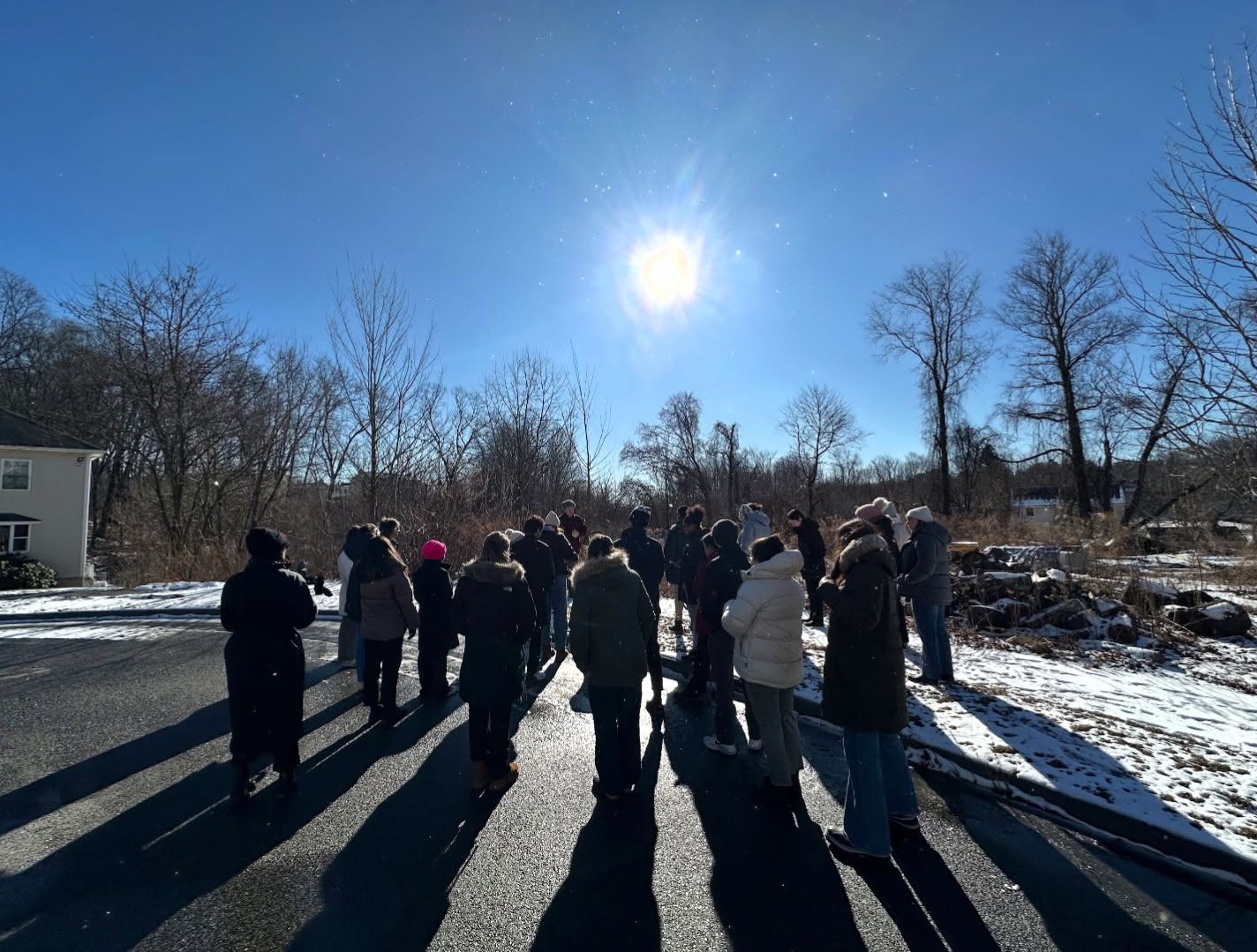
A small piece of land on the Worcester-Auburn line with deep ties to Indigenous history is permanently protected following a unanimous vote by the Worcester City Council on Tuesday night.
Councilors approved a conservation restriction for Pakachoag Spring, a 0.55-acre parcel at 9 Ellie Way that supporters say holds cultural, historical and environmental significance. The vote was the final municipal approval needed to move the project forward after the Auburn selectmen approved the restriction last week.
The property is owned by the Greater Worcester Land Trust and remains under its ownership. Under the agreement, the Quinsigamond Band of Nipmucs hold the conservation restriction and play a role in site interpretation, management and public programming.
According to Chief Development Officer Peter Dunn, the property is part of the historic Nipmuc village of Pakachoag and sits near a spring around which the settlement was established. The site is also referenced in historical accounts related to King Philip’s War.
The project has been years in the making.
The Greater Worcester Land Trust and the Quinsigamond Band of Nipmucs secured a Conservation Partnership Grant through the Massachusetts Executive Office of Energy and Environmental Affairs to acquire and preserve the land. A condition of that grant required a conservation restriction to ensure the property would remain permanently protected.
Speaking before the council, Greater Worcester Land Trust Executive Director Colin Novick said the site is important not only to Indigenous history but also to Worcester and Massachusetts history.
“It is a historic site,” Novick said. “It was where Sagamore John Horowanone — it was the last Sagamore that we are aware of, that we have a name for, for the Nipmuc. It is a site that’s important to Massachusetts history, Worcester history, and the King Philip’s War, all being documented on the site.”
Novick said the conservation restriction allows the Greater Worcester Land Trust to retain ownership of the property while the Quinsigamond Band of Nipmucs oversees public interpretation and programming.
“This site is one of the three villages that were Nipmuc that make up what we think of as modern Worcester,” Novick told councilors.
According to city documents, Worcester’s Conservation Commission voted in 2022 to support the project, finding it consistent with the city’s Open Space and Recreation Plan. The site is specifically identified in that plan as a historic resource threatened by development.
Although Worcester holds no ownership interest in the property, state law requires municipal approval before a conservation restriction can be recorded.
In a letter submitted to the city, Novick described the vote as the final step needed to complete the project.
“I look forward to seeing this important historical and cultural project through to completion,” he wrote.
Following the unanimous vote, the conservation restriction can now be finalized and recorded, permanently protecting the site.
Have a story tip, community concern, or insight to share? Email Editor Charlene Arsenault at carsenault@theworcesterguardian.org.
The Worcester Guardian is a nonprofit newsroom serving Central Massachusetts. Help keep independent reporting alive by making a donation today.
