
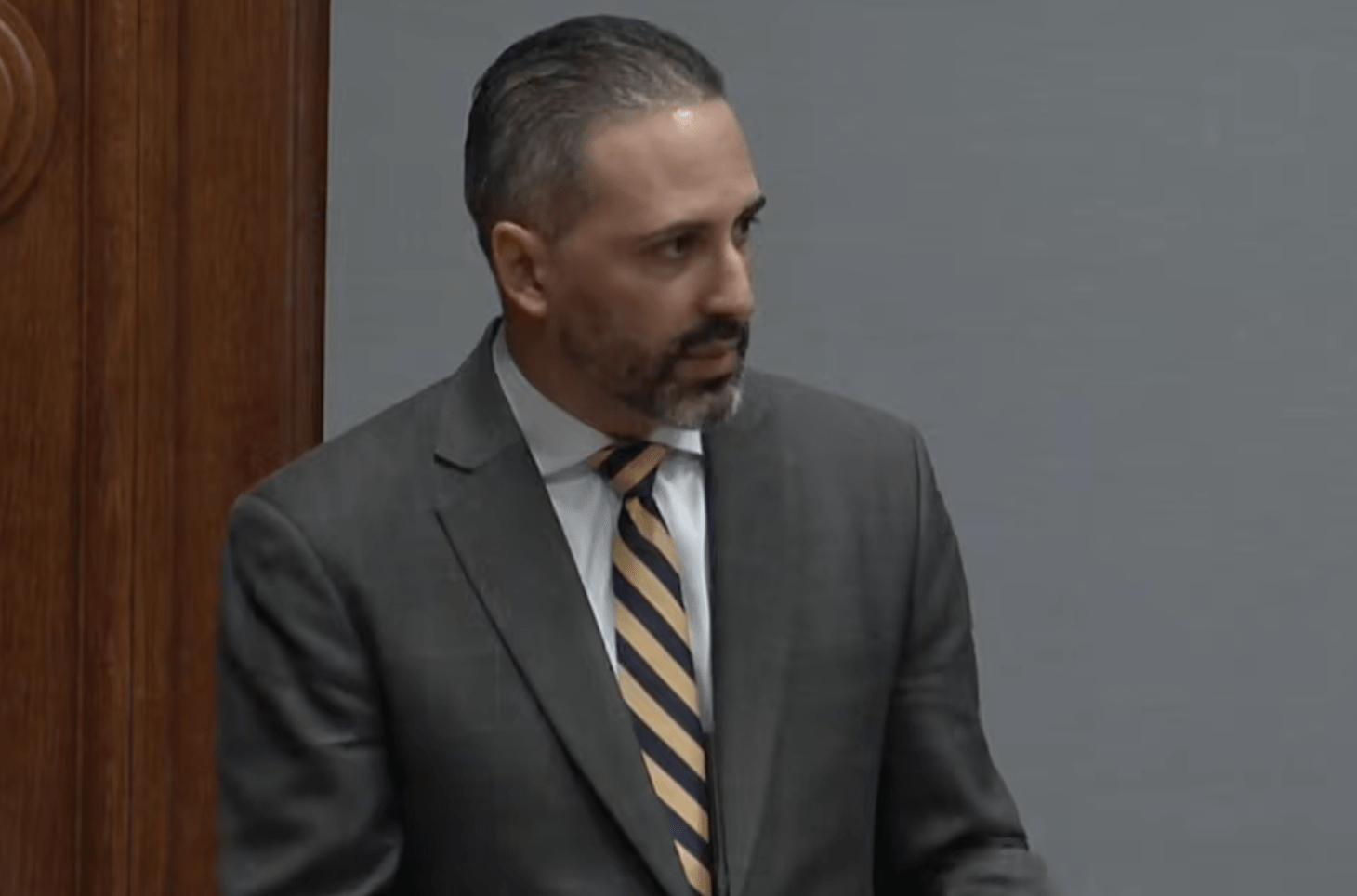
A long-running debate over civilian oversight of the Worcester Police Department returns to City Hall on Tuesday, this time with a clear recommendation from City Manager Eric Batista: Do not create a separate civilian review board.
The recommendation anchors an unusually broad agenda that also includes the future of school construction funding, possible changes to citywide parking requirements, updates on trash enforcement and public works programs, salary adjustments for municipal employees, development incentives and a series of neighborhood petitions.
Batista’s recommendation follows years of community pressure for a civilian review board and a 2025 study by the Worcester Regional Research Bureau examining oversight models, national practices and the structure required to make such a board effective. The discussion gained urgency after the U.S. Department of Justice issued a report accusing Worcester police of a pattern or practice of excessive force and sexual misconduct. Although the federal report did not specifically recommend a civilian board, Batista committed to evaluating whether one would strengthen the city’s accountability system.
The new report from the Executive Office of Diversity, Equity and Inclusion concludes that Worcester should build upon its existing oversight structure rather than establish a separate board. It argues that the city already has many of the functions associated with civilian oversight through the office’s Investigations Division and Human Rights and Accessibility Division, including complaint intake, independent investigations, policy review and coordination with police and municipal leadership. Creating a new board, the report says, would require substantial funding, legal support, administrative staffing, training, access to confidential information and carefully defined authority—much of which the city believes is already embedded in its current system.
Batista said the city’s existing framework is producing results, pointing to body-worn cameras, expanded investigative capacity within the diversity and equity office, anti-harassment training, changes to civil service requirements for police leadership, racial equity auditing and greater involvement by the Human Rights Commission in policy review. The report notes that excessive-force complaints have declined since 2023 and that most investigations from 2018 through 2025 resulted in officers being exonerated, meaning the incident occurred but investigators determined the officer’s actions were lawful and consistent with policy. Sustained findings were comparatively rare. The city’s equity office reviewed two police-related cases in both 2022 and 2023, five in both 2024 and 2025, and three so far in 2026, according to the report.
The administration’s recommendation is not likely to end the debate. The Research Bureau previously found that civilian oversight could improve accountability and public trust if it were granted clear authority, adequate resources and access to information. Community advocates have pushed for an independent board for years, arguing that oversight housed within city government does not provide the same degree of public independence. Batista’s report acknowledges those concerns but recommends continued investment in the existing structure, with future changes left open if data, community feedback or operational needs show that more is required.
Councilors are also asked to get Worcester’s finances in order for what could become the city’s next major school construction project. Chief Financial Officer Timothy McGourthy is recommending the city consolidate two existing school stabilization accounts by transferring $329,681.65 from the Massachusetts School Building Authority Stabilization Fund into the New High School Fund and closing the separate MSBA account. The administration says the move would streamline the city’s finances while preserving the money for future school construction costs, but it requires a two-thirds vote of the city council.
At the same time, officials want to expand the purpose of the New High School Fund to include the planned reconstruction of Burncoat High and Middle Schools, allowing the stabilization account originally created for the South High Community School and Doherty Memorial High School projects to also help offset future debt associated with Burncoat. According to McGourthy, the Burncoat project is currently estimated at approximately $600 million, with about $300 million expected to be the municipality’s responsibility and another $300 million potentially reimbursed by the Massachusetts School Building Authority. If those estimates hold, Worcester could face annual debt service costs of roughly $20 million to $25 million.
“The New High School Fund will allow the municipality to partially mitigate peak repayment periods and buffer the annual impact of this project,” McGourthy wrote. In forwarding the request, City Manager Eric Batista noted that stabilization funds are “critical tools to plan for and mitigate the impact of significant, identified debt service costs on the annual budget.”
McGourthy is also providing councilors with the city’s latest financial snapshot through May 31, reporting that Worcester remains in stable financial condition heading into the final month of Fiscal Year 2026. Property tax collections have reached 98% of budget, local receipts totaled $61.3 million—or 104% of projections—and overall revenues have reached 95% of the annual budget while expenditures stand at 87%. The report notes, however, that the Commonwealth’s final budget reduced Worcester’s anticipated state aid by about $2.7 million, including roughly $2 million affecting Worcester Public Schools and about $500,000 in general government aid. Enterprise funds remain stable, according to the report, although officials caution that the city’s settlement with Holden over the long-running water dispute has already required a $10 million payment from the Sewer Reserve Fund, with another $10.5 million payment financed through borrowing that will create new debt-service costs in future years.
Another report answers a council request to examine whether homeowners financing private street conversions through the city could repay those betterments over 35 years instead of the current 10- or 20-year options. McGourthy finds that the city can’t legally offer a repayment period longer than 20 years because Massachusetts law caps those agreements, except under limited hardship provisions. He also cautions that extending repayment would increase the risk of defaults, add significantly to homeowners’ interest costs and leave taxpayers carrying infrastructure costs long after the city has completed the work.
Public Works Commissioner John Westerling reports on the first six months of the city’s Keep Worcester Clean initiative, a multi-department effort aimed at reducing litter, illegal dumping and neighborhood blight. From January through June, the program logged more than 1,600 nuisance patrol work orders, removed nearly 300 dead animals, collected 464 items from public ways, removed 136 abandoned shopping carts and addressed hundreds of illegal dumping complaints. The report also highlights expanded neighborhood cleanup efforts, the installation of WooBins recycling and trash containers, and continued work on the city’s Zero Waste Master Plan.

Councilors also receive updates on several public works initiatives, including the June bulk waste facility pilot, the city’s new five-year utility street restoration warranty and the latest pavement management and construction progress report. The June pilot found that expanding the bulk waste facility from two to four operating days increased appointments by only about 14% while requiring staff to be reassigned from other public works duties, leading the administration to recommend against a permanent expansion. Instead, officials plan to revive August’s popular fee-waiver program, which increased facility use by nearly 60% last year.
Meanwhile, the construction report outlines progress on dozens of roadway, sidewalk and Complete Streets projects as Worcester continues implementing its data-driven pavement management program, which prioritizes preventive maintenance to extend the life of city streets while advancing safety and accessibility improvements.
Transportation Commissioner Stephen Rolle also recommends creating a commercial loading zone and two-hour metered parking on part of Main Street, while councilors receive proposed changes to the municipal salary ordinance intended to align employee pay classifications with the fiscal 2026 budget and the city’s current organizational structure.
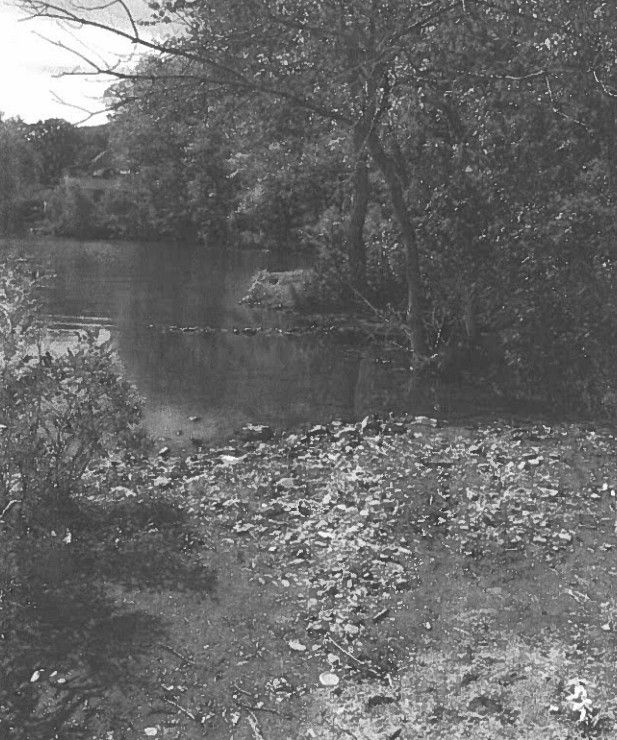
Resident Lawrence Freed has filed several petitions focused on waterways, stone walls and aging neighborhood infrastructure. Freed is asking the city to remove stone deposits that washed from Coal Mine Brook into Lake Quinsigamond and to remove an obsolete city-owned dam on Poor Farm Brook in Shrewsbury, which he argues would improve water flow and address dying fish. He is also seeking repairs to the stone wall along Highland Street between Newton Square and Doherty Memorial High School and to the two stone entrance columns at Logan Field on Mill Street.
Other highlights on the agenda
- New faces for city boards: Batista is recommending three appointments that require council confirmation. Candice Mero-Carlson has been nominated to the Worcester Redevelopment Authority, Jared Madison to the Trust Funds Commission and Che Anderson to the Civic Center Commission. The boards influence redevelopment decisions, management of charitable and municipal funds, and oversight of the DCU Center and related civic facilities.
- Noise complaints reach City Hall: District 1 Councilor Tony Economou is asking Batista to organize a neighborhood meeting over what he describes as chronic noise and loud music associated with functions at St. Joan of Arc Church. The requested meeting would include church leadership, event organizers, police, inspectional services, the license commission and the manager’s office, and Economou wants it held before additional events take place. The order suggests that complaints have continued despite prior efforts to address them. The discussion could lead to new restrictions, enforcement measures or conditions on future events.
- Overnight enforcement sought at Beaver Brook: District 5 Councilor Jose Rivera is asking Worcester police to increase overnight enforcement along Beaver Brook Parkway in response to alleged illicit activity, including public indecency. The request does not specify particular incidents or dates, but its placement on the agenda indicates that neighborhood concerns have reached the council. Increased patrols could affect park access and enforcement practices in an area used by residents for recreation. Councilors may seek more information from police before determining whether a broader response is needed.
- Sports commission proposal returns: A council committee is again asking for a report on whether Worcester should establish a sports commission. The proposal has been promoted as a way to attract tournaments, collegiate championships and other events that fill hotel rooms and bring visitors to restaurants and local businesses. Worcester already hosts major sporting events at venues including the DCU Center, Polar Park and local colleges, but supporters argue that a dedicated commission could coordinate bids and marketing more aggressively.
- Rethinking how much parking Worcester requires: The Economic Development Committee is requesting a draft zoning amendment that would reduce minimum off-street parking requirements across the city. The order follows a June 25 hearing at which residents and committee members discussed how mandatory parking rules can increase construction costs, consume valuable land and make some housing or commercial projects harder to build. Any citywide reduction would represent a significant shift in Worcester’s development policy. It could encourage denser projects and lower costs, while also raising concerns in neighborhoods where on-street parking is already scarce.
- Providence Street zoning and GreenTech incentives: The administration is recommending a zoning map amendment involving 128 Providence St. and the creation of a Tax Increment Financing zone for GreenTech Park. A TIF arrangement can reduce taxes for qualifying development in exchange for investment, job creation or other negotiated benefits. GreenTech Park has been positioned as a major economic development site, and the designation could help attract additional tenants. The Providence Street change is separate but adds to a growing list of zoning and development decisions before the council as new housing and commercial projects move forward.
- Millions in grants, plus support for fire and senior programs: The council considers accepting more than $4.2 million in grants and donations across several departments and programs. The largest is a nearly $3.2 million state public-health preparedness grant, followed by a $639,200 Council on Aging formula grant and more than $291,000 from the state Department of Elementary and Secondary Education. The agenda also includes a $30,000 donation from the Friends of Worcester’s Senior Center, a $10,000 donation from Anastasio Parafestas and the Profesta Foundation for the Worcester Fire Department, and smaller awards supporting youth employment and community programs.
Worcester City Council meets Tuesday, July 21, at City Hall in the Esther Howland (south) at 6 p.m. It is also livestreamed on the city’s website.
Have news, tips, or a story worth telling? Reach Editor Charlene Arsenault at carsenault@theworcesterguardian.org—because good stories (and great scoops) deserve to be shared.