
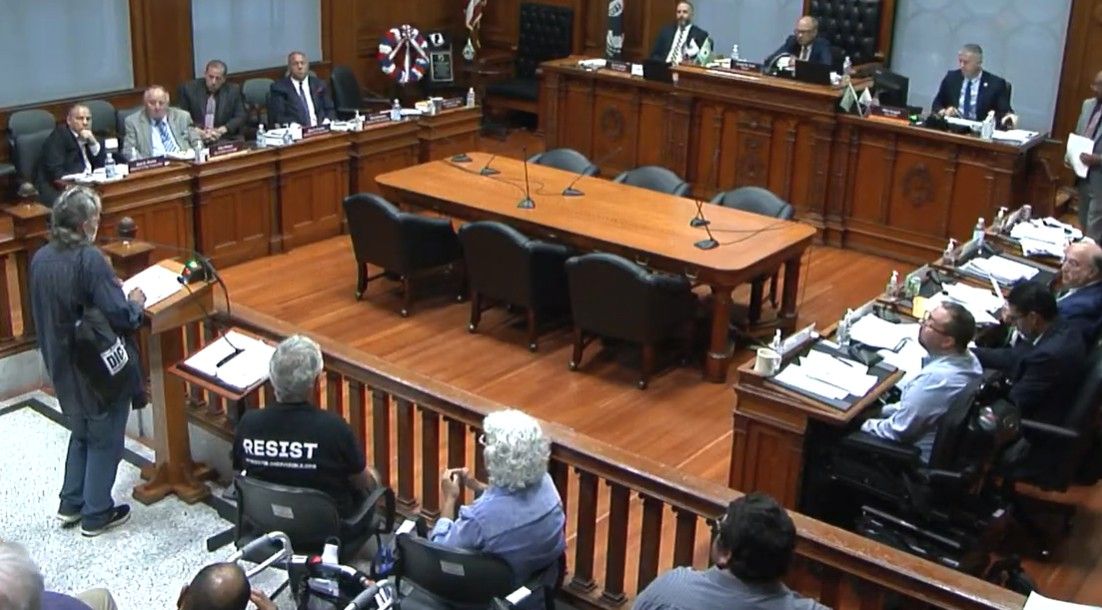
Residents packed the city council chamber Tuesday night mostly to weigh in on whether Worcester should establish a civilian review board for the police department, with speaker after speaker urging councilors to reject City Manager Eric Batista’s recommendation against creating the panel.
Following approximately 80 minutes of public testimony, Council Vice Chairman Khrystian King held the item under privilege, saying councilors need additional time to review Batista’s report and consider the public comments before taking it up. The matter is expected to return to the council’s agenda Aug. 18.
“I’m going to hold this under personal privilege, this premature recommendation that’s intended to undermine City Council debate, public discourse and civic participation,” King said, “…for further review, deliberation and consideration.”
Batista released a report last week recommending against creating a civilian review board, arguing the city should instead continue strengthening its existing police accountability framework. Many speakers challenged that conclusion, citing concerns about public trust, transparency, accountability and the U.S. Department of Justice’s 2024 report that found patterns of excessive force, discriminatory policing and other misconduct within the Worcester Police Department.
Former Human Rights Commission Chair Ellen Shemitz said Batista’s report disregards years of recommendations from outside organizations and oversight bodies.
“That decision ignores years of consistent recommendations from the Worcester Regional Research Bureau, the racial equity audit, the Board of Health and the HRC, as well as the investigation [by] the U.S. DOJ,” she said, “which found reasonable cause to believe the WPD engaged in a pattern of excessive force, officers engaged in outrageous sexual misconduct, and raised serious concern about gender bias and discriminatory policing.”
Shemitz called for Worcester to adopt oversight practices used in many other major cities by creating an independent civilian review board that is “adequately funded, representative of our community, [has] power to access records, investigate complaints and ensure compliance.”
“Current practice falls far short of those standards,” she continued. “Worcester residents deserve transparency, accountability and public trust.”
Amy Ebbeson, director of Vision and Content for Worcester ACTS (Addresses Childhood Trauma), said police accountability is also a mental health issue.
“Who do you call when the ones you’re supposed to call are doing the harm?” she said. “The victims of police brutality, of racism, of sexual assault—the mental health impacts on them are enormous. The mental health of individuals in our community to not feel safe, has a huge impact that can’t be underestimated.”
Ebbeson argued that officers are not adequately holding one another accountable.
“They’re not holding each other to account,” she said. “They’re colluding, and if you vote against a civilian review board, you’re colluding as well. I implore you to consider the mental health of Worcester residents and knock down this idea that we can’t have a civilian review board.”
Andrew Marsh also urged councilors to establish independent oversight.
“Nobody, and I mean nobody, should be allowed to police themselves,” Marsh said. “It’s an insane conflict of interest – one that can only be solved by independent oversight.”
David Coyne warned that rejecting a civilian review board could damage Worcester’s reputation.
“If the city of Worcester makes itself stick out from other large gateway cities in New England,” Coyne said, “as a place where police misconduct will go unpunished (in terms of the individual officer) we will attract every bad cop in the country looking for a good, safe place to hang out and to do their bad deeds.”
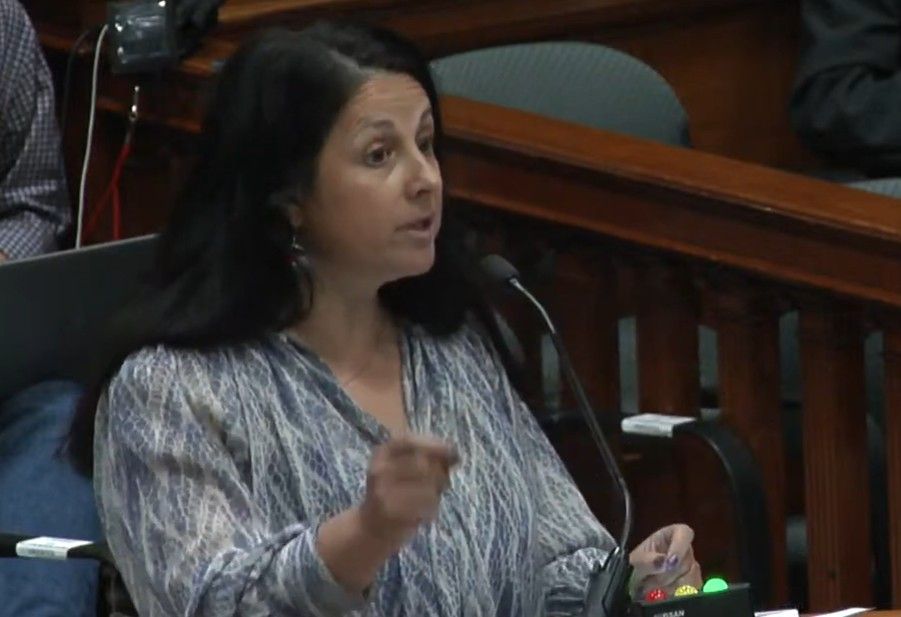
Former City Councilor Etel Haxhiaj said the effort to establish a civilian review board has been discussed for decades and criticized the administration for not pursuing broader community engagement.
“That would have been a community process, that invited the chief of police along to have a meaningful discussion about what police transparency, accountability, constitutionality, and an obligation to residents of this city to have proper mechanisms of independent oversight,” Haxhiaj said.
She also argued that local oversight is needed rather than relying on the Massachusetts Peace Officer Standards and Training Commission, which she said is not a substitute for an independent local review board.
Mitra renews call for more road funding
Later in the meeting, Councilor Satya Mitra renewed his push for significantly increasing the city’s annual road repair funding.
Mitra requested a report examining the impact of borrowing an additional $100 million—or $20 million annually over five years—to accelerate street repair and resurfacing.
“What would be the consequences if we do so?” Mitra asked. “Then, we can think about it in the future.”
King asked the administration for more information about the city’s existing road funding and approximately $600 million in previously authorized but unborrowed debt.
Batista explained that while the council may authorize borrowing for major capital projects years in advance, the city only borrows money as projects move forward and debt payments can be accommodated within the budget.
“If I try to compare to a personal individual that has a credit card, you have a credit limit, but you don’t try to borrow against that entire limit all at once, because on monthly payments — you can’t make those monthly payments,” Batista said. “So, you borrow against that credit card based on what you can afford on a monthly basis.”
He pointed to the city’s new fire station as an example, noting that although the council authorized up to $40 million in borrowing, the city has not yet borrowed the full amount because construction is ongoing.
“Every year, we’re going to be borrowing, as the project continues to happen, we will borrow until eventually we close the books,” Batista said.
King also requested a report detailing the city’s capital investment program, active projects and available borrowing capacity.
Batista said borrowing an additional $100 million would have a significant impact on the city’s finances because it would exceed the municipality’s current annual debt service capacity.
“The debt service on $100 million is significant,” he said. “I haven’t done the calculations, but it’s significant.”
Mitra’s request for a report passed on a 7-3 vote, with King abstaining.
Steve Smith can be reached at at steve@stevephotographysmith.com