
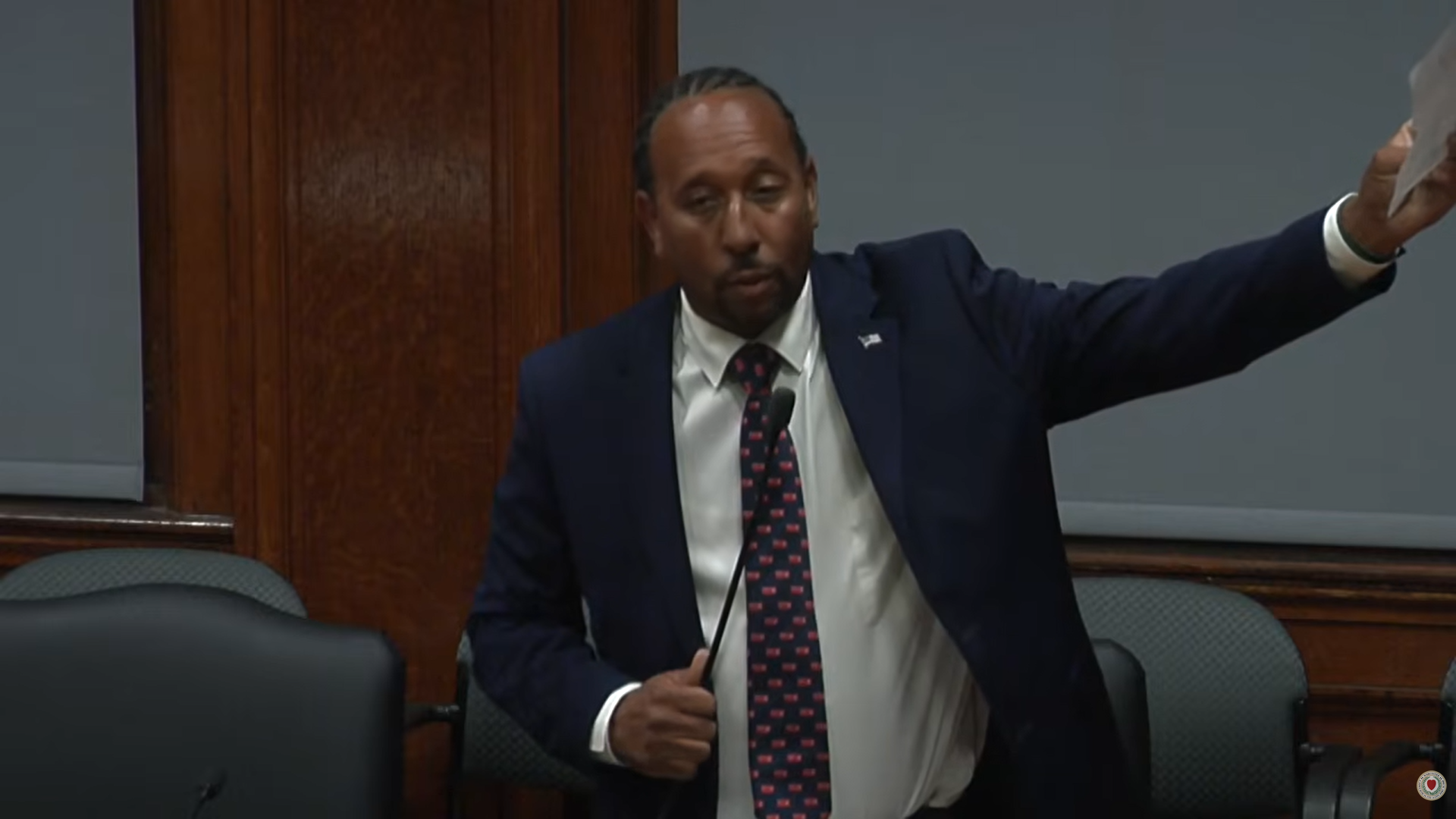
Following the loss of a Worcester police officer earlier in the day, the city council postponed discussion Tuesday of two closely watched police accountability issues: the proposed Civilian Review Board and the U.S. Department of Justice’s decision to close its investigation into the Worcester Police Department.
Instead, councilors spent much of the meeting debating other public safety matters, including the possible future use of speed enforcement cameras, safety and activity on Worcester Common and a proposal to post signs on city property stating that it may not be used for civil immigration enforcement.
Speed cameras could get a public hearing
Councilor Gary Rosen proposed that the city discuss, through public hearings, the potential installation of speed enforcement cameras, with the hope of making roads safer while generating some revenue for Worcester. The move would follow expected state legislation that would allow cameras in school zones and on municipal roadways.
“As we all know, especially by the number of speed humps that have been and will be installed in the city of Worcester, we do have a problem with speeding,” Rosen said, adding that the cameras would not be red-light cameras or Flock-style cameras, but would be used for speed enforcement only.
The legislation would allow up to 40 cameras on Worcester streets and fines for drivers traveling 11 mph or more over the speed limit. Rosen said he wasn’t sure whether he would ultimately support the effort, but wanted the city to examine its potential advantages and drawbacks.
“My intention is not to say that I agree with the policy or I disagree,” Rosen said. “We certainly need discussion and study. I thought it would be good just to get ahead of it, get it into our Traffic and Parking committee, and the chairman of that committee can decide if and when they want to hold a public hearing or two. Before we ever take a vote on this, let’s hear from the public on what they think about speed cameras here in the city of Worcester.”
Councilor Luis Ojeda asked about the status of 25 mph speed-limit signs and how effective they have been since Worcester enacted its citywide 25 mph statutory speed limit in early 2025.
City Manager Eric Batista said the Department of Transportation and Mobility is evaluating roads to determine whether the lower statutory limit is affecting traffic speeds.
“We’ve seen some areas already where they have data to show for that, and we’re going to plan to communicate that to the council, to keep people up to date,” Batista said. “There are some benefits to it, but it’s an ongoing work to evaluate the efficacy of the actual statutory speed limit.”
The council sent Rosen’s request to the Traffic and Parking Committee.
Debate over safety on Worcester Common
Councilor Satya Mitra requested a report on public safety, cleanliness, maintenance and enforcement on Worcester Common and surrounding streets.
“We know that there were some disturbances in the Worcester Common in the past, and I see some of the law enforcement officers are situated in the Common,” Mitra said. “I’d just like a report on what we have done and what we are doing to really bring some safety there, and bring some peace to the minds of people who are visiting there.”
Councilor Kathleen Toomey proposed an amendment seeking information about previous incidents, including arrests on the Common, as well as input from the city’s crisis intervention and quality-of-life teams.
“I think we need everybody at the table, and we could include all the efforts that have happened and what the results have been,” she said.
Councilor Robert Bilotta sought reconsideration after the request passed, saying he was concerned about perpetuating a narrative that Worcester Common is unsafe. He urged councilors to seek information from the administration without necessarily placing the issue on a council agenda, arguing that doing so could paint the park in a negative light despite numerous gatherings and events that have occurred without incident.
“I think the city has done an excellent job at activating that space,” Bilotta said. “We’ve had tons of festivals down there this summer. Downtown, I believe, is becoming more safe and more vibrant, and I just worry about the chilling effect that we have with these reports. I think there is a lot already happening to address these issues.”
Council Vice Chairman Khrystian King said he did not question the intent behind the request but shared concerns about the “labeling of the city of Worcester.” He said continued use of public spaces is itself an important component of improving safety.
“The more activated it is, that’s the best response — community involvement, community engagement, people being present, and the scheduling of events, etc. is what really makes things safe,” King said.
Immigration enforcement signs fall short
Later in the meeting, King proposed that Worcester create signs for city-owned public spaces, potentially including Worcester Common, stating that the property may not be used for civil immigration enforcement activities.
King displayed an example from Lynn that reads, “This Property of the City of Lynn may not be used for civil immigration enforcement activities,” and said Worcester could adopt similar messaging consistent with previous city efforts involving immigration enforcement.
Councilor Morris Bergman questioned whether such signs would have any legal “teeth” or means of enforcement.
City Solicitor Alexandra Kalkounis said the city’s authority could be limited, although a sign could reinforce Batista’s May 2025 executive order stating that municipal resources and property cannot be used for federal civil immigration enforcement.
“I don’t know how much authority we would have, but it would be putting people on notice,” Kalkounis said. “The federal authorities, ICE, can come onto any property and they can pursue a detainment or an order. I don’t know what action we could take if they violated an ordinance.”
Bergman said that while he does not want people deported over the civil matter of lacking documentation, he was concerned that a person accused of a crime could view public property as a “safe haven” from federal authorities.
“I don’t want to be answering the family, whose family member got raped or murdered or assaulted, that we prevented the federal authorities from stopping a person who committed a crime because there’s kind of this free zone on Worcester property,” Bergman said.
King objected to that characterization, saying the proposed language dealt specifically with civil immigration enforcement, not criminal enforcement.
“We’re not talking about criminal enforcement,” King said. “Of course we assist with murder and rape. Come on. It is not the same. These false correlations are hurtful. We’re certainly not looking to harbor criminals.”
Bilotta also supported the proposal, saying Worcester immigrants are fearful of the current federal enforcement environment.
“What’s happening right now with immigration enforcement in this country is a gross injustice,” Bilotta said. “I think, when history looks back on this, it’s going to be very bad. There are thousands of people in our city — residents that have come here, that send their children to school here, that live and work in our community, that are terrified.”
King’s order failed on a 5-5 vote. Councilor Tony Economou was absent.
Steve Smith, a veteran reporter with 17 years at The Hartford Courant, now brings his passion for photojournalism to Worcester. An award-winning photographer, he has covered major events like U.S. soccer, pro football, and UConn basketball. He is also the official photographer for the Miss Massachusetts competition and works as a realtor. Contact him at steve@stevephotographysmith.com