
The second draft of Worcester Public Schools’ realignment proposal backs away from several changes introduced last month, most notably a plan to move Worcester Arts Magnet School to the Francis J. McGrath Elementary School building.
Draft 2 was presented to the district’s Standing Committee on Operations and Governance on Sept. 16 as part of a series of proposals leading up to the school committee’s expected vote on a final realignment plan before the end of the calendar year. The latest version responds to several concerns raised after the initial proposal in August, while leaving questions about student transitions and lotteries for specialized programs to be worked out in future drafts.
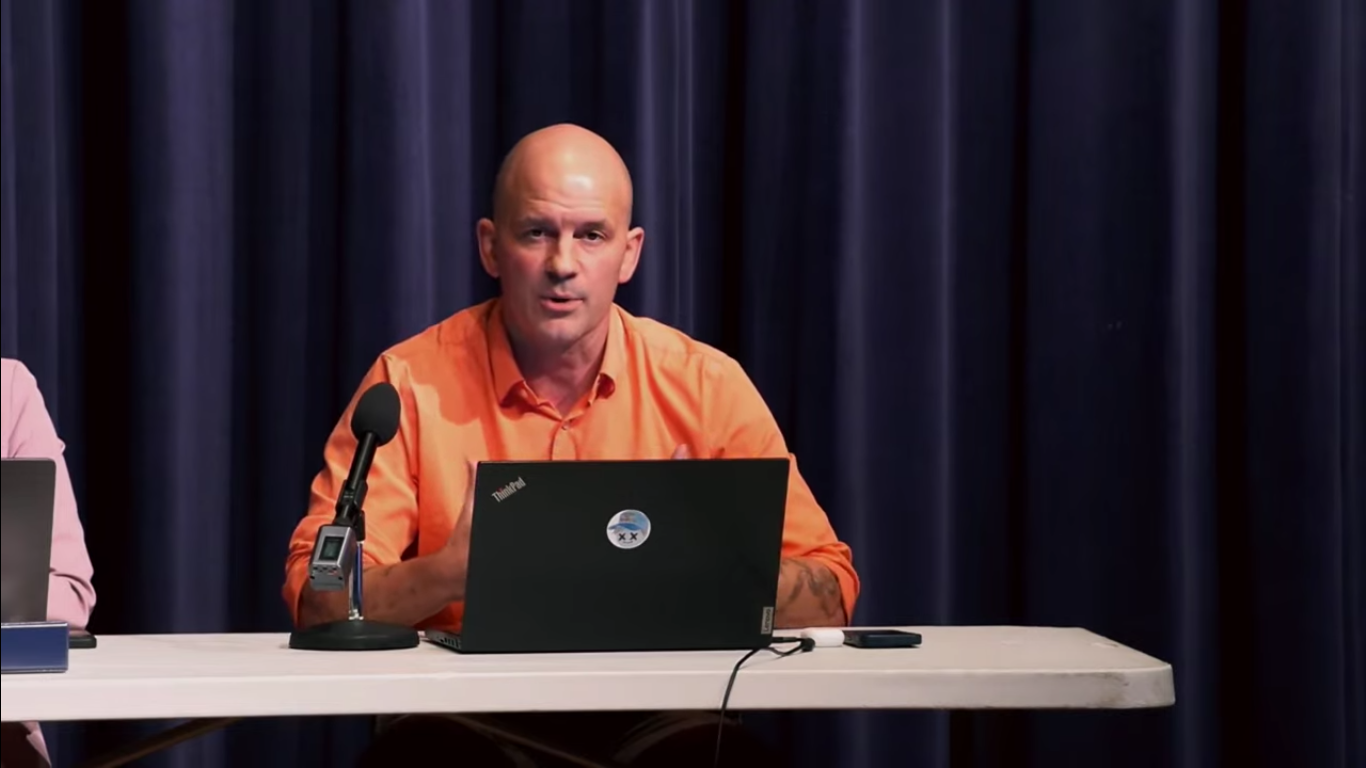
Nick Stellitano, managing director and co-founder of Dillinger Research and Applied Data, a nonprofit helping create the realignment plans, said concerns about moving Worcester Arts Magnet, or WAMS, to the McGrath building in the Doherty Quadrant led planners to abandon that change in Draft 2.
“The proposed facility at Francis J. McGrath would not be suitable for Worcester Arts Magnet,” said Stellitano. “It did not satisfy operational requirements of the current program and really highlighted what everybody perceived as the unique nature that WAMS offers which is a combination of neighborhood and magnet program, and so for the time being we kept WAMS in its current form at its current location.”
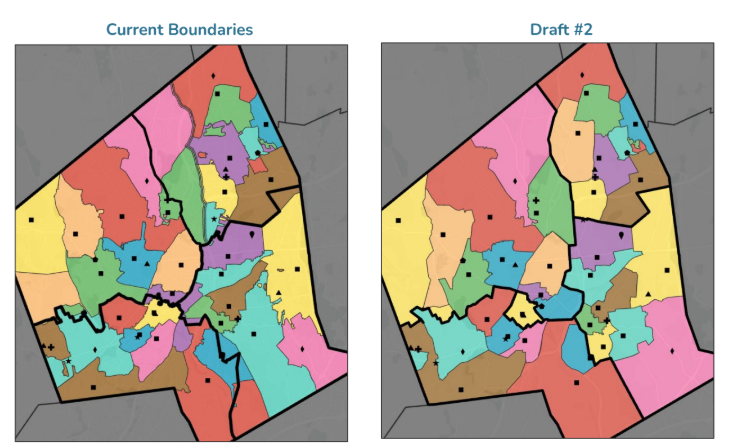
Other concerns raised following the first presentation in August included the impact of realigning neighborhoods to different schools and the tiered structure of start times for different grades, both of which are being examined as the remaining drafts are developed.
Stellitano said as the proposal continues to evolve, the focus remains on planning for Worcester’s future growth and trying to satisfy both the current and projected needs of each quadrant. Transition planning will also become part of future drafts.
“The plan has to survive the current situation of Worcester and a potential five or ten years down the line as Worcester continually changes through new developments. You can’t have a realignment without a movement of students,” Stellitano explained. “There will be a conversation, specifically after the third draft sometime in October, around implementation and different options that are available to Worcester in terms of thinking about how we can get from here to there in regard to the plan that the School Committee will vote on.”
Among the specific quadrant changes in Draft 2, Worcester Arts Magnet would remain at its current location in the Burncoat Quadrant. The draft also proposes opening a new K-6 program in the Greendale Head Start building, with the existing Head Start program potentially moving to the University Park Campus School building.
The North Quadrant would retain Belmont and Worcester Technical High School. Columbus Park Preparatory Elementary School would become part of the South Quadrant, while Jacob Hiatt Magnet School would move to the Doherty Quadrant. The two schools had been placed in the Doherty and South quadrants, respectively, in the first draft.
The presentation also focused heavily on how the district would handle lotteries for specialized programs. Stellitano said the third draft will require significant input on how that process should work.
Two options have been proposed. The first is a proportional lottery, which would structure secondary specialized programming so the number of students attending the programs reflects expected levels based on quadrant size. The second is a program-level lottery, which would adjust proportions program by program, allowing for a more targeted approach and greater flexibility but creating more combinations to consider among different buildings.
“We feel, at Dillinger, that having proportional lotteries across the system is a priority that we’ve heard loud and clear from parents,” Stellitano said. “Part of what we’re looking for – is this good for folks? Is this acceptable? Does this meet the needs and the priorities of what we’re hearing from the parents?”
In addition to implementation discussions, Draft 3 is expected to take into consideration neighborhood growth over the last decade and further examine optimal high school enrollment capacity. That draft is expected to be released by Oct. 13, the date of the next scheduled meeting of the Standing Committee on Operations and Governance.
Jason Bleau can be reached at bleau.jason@yahoo.com
