

A little more breathing room for taxpayers now, or money set aside to help pay for a new school later?
That’s among the choices facing the Worcester City Council on Tuesday as members return to a crammed agenda featuring competing plans for $3.5 million in additional property tax revenue, a proposed $25 million housing development and an animal-welfare ordinance that could determine whether rodeos continue to operate at city-owned venues.
The council also considers doubling a property tax exemption for eligible elderly homeowners, review the financial consequences of a proposed $100 million investment in street and sidewalk improvements, and receive an update showing that Worcester’s forestry division faces hundreds of outstanding service requests. The discussions come as city officials weigh immediate demands for services and infrastructure against the long-term costs of major construction projects, including new schools.
One of the more consequential financial decisions on the agenda involves revenue generated by new development that exceeded the city’s original budget projections. Worcester anticipated $7 million in new property tax growth for fiscal 2027 but ultimately certified approximately $10.5 million. City Manager Eric Batista is suggesting two options for the additional $3.5 million: preserve it as unused taxing capacity, consistent with the city’s existing financial policy, or place it in a fund intended to help finance the proposed replacement of Burncoat Middle and High School. The administration also proposes committing $7.5 million in previously certified free cash toward the school construction fund, regardless of which option councilors select for the additional tax revenue.
Meanwhile, a separate development proposal would bring 74 apartments to the former Hovey Laundry site at Chandler and Irving streets, with developers seeking a 10-year property tax exemption agreement to help finance construction. And a proposed ban on certain rodeo equipment has produced an unusual contrast in the council packet: The city solicitor has drafted the restrictions councilors requested, while Batista warns that banning a commonly used bull-riding strap could effectively end rodeos in Worcester.
Other business ranges from commercial cannabis consumption establishments and homelessness-related concerns to traffic safety, street trees and incentives to encourage local college graduates to work for the city.
Tax relief now or savings for a new school?
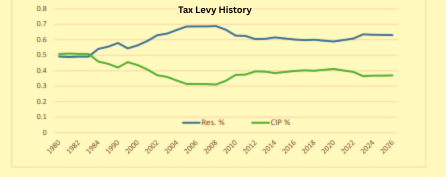
Worcester’s fiscal 2027 tax classification package presents councilors with two competing approaches to the $3,502,413 in new property tax growth above the amount anticipated when the budget was adopted.
Under the first option, the additional revenue would be preserved as excess levy capacity (that’s the amount the city is legally permitted to raise through property taxes but chooses not to collect). That approach follows Worcester’s existing Financial Integrity Plan and would produce a total property tax levy of approximately $439.6 million. The second option would direct the additional $3.5 million into a stabilization fund for construction of new Burncoat Middle and High School facilities. That would increase the proposed tax levy to approximately $443.1 million, with the money intended to help offset future borrowing costs for the school project.
The difference between the two options is approximately $3.5 million in property taxes collected, although the effect on individual homeowners and businesses also depends on the residential and commercial tax rates ultimately selected.
For comparison, the city’s financial documents calculate a hypothetical single tax rate of $16.09 per $1,000 of assessed value under the first option and $16.22 under the second. Those figures are not the final residential and commercial rates; Worcester traditionally uses different rates for residential property and commercial, industrial and personal property.
The city’s total taxable property valuation has climbed to approximately $27.33 billion, an increase of 7.8% over the previous fiscal year. Officials attribute much of the new growth to residential construction and personal property investments, including projects involving large residential developments and utilities.
The council’s annual tax classification process determines how the tax burden is divided among property owners. A tax classification hearing is proposed for Nov. 17.
A bigger break on taxes tax for elderly homeowners
Another financial proposal would double the property tax exemption available to qualifying elderly homeowners. Batista is recommending that the city continue its Clause 41C elderly exemption and authorize an additional abatement, increasing the total potential benefit from $700 to $1,400 for eligible homeowners.
The administration estimates approximately 220 residents would qualify, with total property tax relief of about $308,000.
The exemption is intended for qualifying elderly homeowners who meet the program’s eligibility requirements. It would not automatically apply to every senior citizen who owns property in Worcester.
The proposal is part of a set of financial adjustments following adoption of the state’s final budget. According to the administration, those adjustments include a $1.12 million reduction to the Worcester Public Schools budget appropriation and a separate $101,670 reduction affecting municipal finances.
Chief Financial Officer Timothy McGourthy’s August financial update nevertheless describes the city’s overall finances as stable during the first two months of fiscal 2027, with property tax collections on track and no immediate expenditure concerns identified.
A $100 million roadwork question
Anyone who has navigated Worcester’s potholes and uneven sidewalks might appreciate the appeal of shoveling another $100 million toward repairs. City finance officials, however, say the price tag would extend well beyond the pavement itself.
In response to a council request, McGourthy put together an analysis of what it would cost to invest an additional $20 million annually in streets and sidewalks for five years. The administration estimates that the borrowing would generate approximately $34 million in interest payments over the life of the debt, with annual debt service costs eventually exceeding $10 million at their peak.
Batista warns that the additional borrowing could place pressure on city services, compete with other capital projects and potentially jeopardize Worcester’s bond rating, making future borrowing more expensive.
The city already faces major anticipated expenses involving school construction, public buildings, emergency vehicles and other infrastructure. According to the administration, Worcester has authorized approximately $215 million in street and sidewalk investments over the past decade, including about $131 million in borrowing.
The new report is an assessment of the costs of a larger investment, not an authorization to borrow another $100 million.
A new chapter for the former Hovey Laundry site
A vacant property at Chandler and Irving streets could become a five-story apartment building under a development proposal seeking council approval for a tax incentive.
GoVenture Capital Group and Benedict Canyon Equities are proposing The Hovey, a $25 million development featuring 74 apartments at 27 Chandler St. and 53 Irving St.
The project would include 67 market-rate apartments and seven affordable units reserved for households earning 60% of the area median income. The affordable apartments would remain deed-restricted for at least 30 years.
The development would contain eight studios, 56 one-bedroom apartments and 10 two-bedroom units.
The approximately one-third-acre site formerly housed the 35,000-square-foot Hovey Laundry building, which was demolished after years of vacancy and deterioration.
Developers are requesting designation under the state’s Housing Development Incentive Program, along with a 10-year Tax Increment Exemption agreement.
The proposed agreement would provide an average annual exemption of 40% on the increase in property value generated by the development. The city estimates the incentive would save developers approximately $832,837 over 10 years, or $11,254 per apartment.
In exchange, the completed development is projected to generate approximately $1.5 million in residential property taxes over the agreement’s duration. After the exemption expires, annual residential property taxes are projected to exceed $256,000, compared with approximately $11,300 generated by the properties’ current base value.
The project has already received definitive site plan approval from the Worcester Planning Board.
City officials argue that the incentive would help make construction financially feasible while bringing additional housing and long-term tax revenue to an underused downtown-area property.
Council approval would allow the project to proceed through the state certification process and seek additional assistance under the housing incentive program.
Rodeo restrictions raise animal welfare and economic questions

A proposed ordinance aimed at protecting animals during rodeos could have significant consequences for events at the DCU Center.
The city council requested a draft ordinance prohibiting equipment and practices that cause unnecessary pain or suffering to animals during rodeos and related events on municipal property.
City Solicitor Alexandra Kalkounis has responded with language that would prohibit electric prods, flank or bucking straps, certain spurs, chemical irritants and other practices intended to cause pain or induce animal performance.
Violations could carry fines of up to $300 per offense, with separate violations possible for each animal affected and each day a violation occurs. The proposed ordinance would apply to rodeo events on municipal property, rather than imposing a citywide prohibition on all rodeo activity.
Batista’s accompanying communication, however, cautions that a ban on flank straps — equipment commonly used in professional bull riding — could effectively prevent rodeos from returning to Worcester.
The city manager argues that modern rodeos operate under animal-welfare standards and that properly fitted flank straps are a standard part of bull-riding competition. His communication also points to existing Massachusetts animal cruelty laws and the economic benefits associated with western sporting events.
According to the administration, Professional Bull Riders events have visited Worcester over more than two decades, drawing an average of approximately 13,500 attendees annually. The DCU Center also hosted a sold-out Bulls, Bands, and Barrels event in February that the administration describes as the venue’s highest-attended western sporting event.
Batista warns that losing such events could affect hotel stays, restaurant business, parking revenue and the city’s competitiveness as a live entertainment destination.
The proposal therefore presents councilors with competing considerations: stronger restrictions on practices that animal-welfare advocates consider harmful, and the potential economic consequences of prohibiting equipment used in professional rodeos.
No ordinance has yet been adopted.
Worcester’s street trees face lengthy waits

Residents waiting for the city to inspect, trim or remove a street tree may be waiting considerably longer than they realize.
A new report from Parks, Recreation and Cemetery Commissioner Rob Antonelli Jr. details significant backlogs in Worcester’s forestry operations, which currently have only six full-time employees filling 10 budgeted positions.
The department reports approximately 200 pending tree inspections, 110 trimming requests, 226 removal requests and 100 planting requests. Routine inspections typically take four to five weeks, while trimming and removal requests can take six months to more than a year.
The city has secured more than $250,000 in additional funding for contracted tree removal services, which officials expect will allow approximately 200 trees to be removed over the next six months, subject to weather and emergency demands.
The forestry update arrives alongside a separate proposal from Councilor Jose Rivera that would change how Worcester replaces street trees.
Rivera wants the city to consider automatically replacing dead or removed street trees during the next available planting season, rather than relying on residents to request replacements. Under his proposal, adjacent property owners would receive advance notice and an opportunity to opt out.
The proposal is intended to support Worcester’s Urban Forest Master Plan and make tree replacement a more consistent part of city operations.
Together, the two items raise questions about whether the city has sufficient staffing and resources to maintain its existing trees while expanding planting and replacement efforts.
Other highlights on the agenda

- Cannabis lounges come knocking: Worcester could begin considering whether to allow licensed cannabis social consumption establishments, where adults would be permitted to consume cannabis on the premises under state regulations. Attorney Frederick Rushton, representing Richard Bradshaw, has petitioned the council to adopt an ordinance authorizing such businesses. The request comes as Massachusetts develops a regulatory framework for social consumption, which would represent a significant change from the existing retail model. The petition does not establish any particular location or authorize a business to open; it asks Worcester to consider creating the local rules that would permit the establishments.
- A break for homebuilders? The council considers a committee recommendation requesting a report on whether developers constructing homes for sale should be exempt from a payment required under Worcester’s inclusionary zoning ordinance. The city’s current requirements include a payment-in-lieu option equal to 3% for qualifying developments that do not provide the required affordable housing units. The Economic Development Committee wants the administration to examine the advantages and disadvantages of exempting for-sale housing developers from that payment. The question raises a familiar housing-policy tradeoff: whether easing development costs could encourage home construction at the expense of funding intended to support affordability.
- Stay in Worcester, get help with student loans: Councilor Satya Mitra wants the city to explore a student loan repayment or forgiveness program for graduates of local colleges and universities who work for Worcester or Worcester Public Schools for at least five years. His proposal would also examine whether colleges could contribute to a fund through their payment-in-lieu-of-taxes agreements with the city. The idea is intended to create an incentive for graduates to remain in Worcester and enter municipal or school employment. No program or funding commitment is being approved at this stage; Mitra is asking the administration to investigate the possibility.
- An emergency plan for uncertain times: Councilor Kathy Toomey asks for consideration of an emergency preparedness plan addressing how Worcester would protect and inform residents during emergencies, demonstrations or periods of civil unrest. Her order references events occurring in Europe as a reason to examine local readiness. The proposal calls for planning rather than responding to any specific emergency identified in the agenda. Council consideration could determine whether the administration is asked to develop a more detailed preparedness strategy.
- Could Boston’s zoning restrictions benefit Worcester? Toomey also wants the city’s economic development officials to examine whether Worcester could attract developers facing restrictive zoning policies in Boston. Her order requests a report on strategies for recruiting such investment to Worcester. The proposal comes as the city continues encouraging housing and commercial development while confronting construction costs and other obstacles. The requested report would explore whether differences in local zoning could become an economic development advantage.
- Planting a new idea for trees: Councilor Jose Rivera wants Worcester to move away from a street tree replacement system that depends on residents submitting requests. His proposal calls for automatic replacement of dead or removed street trees during the next suitable planting season, with advance notice to adjacent property owners and an opportunity to opt out. The change would support the city’s Urban Forest Master Plan and could help restore tree cover without requiring residents to initiate the process. The request comes as a separate forestry report documents staffing shortages and lengthy backlogs, raising questions about the resources needed to implement such a system.
- When bikes become a safety concern: Councilor Morris Bergman is requesting a review of ways to address dangerous behavior involving bicycles and electric bicycles, specifically incidents described as swerving and playing chicken. The order seeks information about practices used elsewhere to respond to those concerns. It does not propose a particular new penalty, enforcement policy or restriction on e-bikes. The issue is whether Worcester needs additional measures to address hazardous behavior involving riders and other road users.
- A new home for veterans services: Worcester’s Veterans Services Division is relocating from City Hall to the Worcester Senior Center, with the move scheduled for Nov. 5-9. Health and Human Services Commissioner Seema Dixit says the new location will give older veterans and surviving spouses easier access to recreation, fitness, wellness programs and other services. The administration also hopes the arrangement creates opportunities for social activities and intergenerational programming involving the Division of Youth Opportunities. The council will receive information explaining the move and its place in the department’s reorganization.
- Getting ready for Veterans Day: Worcester marks Veterans Day on Wednesday, Nov. 11, with a community pancake breakfast at Veterans Inc., 69 Grove St., from 8:30-11 a.m. The city’s 73rd annual Veterans Day Parade begins at 11 a.m. near Grove and Glennie streets, followed by commemorative remarks and a 1 p.m. ceremony at the Vietnam Veterans Memorial in Green Hill Park. Complimentary WRTA transportation will depart from Prescott Street at 12:30 p.m. for the memorial ceremony, with return transportation at 2 p.m. The council will receive the schedule as part of the city’s annual recognition of military veterans.
- A salute to a Worcester general: Councilor Gary Rosen proposes a resolution recognizing Worcester resident Brig. Gen. Richard P. Cipro for taking command of the Army National Guard’s 42nd Infantry Division, headquartered in Troy, New York. Cipro is a veteran of the wars in Iraq and Afghanistan. The resolution would formally acknowledge his military service and new leadership assignment. It is a ceremonial item rather than a proposal requiring municipal spending or policy changes.
- The future of miniature liquor bottles: A proposal to prohibit the sale of miniature alcohol bottles, commonly known as nips, is returning to the council through a Public Health and Human Services Committee report. Resident Brian Dutremble originally requested the restriction as a way to reduce litter and alcohol abuse. The committee is recommending that the petition be placed on file, rather than advancing a ban. The council’s action will determine whether to accept that recommendation; the agenda does not propose an ordinance immediately prohibiting sales.
- Young people take on underage drinking: The Public Health and Human Services Committee is also recommending that a previous order concerning Worcester’s Sticker Shock Campaign be placed on file. Councilor Gary Rosen had requested a discussion with public health officials, police, youth program representatives and seven city teenagers who participated in the initiative. The youth-led campaign seeks to discourage adults from purchasing alcohol for minors and reinforce identification checks at retail locations. The committee’s recommendation concerns the disposition of the earlier order, not the creation of a new enforcement program.
- Shelter planning as winter approaches: A committee report returns to the council concerning Worcester’s preparations to provide emergency shelter for people experiencing homelessness during the winter of 2026-27. The original order, supported by the mayor and all 10 councilors, called for public hearings well before winter to identify enough safe emergency shelter locations and develop strategies for recruiting and training volunteers. The Public Health and Human Services Committee is recommending that the order be placed on file. Separately, Councilor Robert Bilotta is requesting an update on appointments to the city’s Commission on Homelessness, keeping another part of the city’s response to homelessness before councilors.
- New appointments and familiar faces: The city manager is notifying councilors of several appointments and reappointments, including Danielle Delgado to the Community Preservation Committee and Asuncion “Shonee” Austriaco to the Elder Affairs Commission. The agenda also includes the appointments of Richard Mattioli and Kevin Derry as constables. Separate recommendations requiring council confirmation include Benetta Kuffour’s reappointment to the Affordable Housing Trust Fund Board of Trustees and five reappointments to the Citizens Advisory Council. The appointments affect boards and commissions involved in housing, community investment and municipal participation.
- Grants for culture, public safety and young people: Councilors will consider authorizing the city to accept several grants, including up to $350,000 from the National Endowment for the Humanities under its Collections Stewardship program. Other proposed awards include approximately $192,247 from the state’s 911 Department, $200,000 from the Massachusetts Department of Elementary and Secondary Education for Recreation Worcester, and $23,800 from the United Way of Central Massachusetts for Worcester Cares 4 Kids. A separate $500 donation from the Greater Worcester Community Foundation, on behalf of the Clarence S. Arms Family Fund, is also before the council. The resolutions would authorize acceptance and expenditure of the funding for the designated purposes.
- Safer streets, one intersection at a time: The agenda contains numerous requests involving speeding, crosswalks, traffic signals and pedestrian safety. Among them, Councilor Tony Economou wants a citywide review of ways to improve walkability, including flashing crosswalk signals, changes to pedestrian signal timing and diagonal crossings where appropriate. Councilor Kathleen Toomey separately requests consideration of a diagonal crossing at Lincoln Square, where students walk between Massachusetts College of Pharmacy and Health Sciences buildings. Other proposals include speed humps on neighborhood streets, additional crosswalk protections and a 20-mph school zone on Main Street near Our Lady of the Angels School.
- A “cat”astrophic problem? The Public Health and Human Services Committee is requesting a report on how other municipalities address owned cats roaming freely outdoors. The report would examine potential regulations, enforcement costs and incentives for owners to spay or neuter their pets. The request follows a resident petition seeking restrictions on free-roaming cats, which the committee separately recommends placing on file. No new restrictions on cat ownership or outdoor access are being adopted through the report request.
- Tracking xylazine overdoses: The council will consider a Public Health and Human Services Committee request for a report on overdoses involving xylazine in Worcester. The request would direct the administration to obtain information from the commissioner of Health and Human Services. Xylazine is a veterinary sedative that has appeared in the illicit drug supply and can complicate overdose response. The agenda does not provide Worcester-specific overdose figures, making the requested report an opportunity to establish the extent of the problem locally.
- A new look at Grove Street zoning: Several zoning amendments are returning to the council with recommendations from the Economic Development Committee. They include proposed changes affecting properties along Grove, Brookfield and Milton streets, as well as 455 Grove St. and the Belmont Street-Plantation Street corridor. Another proposal would extend business and commercial corridor overlay zoning to properties associated with Centro Las Americas near Charlton, Hermon and Beacon streets. The changes could affect what types of development are permitted on the properties, but the agenda calls for advertising proposed ordinances rather than treating the zoning changes as already enacted.
- Keeping special education buses on the road: Worcester Public Schools is requesting council authorization for a five-year lease involving 10 special education buses. The district says the agreement would support its vehicle replacement cycle and maintain specialized transportation services. The request involves a multiyear commitment rather than a routine one-year purchase. Council approval is required before the city and school district can enter the proposed lease.
Worcester City Council meets Tuesday, Nov. 10, at 6:30 p.m. in the Esther Howland (South) Chamber at City Hall, 455 Main St. The meeting is also available for remote participation and viewing through the city’s website.
Have news, tips, or a story worth telling? Reach Editor Charlene Arsenault at carsenault@theworcesterguardian.org — because good stories (and great scoops) deserve to be shared.