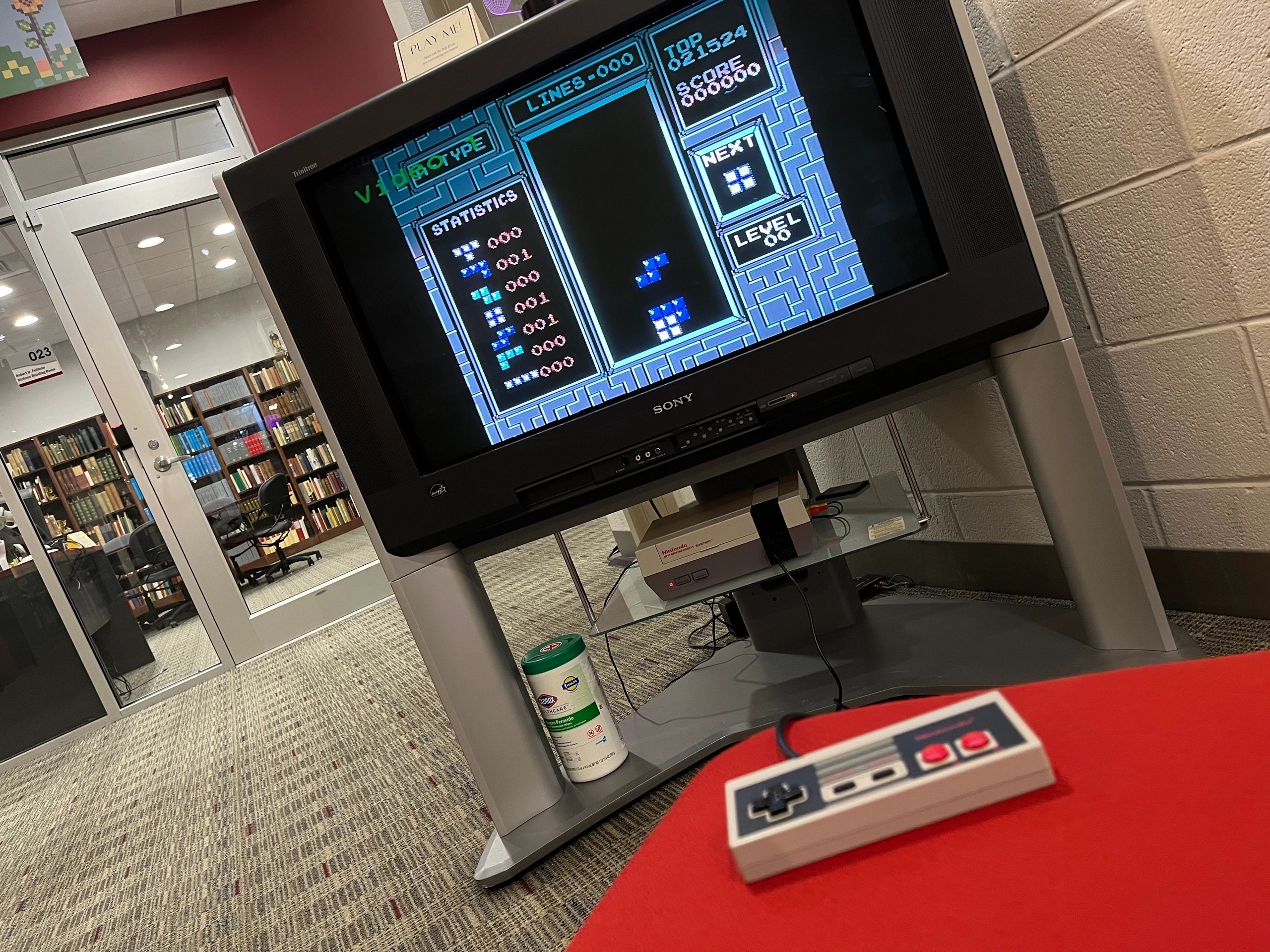
WORCESTER—This week marks the 40th anniversary of Alexey Pajitnov’s creation of Tetris, a game that evolved from a simple puzzle board game into a global sensation. To celebrate this milestone, Worcester Polytechnic Institute hosts a retro Tetris display featuring the classic Nintendo Entertainment System version.
The game is part of WPI’s special exhibit, “Video Game Console Wars 1976-2001,” which showcases the work and interests of WPI’s Interactive Media Archive and Interactive Media & Game Development Department.
“A colleague reached out to share he saw the birthday of Tetris was approaching and asked if we had a working copy,” Arthur Carlson, WPI’s university archivist and assistant director for special collections, told the Worcester Guardian. As part of the preparation for the exhibit installation, Gillian McCuistion, our access and outreach archivist, and our student assistants tested all of the consoles and games last summer, so we knew we had a working cartridge for the Original NES.”
The exhibit, which is on display through the end of August, features a different game each month to play on the Sony Trinitron that is used to connect all of the school’s early-generation consoles. Carlson explained that it allows players to interact with the games with era-appropriate peripherals.
Through Friday, members of the campus community and the public are invited to drop by the exhibit between 9 a.m. and 4 p.m. to compete for high scores, with a leaderboard tracking top players in this nostalgic Tetris tournament.
“I was an easy decision to feature Tetris for June,” said Carlson. “Given that it is also summer, it seemed a Tetris Tournament for campus bragging rights would be a fun way to connect with folks during a time of the year we traditionally get fewer visitors and our colleagues might have more time in their schedule to try their luck.”
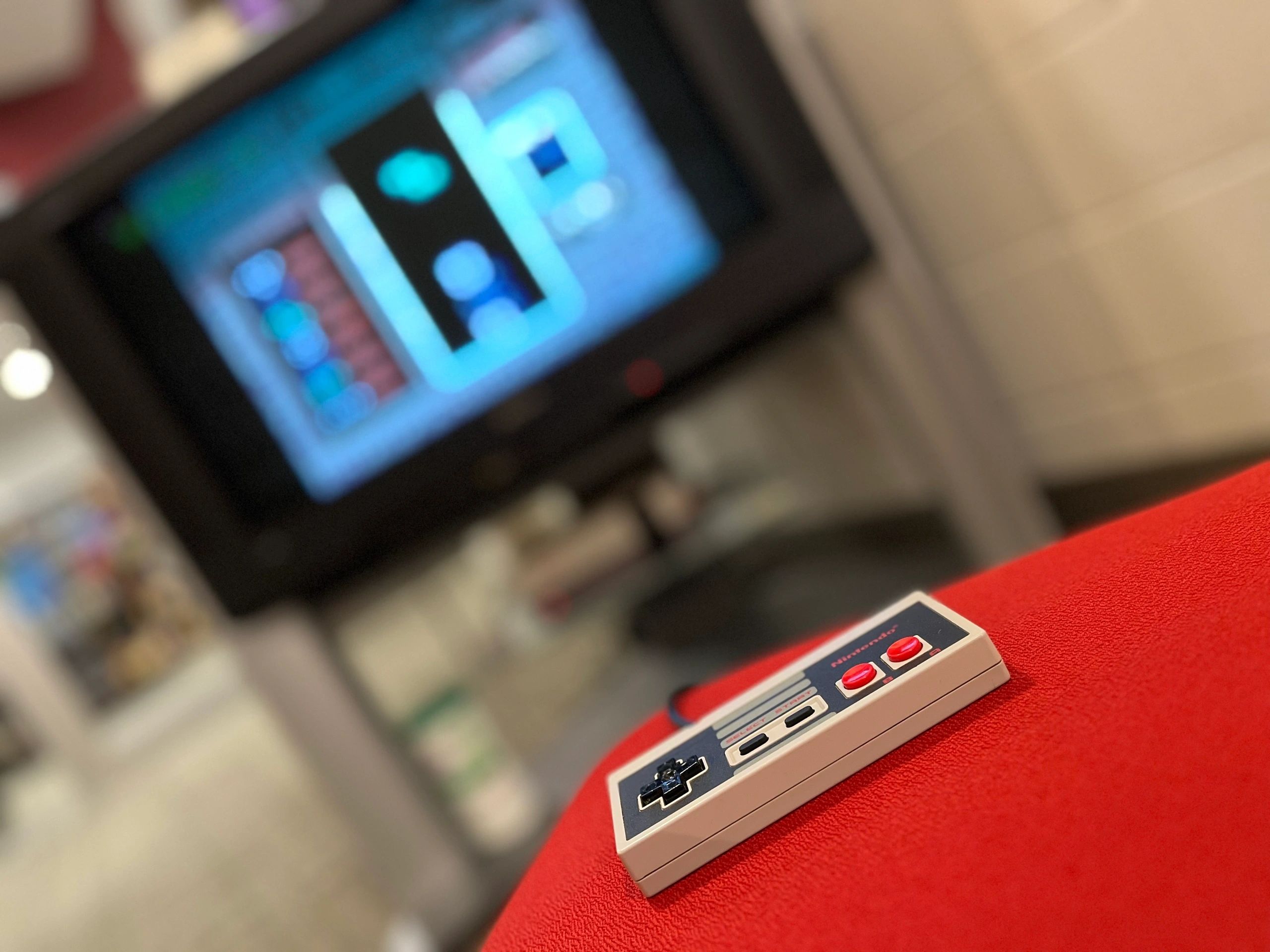
The exhibit, located in WPI’s library, features a collection of video game consoles and games spanning several decades, highlighting the collaboration between WPI’s Archives and Special Collections and the pioneering IMGD program, which launched 20 years ago as the nation’s first degree-granting program in interactive media and game development.
But back to Tetris. What made this idea of rotating and interlocking blocks as they fell from the top of the screen so addicting, so memorable, so everlasting in popularity?
“I think the simple game mechanics easily bridge cultural and generational gaps,” said Carlson, “and that has made it very portable to different devices and screen formats without losing or changing the essential gameplay. Plus, no matter how well we play, everyone’s game ends with a slightly stressful failure.”
The 1989 NES version features three songs—two original compositions plus Tchaikovsky’s “Dance of the Sugar Plum Fairy,” which is the default music if the user does not alter any settings. The 1860s Russian folk tune “Korobeiniki” has been a required element for all licensed editions since the early 2000s, explained Carlson.
Gladwin Gallery exhibits such as the current “Video Game” are primarily curated by the Archives and Special Collections team using items from WPI’s repository.
“Each year’s exhibit features an element of WPI history, so we naturally collaborate with appropriate departments each year,” said Carlson. “This year we worked with the Interactive Media and Game Development program, while recent partnerships have included Fire Protection Engineering, Humanities and Arts, and women that have historically helped remove gender barriers on campus.”