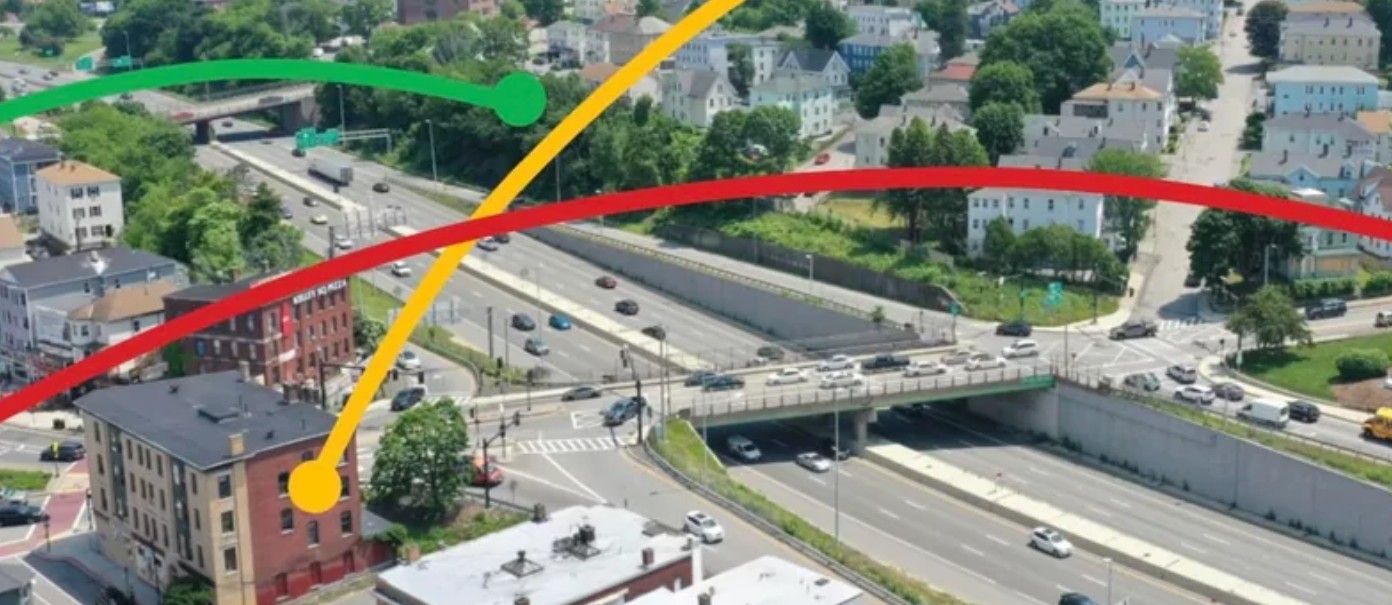
The Central Massachusetts Regional Planning Commission (CMRPC) is asking residents to help shape how the public is involved in transportation decisions across Worcester and the surrounding region.
Through its role as staff to the Central Massachusetts Metropolitan Planning Organization (CMMPO), which is the federally designated transportation planning body for Central Massachusetts, CMRPC released a draft public participation plan for public review and comment. The draft, which covers Worcester and the 39 surrounding towns and counties, was released June 17 and is required under federal regulations that require metropolitan planning organizations to regularly update their public participation policies.
The CMMPO oversees transportation planning for a 40-community region that includes Worcester and surrounding municipalities. Its plans influence which highway, bridge, bicycle, pedestrian and transit projects are ultimately eligible for federal transportation funding.
According to the draft plan, its purpose is to “ensure early and continuing access and opportunities for the public to express their views on transportation projects, and to promote active participation throughout the transportation decision-making process.” The document is also intended to guide all of the agency’s public engagement efforts.
Among the goals outlined in the proposal are reaching residents who have historically been underrepresented in transportation planning, making meetings and materials more accessible, presenting technical information in plain language, and clearly showing participants how their comments influence decisions.
As part of the public comment period, the CMMPO will hold two virtual public meetings on July 21, at noon and again at 5 p.m., where residents can learn more about the draft plan and provide feedback. Written comments are also being accepted during the review period.
The draft also places a stronger emphasis on measuring whether public outreach is effective. Rather than simply counting attendance at meetings, planners propose tracking factors such as demographic representation, response times to public comments, accessibility requests, participant satisfaction and whether public feedback ultimately changes projects or policies.
“The main reasons to update our PPP was the recent update of MassDOT’s PPP and it has been almost five years since our last PPP update,” Transportation Deputy Director Sujatha Krishnan told the Worcester Guardian. “We are trying to lineup our PPP to include items from the DOT’s PPP, include new ways of engaging with the public and include metrics to evaluate our public participation process. We expect to hear more from the meeting attendees about what methods/communication channels work best or do not for them. Did we include those methods in our PPP update and how can we make sure they stay engaged with our work continuously? Are we missing anything in the plan to ensure we have a robust public participation?”
In an effort to spark up more participation, the plan calls for a mix of traditional and newer outreach methods, including public meetings, pop-up events, online surveys, interactive mapping exercises, social media campaigns and visualization tools that simplify complex transportation proposals. It also emphasizes providing translated materials, accessible meeting locations and multiple ways for residents to participate, including by mail and telephone.
One notable addition is a section addressing the use of artificial intelligence in public engagement. According to the draft, AI could be used to produce plain-language summaries of technical documents, assist with translations, organize and summarize public comments, identify underserved communities for outreach, and improve accessibility through automated captioning and transcription.
The proposal stresses, however, that AI would supplement—not replace—staff judgment. It states that all AI-generated material would be reviewed by staff before being used in official communications and that the agency would disclose when AI tools are used during public engagement.
The Public Participation Plan is updated every four years and serves as the framework for how the CMMPO gathers public input while developing major transportation planning documents, including the Transportation Improvement Program, Regional Transportation Plan, Unified Planning Work Program and other transportation studies that guide future investments across Central Massachusetts.
Have a story tip, community concern, or insight to share? Email Editor Charlene Arsenault at carsenault@theworcesterguardian.org.
The Worcester Guardian is a nonprofit newsroom serving Central Massachusetts. Help keep independent reporting alive by making a donation today.