
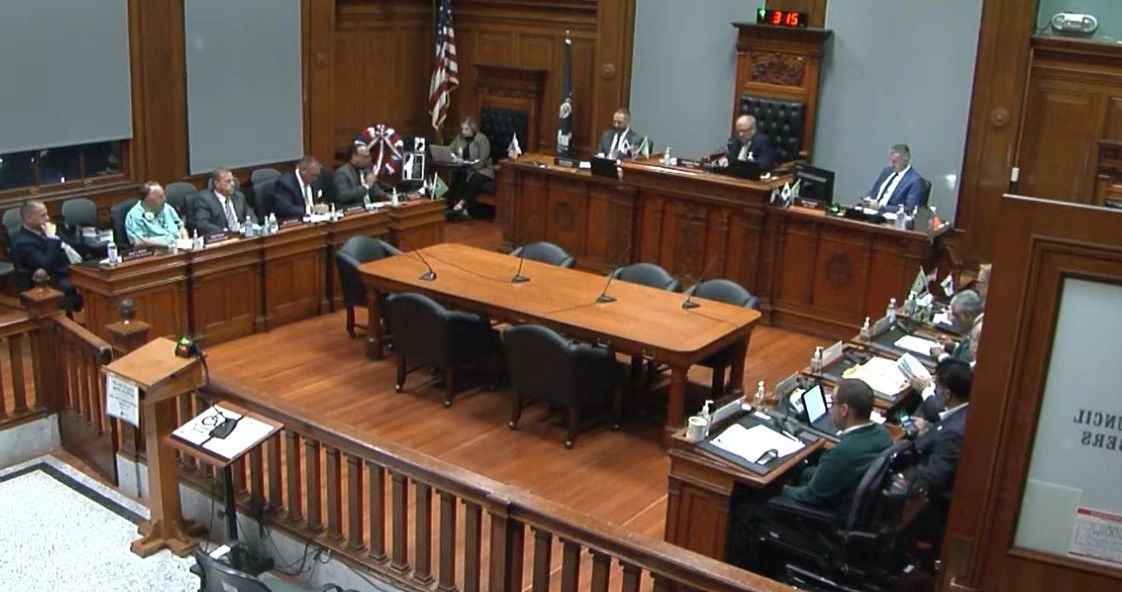
WORCESTER—The city council’s Tuesday meeting brings together a wide-ranging slate of updates and policy discussions, many of them less headline-grabbing than past weeks. At the center is a series of reports from City Manager Eric Batista’s administration that, taken together, offer a snapshot of how Worcester is managing growth, public safety, infrastructure and quality of life.
Housing makes an appearance, with councilors asked to approve a deed restriction that would permanently preserve an affordable homeownership unit on Gibbs Street. The move, tied to a Habitat for Humanity project, is small in scale — a single unit — but reflects a broader, ongoing strategy to lock in units as prices climb.
But much of the meeting’s substance is expected to revolve around Worcester’s public spaces—how they’re used, how they’re maintained and how they might change. A series of updates from the Department of Parks, Recreation and Cemetery paints a picture of a city leaning more heavily into its parks system, both as a recreational asset and an economic one.
That includes early planning work at Newton Hill in Elm Park, where students from UMass Amherst help shape a long-term improvement plan, as well as a broader update to the Worcester Common master plan. That effort is being driven in part by aging infrastructure—including the now 17-year-old skating rink—and the need to better support the steady stream of events held downtown.
At the same time, city officials are weighing whether to expand alcohol service at permitted events beyond its current footprint at Worcester Common and Green Hill Golf Course. The proposal would open the door for beer, wine and other alcohol sales at parks such as Elm Park, Green Hill Park and Institute Park — a shift framed as a way to boost attendance, support local businesses and expand programming, but one that will likely draw scrutiny over enforcement and neighborhood impacts.
Public safety updates also land on the agenda, including a quarterly report on the Worcester Police Department’s drone program. The report arrives as departments nationwide continue to expand drone use.
“The sUAS/Drone was deployed four times between Sept. 10, 2025 and March 10, 2026 for SWAT incidents,” wrote Batista in his correspondence to councilors introducing Saucier’s drone report. “All incidents resulted in the subject being taken into custody safely. The sUAS/Drone Team was also in attendance at the Special Olympics Polar Plunge fundraising event at Polar Park to speak to attendees about the WPD drone program. As for drone maintenance, one drone returned from repairs and one drone was sent out for camera maintenance.”
Alongside that, Worcester police are continuing their long march toward state accreditation, a multi-year process that requires meeting hundreds of professional standards. The department is currently in the self-assessment phase, working through policy updates and preparing for a formal on-site review—though full accreditation remains years away.
Environmental and infrastructure updates round out the agenda. The city’s annual “state of the lakes” report shows generally stable water quality across Worcester’s major bodies of water, though issues such as invasive plant growth and fluctuating oxygen levels remain ongoing concerns in places such as Indian Lake. Meanwhile, sustainability officials are advancing a slate of projects tied to energy efficiency, electric vehicle infrastructure and waste reduction, with a long-awaited Zero Waste Master Plan expected next month.
And after months offline, one of the most immediately visible changes for residents is back: ALERTWorcester, the city’s emergency notification system, has been relaunched following a cybersecurity-related shutdown. The new system includes more customizable alerts—but requires all previous users to sign up again.
Financially, the city’s midyear update provided by CFO Timothy McGourthy, shows Worcester largely on track—at least for now. As of Jan. 31, revenues are at about 58% of the fiscal year budget, with expenditures close behind at 57%, a balance officials say reflects typical timing rather than any red flags. Property tax collections are steady at roughly 57% of expected totals, and local receipts have brought in $31.3 million, slightly ahead of last year at this point.
But there are early signs of pressure: the city is absorbing a roughly $2.7 million reduction in state aid, split between municipal and school funding. And looming over the otherwise stable report is a far larger uncertainty — Worcester’s nearly $30 million liability in the long-running sewer dispute with Holden—which officials warn could significantly impact the city’s sewer fund, as negotiations continue behind closed doors.
Other highlights on the agenda:
- Energy costs, EV chargers and what’s coming next: Councilors receive a broad update from the Department of Sustainability and Resilience, touching on everything from rising energy costs to future infrastructure. Officials report more than 1,000 residents have already been connected to energy efficiency programs, including more than 450 low- and moderate-income households. The city is also advancing plans for new curbside electric vehicle charging stations — including locations near Elm Park and in the Vernon Hill area—with installation expected in summer 2026.
- Constables still handle the city’s legal legwork: Councilors are expected to approve two new constable appointments, a role that remains a quiet but essential part of the legal system. Constables are responsible for serving civil paperwork such as subpoenas, summonses and eviction notices, and in some cases can carry out limited enforcement duties under state law. They are not salaried city employees but are paid per job, typically by attorneys, landlords or private parties. While rarely discussed at length, the appointments help keep court processes moving behind the scenes.
- Free kids programming expands at Green Hill Farm: The city is introducing a new lineup of free monthly events for children at Green Hill Farm, aimed at increasing use of park spaces beyond the summer months. The programs include hands-on activities like crafts and seasonal projects, with a focus on younger children and families. Participation is capped, with advance registration required. Officials say the effort builds on recent staffing additions and reflects a broader push to activate parks year-round.
- Executive session returns to the Holden sewer case: As referenced earlier, for a third week, councilors enter executive session to discuss strategy related to Worcester’s ongoing legal and financial dispute with the town of Holden. The case — which has already resulted in a significant judgment against the city—now centers on how Worcester ultimately handles the payment and negotiate next steps. While discussions remain private, the continued executive sessions signal that the issue remains unresolved and financially significant.
Editor’s note: This story will be updated as agenda items are added or revised. Refresh this page for the latest developments.
Worcester City Council meets Tuesday, March 24, at City Hall in the Esther Howland (south) at 6:30 p.m. It is also live streamed on the city’s website.