
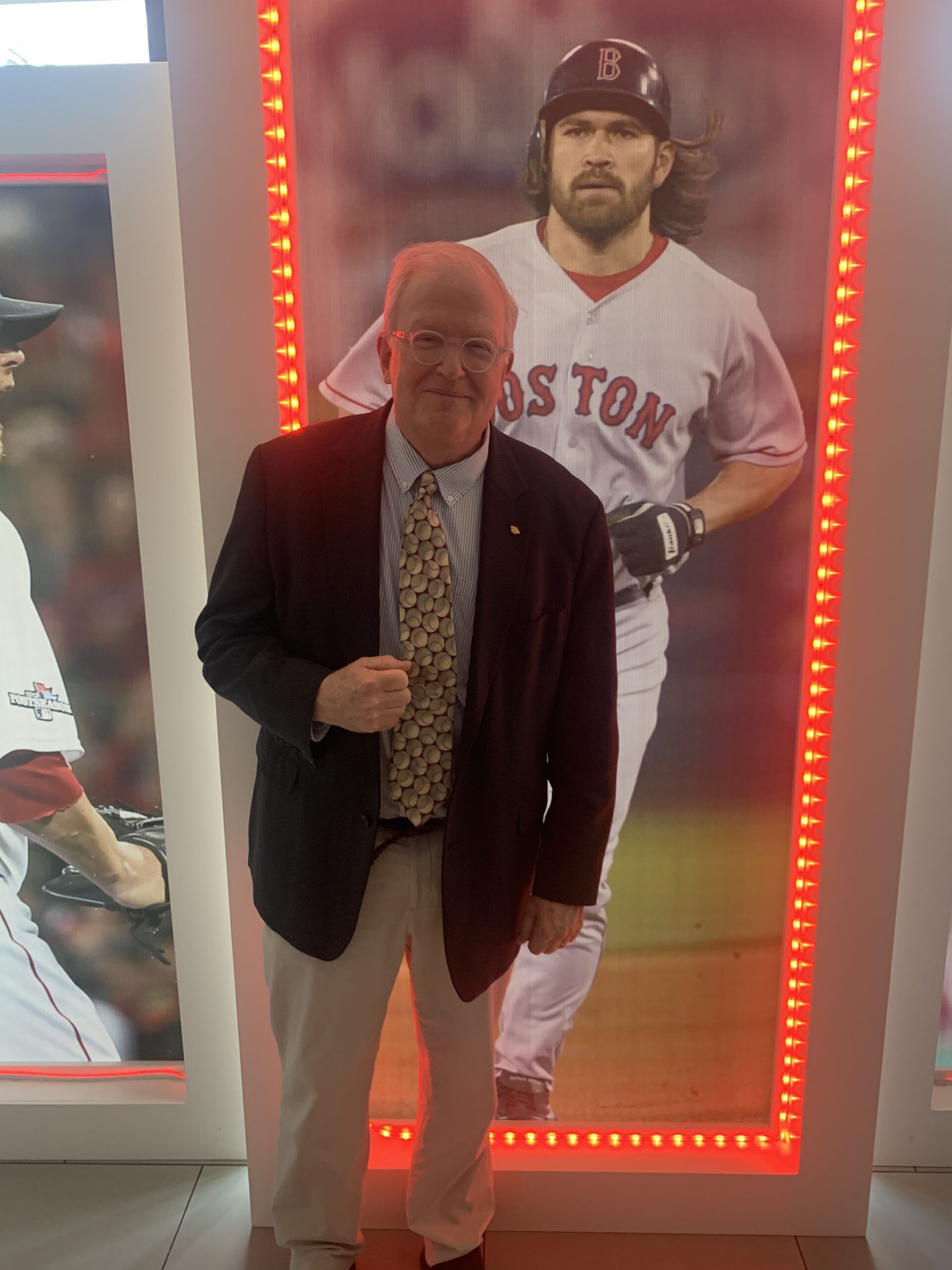
He did not know it some 70 years ago, but Richard Johnson was born to be a curator.
A native son of this city, his home growing up, Johnson retired as curator of The Sports Museum on April 30. He was the first employee — depending on your definition, but more on that later—of that esteemed institution when it opened as the New England Sports Museum in 1982.
Starting in a humble building tucked between Soldiers Field Road and the Charles River in Boston, the Sports Museum has grown into the Smithsonian of New England sports. These days, its headquarters is major league in the TD Bank Garden.
Curators are not like plumbers, electricians, teachers, etc. Their job description can be vague. One definition is that curators acquire interesting and historic artifacts and put them on display in places where visitors talk about them in hushed tones.
Johnson grew up on Richmond Avenue when it was a wonderful time to be a kid in Worcester. Holy Cross had a signficant presence on the national college sports scene. His dad, Robert, was a neurosurgeon who helped take care of Crusaders athletes.
The Boston big league teams were what, at the time, was an easy drive east without all that much traffic.
Here, there were teams in every neighborhood, for every sport and for every age.
“Life was a ‘Leave it to Beaver’ episode,” Johnson said. “It was really a charmed sporting existence back then.”
Johnson went to the Flagg Street school, the Bancroft School, Lawrence Academy in Groton and finally Bates College. He was an avid player of team sports, but not a great one. However, Johnson could run and was an All-New England competitor in cross country at Lawrence Academy.
“Sports was a very important part of my life but I was never a star athlete,” he said.
He did not just compete, though. Johnson also collected.
“I grew up in a household where my brother (Robert) was collecting things here and there and I always had collected odds and ends,” he said. “I was doing it in grade school and I was always interested in history.”
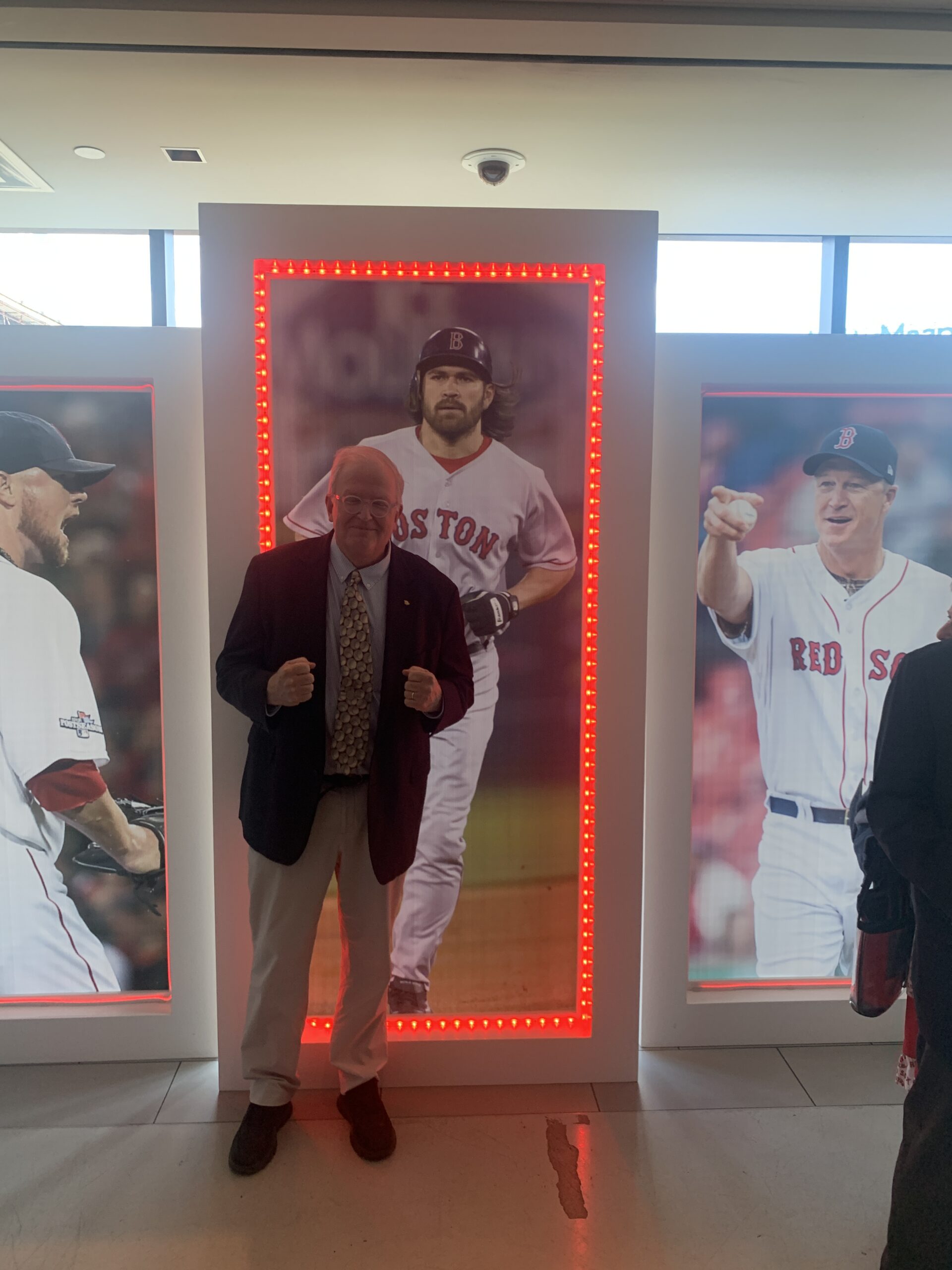
Johnson went to Crusaders football games when they played schools like Syacuse. He went to basketball games at the Auditorium and his favorite playe was Ed Siudut. Johnson was also a fan of the great Crusaders runner Art Dulong.
In 1982, Johnson was working as an associate arts editor at Houghton-Mifflin publishing. A friend told him about some people who were interested in creating a museum focused on local sports and suggested Johnson make a call.
“My eyes lit up,” he said.
Johnson made the call. He met with the committee. They hired him as curator, the first employee of the New England Sports Museum, depending on your definition of “employee.”
“I started as a volunteer and became the first employee of the museum shortly thereafter,” Johnson recalled, “but there was a caveat to it and it was a pretty big one. They told me:
‘We can’t afford to pay you now. We’ll give you some deferred pay when we get some money if you’re still willing to do this.”
Johnson figured, “I think I can pull this off, not knowing it would be three years. The carrot was on the stick because I figured if I didn’t make a go of it I wasn’t gonna get anything but if we did make a go of it I’d get my back pay.”
The gamble worked out in large part because of his wife. The former Mary Hamilton, she was valedictorian of the Millbury High Class of 1973 and went on to have a career as an attorney with the U.S. Treasury Department.
“She is the real hero of the Sports Museum,” Johnson said. “She had gone to law school and married a guy chasing this butterfly. She was very patient and has been for 40-odd years.”
During his 44 years with the Sports Museum Johnson has been responsible for acquiring a collection worth more than $15 milion. He has found time to write or edit 25 books.
Rusty Sullivan, the executive director of the Sports Museum, calls him “A leading authority on Boston sports.”
Johnson has, through the decades, met countless famous athletes and not just ones with direct connections to New England sports. For all of those people, his favorite athlete lives merely a long three-point try from where Johnson grew up.
“I would have to say it’s Bob Cousy,” Johnson said. “I remember meeting him and talking with him for the first time. I had grown up idolizing Bob Cousy, and he is still going strong at age 97. A lot of people don’t realize that he helped start the players union. Guys getting who are getting paid $60 million a year should at least be sending him a fruitcake at Christmas.”
Bobby Orr is up there, too.
“On any given night you’d see something you had never seen before,” Johnson said. “There are select people in any endeavor who are vessels of divine intervention, but not many performers are. He was other wordly and an incredibly nice gentleman.
“Another is someone who I barely spoke to, but just being in his presence was enough. Can I think of a better champion than Bill Russell?”
Johnson’s favorite sports moment happened on Oct. 1, 1967 when the Red Sox won the American League pennant after finishing in ninth place the year before. The Sox had beaten the Twins to clinch at least a tie for first place but had to wait to see if the Angels could beat the Tigers to the win the pennant outright.
“That final day was just the best,” he recalled. “I remember being out in my driveway throwing a tennis ball against the garage and listening to WTAG carrying the feed of the Angels game.
“They were a 100-1 shot. The season was a tapestry of improbability and serendipity.”
Johnson has been to other museums and several Halls of Fame. The Baseball Hall of Fame in Cooperstown is his favorite by far.
“It’s not even close,” he said. “Cooperstown is the Vatican of Halls of Fame.”
Johnson’s favorite artifacts are the various sculptures of great Boston athletes created by the late Armand LaMontagne, a graduate of Worcester Academy. He has a fondness for some you-are-there pieces that wound up at the Sports Museum.
They include the home plate used for the last game at Braves Field, a souvenir dug up right after the team announced its move to Milwaukee in 1953; the goal — iron,but not netting — that Orr scored into to win the Stanley Cup in 1970, donated by some Peabody folks who had managed to haul it out of the old Boston Garden; and the Celtics’ portable 24-second clock straight from the trunk of Red Auerbach’s car, used in the team’s early days when they played exhibition games in high school gyms, armories, etc. that did not have permanent ones installed.
The Sports Museum has evolved through the decades. It is not just about artifacts. It includes things like the Boston vs. Bullies outreach initiative which has touched the lives of more than 330,000 kids.
“You can literally say it’s a program that might have helped save lives through the power of sports for a young audience. It’s a platform for good and we couldn’t be more proud of it.”
Johnson will remain part of the Sports Museum.
“As long as they want me,” he said. “I’m on part-time status. That gets me into the building. Unfortunately, it doesn’t get me into the parking lot….we haven’t forgotten where we’ve come from. We still have to hustle for every dollar. What I enjoy most about it is being around the young people.
“We have people with Master’s Degrees. One kid has a Ph.D. It’s a wonderful spirit.”
During Johnson’s time at the Sports Museum he has lived in Braintree, a place that reminds him of home, he says.
“I grew up where there was a combination of history and sports blended together,” he said. “The city of Worcester is still a very important part of my life.”
And it is still the place where his favorite athlete, one he calls “The Village Elder of New England sports,” lives in same place he was at when Johnson was a neighbor.
Bill Ballou can be reached at vetgoalie@aol.com