
WORCESTER—Worcester residents will be asked this November whether the city should request that private colleges and universities invest 0.5% of their annual endowments into a community impact fund.
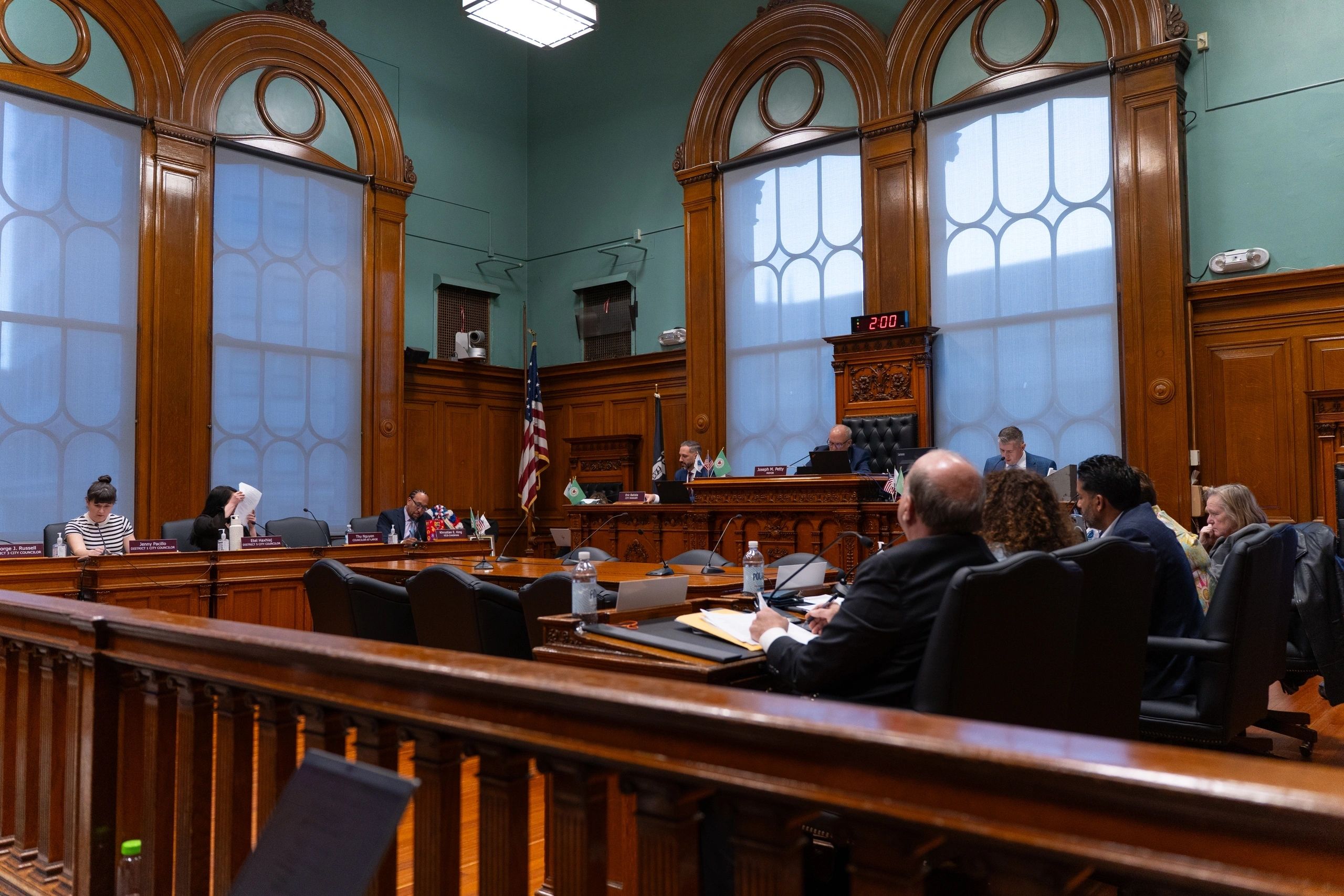
The non-binding question was unanimously approved by the city council at its April 15 meeting, along with three related orders aiming to deepen the relationship between local higher ed institutions and the city.
The idea was first introduced publicly in a joint announcement from Mayor Joseph Petty and District 2 Councilor Candy Mero-Carlson the week prior, when the pair filed two orders intended to establish “a new, more formal model” for partnerships between the city and local colleges.
The orders cited concerns about recent college property acquisitions—$64 million worth over 18 months by MCPHS, WPI and the College of the Holy Cross—which removed taxable property from the city’s tax rolls without prior notice. Petty and Mero-Carlson also pointed to the defunding of the Higher Education Consortium of Central Massachusetts as evidence of a need for more structured collaboration.
The proposed fund would support housing, economic development and community projects. The idea is not a tax or formal PILOT (payment in lieu of taxes) program, Mero-Carlson said, but rather an opportunity for schools to invest in the city’s future.
“We can’t sustain this kind of negative impact going forward,” said Mero-Carlson, citing $1.8 million in lost tax revenue from recent real estate acquisitions by local schools. “Every single week, we raise the question of [how] we don’t have enough housing. I think that this is a great opportunity for us to look at.”
Calls for representation and collaboration
In addition to the ballot question, the council requested that the city manager:
- Consult with the Worcester Regional Research Bureau and Greater Worcester Community Foundation to study similar community impact models
- Meet annually with college leadership
- Encourage colleges to appoint more Worcester residents to their boards
Mero-Carlson noted that local colleges have more than 300 board members but only six are from Worcester. “It’s important for us to have a seat at the table,” she said.
Mayor Joseph Petty called the idea a way to strengthen ties. “It’s not a tax. It’s asking for an investment in the future of the city of Worcester,” he said.
According to the release from the previous week, the city’s five private colleges and universities have a combined endowment of approximately $3.88 billion. A 0.5% contribution from each would generate more than $19 million annually for local investment. Petty and Mero-Carlson said this model would allow schools to see a return on investment while supporting the city’s economic development, housing, and job creation efforts.
Looking at Providence — and limits of enforcement
Councilor George Russell pointed to Providence’s long-standing PILOT program, which has pulled in $200 million over 20 years. He suggested Worcester might get similar returns with a strong ask.
However, City Solicitor Alexandra Kalkounis clarified that the city cannot compel schools to comply. “It would have to be a negotiated deal,” she said.
Caution over timing and federal pressure
Council Vice-chair Khrystian King supported the concept but expressed caution, especially in light of federal scrutiny of higher ed institutions.
“The timing of this makes that very, very acutely a concern,” he said. “We know that the Trump administration and the federal government are attacking our colleges and universities.”
King added that further research should be done before acting, including understanding how endowments support student aid and academic programs.
City Manager Eric Batista said he’s already in regular contact with school leaders and some have shown interest in learning more about PILOTs. One institution even invited city officials to give a presentation on the topic.
Next steps and possible alternative
Russell floated the idea of skipping the ballot entirely by issuing a direct request from the council.
“If we can only ask, let’s ask them,” he said.
His motion to send the matter to committee failed, 6–4, but the motion to add the question to the ballot passed unanimously, as did the three other related directives.
Contact Steve Smith at steve@stevephotographysmith.com