
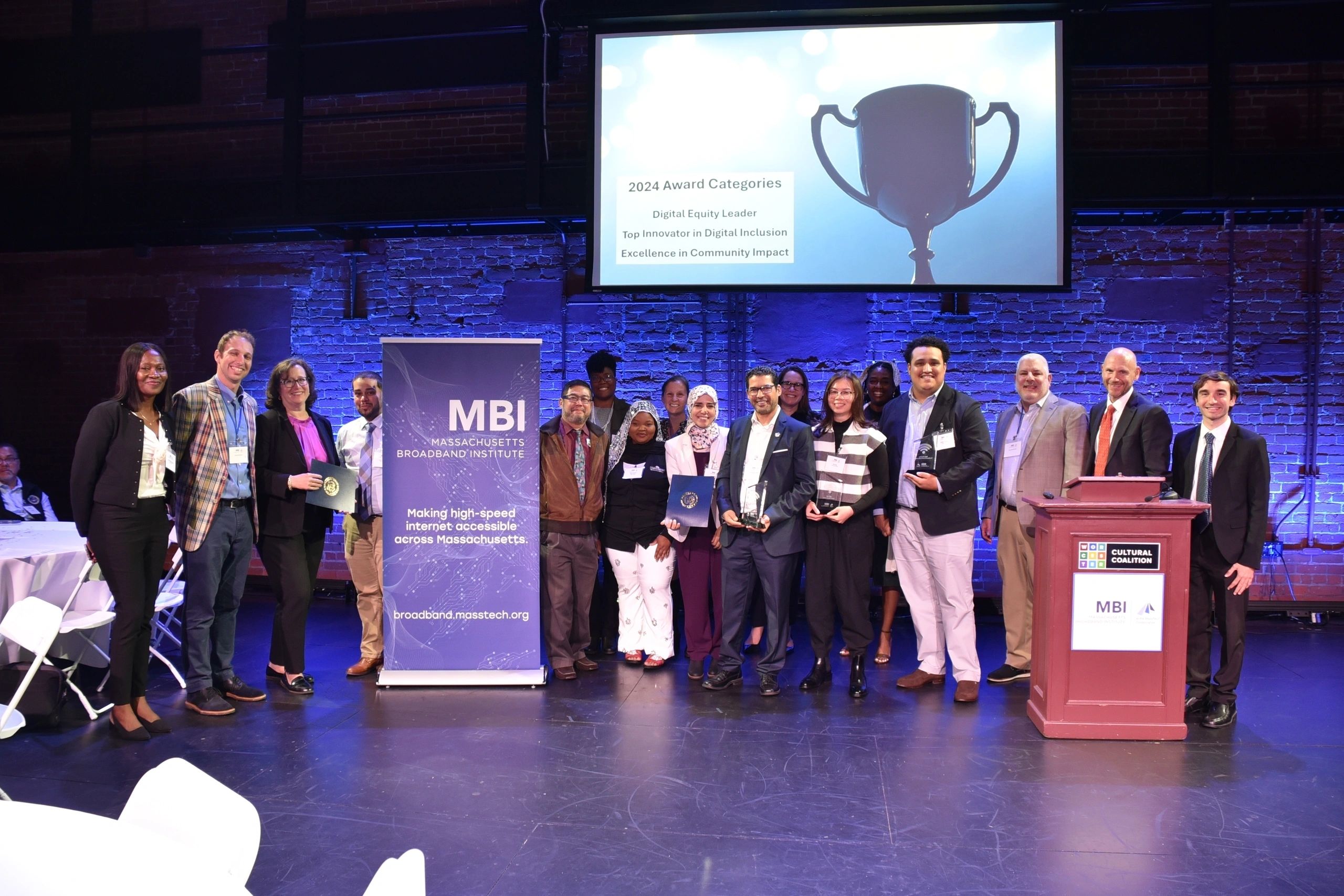
WORCESTER—The Massachusetts Broadband Institute (MBI) held its first-ever Digital Inclusion Awards last week, celebrating organizations and individuals who have made exceptional contributions to expanding internet access, adoption, and affordability across the state.
The event, hosted at the BrickBox Theater in Worcester during National Digital Inclusion Week, brought together digital equity professionals from across Massachusetts to form partnerships and recognize achievements in closing the digital divide.
“We are excited to recognize the community-led initiatives across Massachusetts that aim to tackle the digital divide and ensure all our residents can get online,” said Massachusetts Economic Development Secretary Yvonne Hao in a statement. “These local organizations help us ensure that everyone in our state has the access and tools they need to fully participate in the 21st-century economy.”
The awards ceremony honored winners in three categories: Digital Equity Leader, Top Innovator in Digital Inclusion, and Excellence in Community Impact.
- Digital Equity Leader: Mei Ngo, from Tech Goes Home
- Excellence in Community Impact: Tech Foundry
- Top Innovator in Digital Inclusion: Massachusetts Association of Computer and Internet Resources (MACIR)
“Digital equity means providing people with the tools, resources, and support needed to access and use the internet effectively,” said MBI Director Michael Baldino. “Our partners across the state are working tirelessly to ensure that residents not only have internet access, but also the skills to use it. We want to thank our libraries, local governments, non-profits, small businesses, and volunteers who devote their time and attention to bridging the digital divide in Massachusetts.”
Jake Stern, a spokesperson for the MBI, told the Worcester Guardian, “The winners are chosen based on exceptional contributions to the digital equity ecosystem in Massachusetts. These awards recognize the efforts of local leaders working to close the digital divide and ensure everyone has the skills needed to join the digital economy.”
The MBI continues to spearhead several initiatives aimed at increasing digital access, including a $56.5 million Digital Equity Partnerships program, a $45 million Gap Networks Program to deploy broadband infrastructure in underserved areas, and a $22 million Residential Retrofit Program to enhance broadband access in affordable housing.
With over 78 municipalities now participating in the state’s Municipal Digital Equity Planning program, Massachusetts is committed to making significant strides toward achieving digital equity for all.