

WORCESTER—Worcester has enacted legislation allowing the installation of surveillance cameras on school buses to monitor and document traffic violations, following approval from both chambers of the Massachusetts Legislature. The law, sponsored by State Senator Michael O. Moore (D-Millbury), aims to address ongoing safety concerns around school transportation.
Worcester Public Schools Transportation Director Michael Freeman highlighted the severity of the issue, noting, “Just this week, we’ve had two stop signs ripped off the side of our school buses. So not only are people not observing the bus stop sign, they’re actually hitting the stop sign.” He identified the most problematic areas as Park Ave, Pleasant Street, Main Street, Airport Drive and Airport Hill.
Under the new legislation, school districts can equip buses with cameras to capture photo and video evidence of vehicles violating bus stop signs. “By allowing the use of school bus traffic cameras,” said Moore, “we are largely automating the process of detecting violations of the law, but leaving ultimate decisions of whether to issue a decision to the local police department.”
Moore added that when a camera detects that a driver failed to stop for a school bus that has its stop sign displayed, photos and videos capture the vehicle and it is transmitted to the police department.
“From there, the department will review the footage and determine whether to issue a citation to the registered owner of the vehicle,” said Moore.
Violations can result in penalties up to $250, compared to standard stop sign violation fines.
“Right now what we’re working on is working with vendors to actually find out how the system works,” said Freeman, explaining further the implementation process. “We are scheduled for a meeting with the Worcester police soon, because a big part of it is going to be the police given that they’re the only ones that can actually enforce the tickets.”
Emphasizing the broader goal, Freeman stressed, “The most important thing is the education part of it. It shouldn’t be about an ‘I got you’ type of thing. It should be about educating individuals that may not know that it is illegal to pass a school bus sign.”

Moore added, “What excites me most about this bill is that it allows cities and towns to decide for themselves whether school bus traffic cameras are the right solution for their community, and in the places that do choose to use them, it will help apply the law to those who violate it evenly and without bias. It’s a win-win-win – safer roads, unbiased enforcement, and more time for officers to focus on other issues.”
When asked whether cameras will be installed on every school bus, a WPD spokesperson said, “We are working with Worcester Public Schools and other entities on this.” The city has already taken preliminary enforcement steps, including deploying police cruisers to areas with high violation rates.
The implementation of this surveillance system brings both advantages and challenges. The cameras are expected to enhance enforcement of existing traffic laws and increase deterrence of dangerous driving behavior throughout the city. The system also provides documented evidence for legal proceedings and offers additional protection for student safety.
However, the program has raised concerns about privacy implications, questions regarding enforcement consistency, and the additional costs associated with camera installation and maintenance. Some have also questioned whether police departments have sufficient resources to review the surveillance footage effectively.
Bethany Mann, a Worcester resident and mother of young children, supports the initiative: “I get the issue of kids’ privacy with the cameras, but there are cameras inside the buses recording, so I don’t see an issue with it being on the outside as well.” She added, “I don’t like my kids’ faces being recorded or shown on other cameras, but when it comes to my kids’ safety, that goes out the window. I’d rather there be physical recordings of it if anything were to have happened to them.”
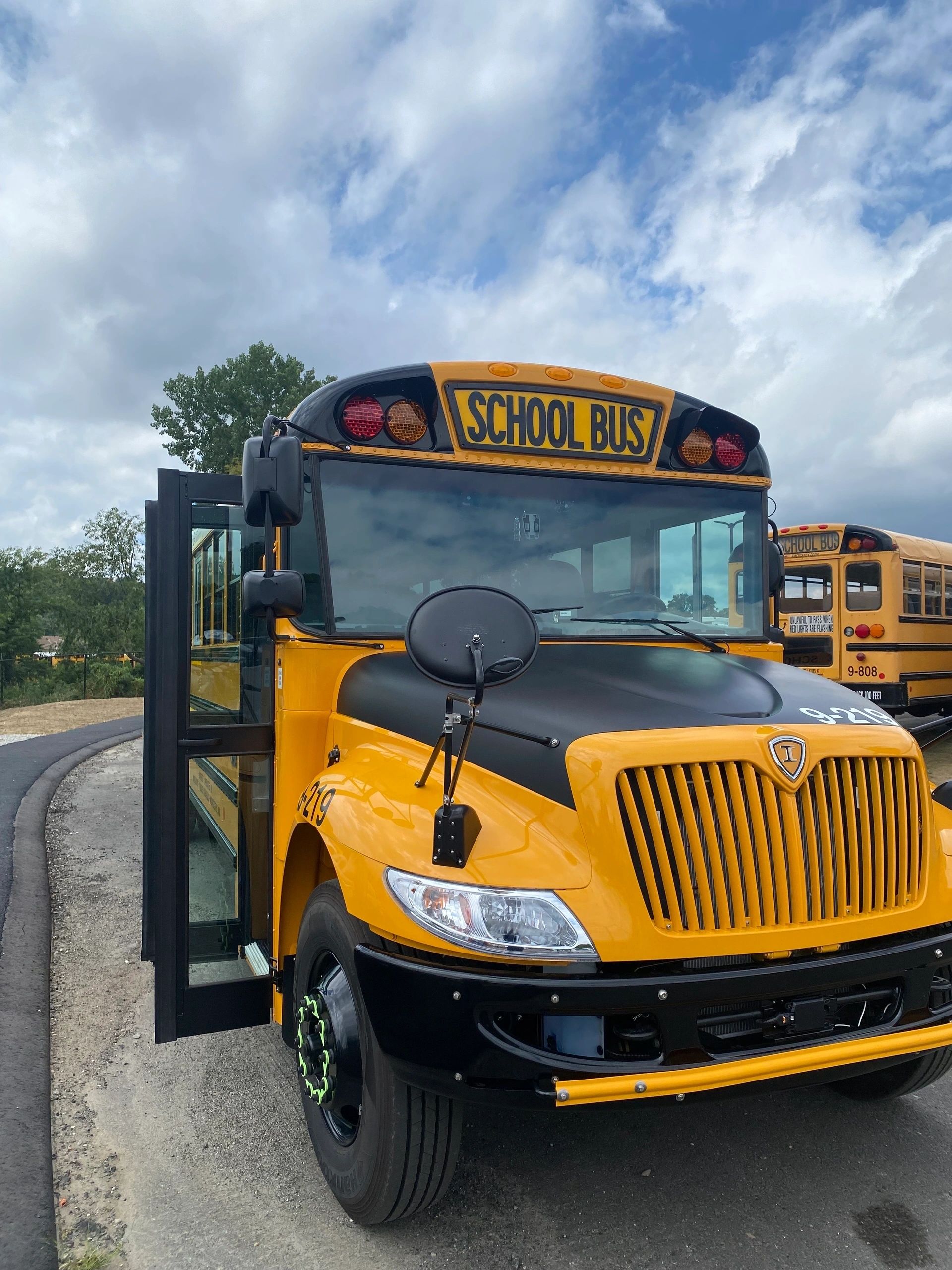
Addressing safety and privacy concerns, Moore replied, “We drafted this law with the privacy of students, drivers, and pedestrians at the forefront by requiring the implementation of reasonable measures to avoid capturing identifiable images of people unless unavoidable.”
The law also requires that non-violation recordings be destroyed within 30 days of capture, while violation-related data must be deleted within a year after final case resolution.
Moore added, “Data, including images and videos, will be owned by the municipality and cannot be used for any other purpose by vendors. To ensure transparency, districts using the system must file an annual report to the Massachusetts Department of Transportation detailing citation statistics, outcomes, costs, and revenue generated.”
The measure is part of Worcester’s traffic safety strategy which includes reduced citywide speed limits, crash data mapping, and intersection improvements. City Manager Eric Batista insists that street safety remains a “shared responsibility” among community members.
The Department of Transportation and Mobility is working closely with Worcester police to implement additional safety measures at high-risk locations throughout the city. This collaboration includes immediate safety improvements at key intersections such as South Ludlow and Clover Street, updated signage, and enhanced pavement markings. The city is also maintaining a Vision Zero StoryMap to track crash data and inform future safety improvements.
“We should all have common sense to know that you wanting to not waste time stopping is putting kids’ lives in danger,” said Mann.
Matt Olszewski is a freelance content and news writer based in Boston, MA. In his free time, Matt enjoys running, hiking or skiing. Matt recegraduated with his MPH from Tufts University. He can be reached at mattoskier@gmail.com
- The Worcester Guardian is an independent nonprofit news organization. Support local journalism by making a DONATION today.
