
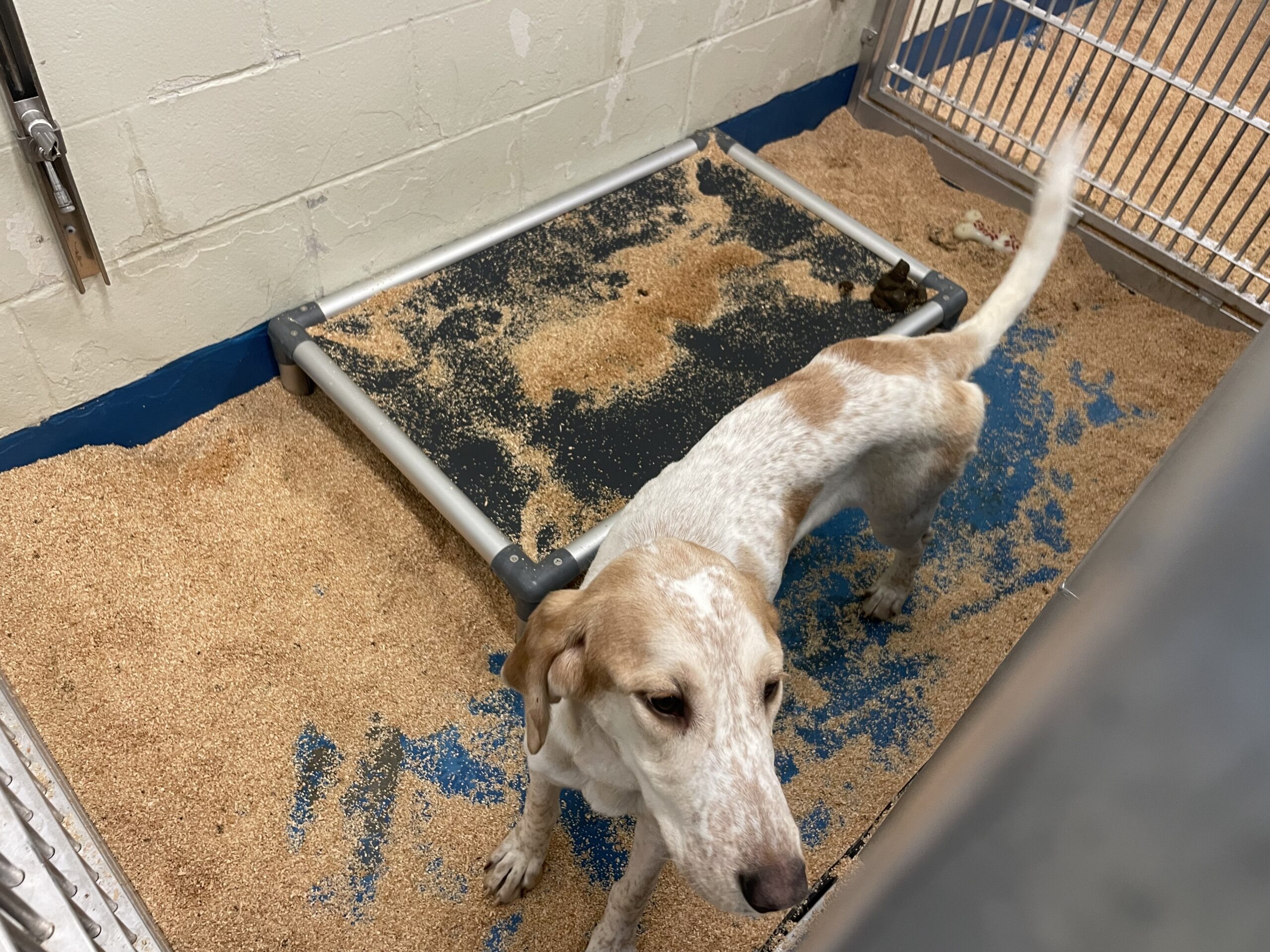
WORCESTER—People for the Ethical Treatment of Animals plans to file a complaint Thursday, Nov. 19, with the U.S. Department of Agriculture seeking an investigation into animal welfare practices at UMass Chan Medical School, citing experimental stroke research in which nine of 12 dogs failed to survive to the planned end of a study and a separate incident involving a dog euthanized after suffering serious complications during a 2026 experiment.
The complaint also draws attention to the university’s acquisition of 33 dogs over a six-month period this year, including 26 young beagles purchased from a commercial breeding facility in New York that has faced protests from animal rights advocates.
Records obtained by PETA and reviewed by the Worcester Guardian document five shipments between Feb. 5 and July 24, 2026, involving dogs purchased from Marshall BioResources in North Rose, New York, and Oak Hill Genetics.
The new complaint focuses on research conducted in the laboratory of Matthew Gounis, a professor at UMass Chan whose work includes experimental treatments for stroke.
PETA alleges that the frequency and severity of complications associated with the experiments raise questions about veterinary care, the adequacy of safeguards for research animals and oversight by the university committee responsible for approving animal studies.
The organization is asking the USDA to investigate possible violations of the federal Animal Welfare Act, particularly requirements governing adequate veterinary care and institutional oversight of animal research.
The allegations have not been established as federal regulatory violations.
Records document 33 dogs acquired in 2026
The acquisition records show that UMass Chan received 26 male beagles from Marshall BioResources in three shipments: eight on April 21, nine on May 19 and nine shipped June 30 and received July 1. The dogs were approximately 13 to 16 months old at the time. The university also purchased seven female hound-mix dogs from Oak Hill Genetics, including four delivered Feb. 5 and three on July 24. The shipping and purchasing records identify the animals individually and include purchase prices, order information and research protocol numbers.
An April invoice from Marshall BioResources lists eight beagles at $2,657 each, along with boarding and transportation charges, for a total of $25,039.12. Records of the subsequent Marshall shipments list additional charges totaling $27,352.77 and $26,823.03.
The documents establish the acquisition of the dogs but do not provide complete information about what ultimately happened to all 33 animals.
Dr. Katherine Roe, responding to questions from the Worcester Guardian on behalf of PETA, confirmed that the newly acquired dogs are separate from the animals involved in an earlier published study in which nine of 12 dogs did not survive to the planned endpoint.
“The fact that the experiments were published in 2024 rules out the possibility that any of the 33 dogs shipped to UMass Chan in 2026 were part of that 12 dog cohort included in the 2024 paper,” Roe told the Worcester Guardian.
PETA has not provided mortality or outcome records for all 33 dogs purchased this year.
Nine of 12 dogs did not reach study endpoint
PETA’s complaint cites a previously published study involving 12 dogs subjected to experimental strokes.
According to Roe’s description of the research, investigators inserted catheters through arteries in the dogs’ groins and advanced them through the vascular system toward the brain. Researchers then temporarily blocked a major artery supplying the brain for 45 minutes to induce an ischemic stroke, a condition caused by interrupted blood flow.
Some of the dogs subsequently received an experimental treatment involving chilled saline delivered through an artery supplying the brain.
The research was intended to examine stroke-related brain injuries and potential treatments, using magnetic resonance imaging and neurological assessments to evaluate the results.
The procedures resulted in serious complications.
According to Roe, two dogs experienced blood vessel injuries that caused bleeding around the brain, another developed extensive brain damage and researchers were unable to restore blood flow in a fourth. Four additional dogs were euthanized because their experimentally induced strokes were too extensive, while another was euthanized after failing to recover from an MRI procedure.
Only three of the 12 dogs survived to the study’s planned 30-day endpoint.
PETA argues that the outcomes should have prompted greater scrutiny of the research protocols and the risks to animals subjected to the procedures.
The study involved animals used before 2026. Its results do not establish the mortality rate among the 33 dogs acquired this year.
Veterinary record raises questions about oxygen restriction
A separate incident documented in university veterinary records concerns a female dog identified as F357, one of four animals purchased from Oak Hill Genetics and delivered to UMass Chan on Feb. 5.
The dog experienced a serious adverse reaction during a March 25, 2026, experiment.
According to a veterinary report reviewed by the Worcester Guardian, veterinarians were called at 12:24 p.m. after the animal developed dangerously low blood pressure that had not responded to medication. The report states that the dog’s blood pressure and blood oxygen levels dropped approximately five minutes after administration of an experimental substance.
Veterinarians considered a possible anaphylactic reaction or blood vessel dilation associated with the test substance. They administered diphenhydramine, adjusted anesthesia, increased intravenous fluids and continued medication intended to raise blood pressure. The dog’s blood pressure gradually improved, reaching an acceptable level by 1 p.m. A blood gas test, however, revealed metabolic acidosis, a condition involving excess acidity in the blood. Veterinarians administered sodium bicarbonate, which improved the blood’s acidity. The animal continued to experience low blood oxygen levels despite an increased respiratory rate. The veterinary report states that the dog remained on a ventilator receiving medical-grade air and that the research protocol prevented the use of pure oxygen.
“100% O2 was not an option due to the approved study protocol,” the report states.
The document further states that the experimental blood clot could not be removed and that the dog would be euthanized rather than allowed to recover. Additional efforts to increase oxygenation were therefore considered unnecessary.
PETA is asking federal regulators to examine whether the research protocol improperly restricted veterinary treatment and whether the circumstances complied with requirements for adequate animal care.
The record documents veterinary intervention, including treatment that improved the animal’s blood pressure and blood chemistry. It does not establish whether administering pure oxygen would have changed the outcome.
Roe said that PETA obtained the veterinary report through a public records request and does not currently have additional medical records for F357.
University committee reviewed incident
The adverse reaction was subsequently discussed by UMass Chan’s Institutional Animal Care and Use Committee, or IACUC, during its April 13 meeting.
The committee is responsible for reviewing animal research protocols, monitoring compliance and evaluating animal welfare concerns.
Minutes from that meeting describe a dog that experienced a reaction to an experimental substance. The minutes state that the attending veterinarian was contacted and the animal was successfully treated with medications to raise blood pressure and address a possible allergic reaction.
Committee members discussed whether the reaction resulted from an allergy or another effect of the experimental drug.
The committee agreed that future studies could proceed without giving dogs antihistamines beforehand because doing so might interfere with researchers’ ability to evaluate the drug’s effects. Instead, the committee approved a corrective action plan requiring an attending or clinical veterinarian to be available to provide immediate support during future testing. The minutes indicate that committee members were given an opportunity to discuss the incident privately to avoid potential conflicts of interest. No member requested additional discussion, and two members abstained from voting.
The committee minutes mistakenly identify the research protocol as PROTO201900298. According to PETA’s final complaint, UMass Chan subsequently clarified that no protocol with that number existed and that the correct designation was PROTO201900269, the same protocol associated with F357’s adverse event.
The corrective action plan was approved unanimously by the 13 members who voted.
The committee minutes describe the treatment of the adverse reaction but do not address the restriction on administering 100% oxygen or explain the decision to euthanize the animal.
That distinction is among the issues PETA wants federal regulators to examine.
Questions about animal welfare oversight
PETA alleges that the documented complications raise broader concerns about whether UMass Chan’s research oversight procedures adequately protect animals from avoidable suffering.
Federal regulations require research institutions to maintain programs of veterinary care and establish committees to review animal experiments, including procedures intended to minimize pain and distress.
PETA is asking the USDA to investigate whether the protocols used in Gounis’ laboratory contained appropriate safeguards, whether veterinary intervention was unnecessarily restricted and whether the university adequately reviewed serious adverse outcomes. The complaint seeks a regulatory determination, not a court judgment. The filing itself does not establish that the university or its researchers violated federal law.
The university’s animal research program has been the subject of previous complaints by PETA.
In December 2025, the organization filed complaints with state and federal regulators alleging inadequate veterinary staffing, delayed treatment, improper pain management and other problems involving dogs, rabbits, ferrets, pigs and other research animals.
In October, PETA filed another USDA complaint concerning the deaths of two young pigs following cardiac experiments at UMass Chan. The USDA subsequently acknowledged that it was reviewing those allegations.
The organization also filed a separate lawsuit in October seeking the identities of members of UMass Chan’s animal research oversight committee. That case concerns access to public records rather than a determination of whether animal welfare violations occurred.
Read PETA’s complaint to the U.S. Department of Agriculture, dated Nov. 19, 2026, outlining its allegations concerning dog experiments at UMass Chan Medical School. The complaint was provided to the Worcester Guardian ahead of its planned submission Thursday.
University responds to allegations
In response to questions from the Worcester Guardian about the latest allegations, UMass Chan Medical School reiterated its commitment to animal welfare and compliance with federal regulations.
“UMass Chan Medical School is committed to the ethical and humane treatment of animals in research and is dedicated to rigorous compliance with all policies and laws concerning the care of animals,” Sarah Willey, assistant vice chancellor for media relations, said in a statement Wednesday.
“Animal welfare is an integral part of the institution’s research work.”
Willey also directed readers to the university’s website on responsible animal research, which describes its approach to animal care and its position that animal studies contribute to advances in medicine.
The statement did not specifically address questions about the 33 dogs acquired in 2026, the complications described in the published stroke study or the veterinary treatment of dog F357.
The Worcester Guardian also sought comment from the USDA concerning PETA’s planned complaint. A response had not been received as of publication.
The Worcester Guardian sought comment from UMass Chan regarding the new allegations and from the USDA concerning the complaint. Responses had not been received as of publication.
The USDA has not announced findings concerning the allegations in the new complaint. This report will be updated as additional information becomes available.
Have news, tips, or a story worth telling? Feedback to this story? A good recipe, a funny joke or a suggestion? Reach Editor Charlene Arsenault at carsenault@theworcesterguardian.org—because good stories (and great scoops) deserve to be shared.
- The Worcester Guardian is an independent nonprofit news organization. Support local journalism by making a DONATION today.
