
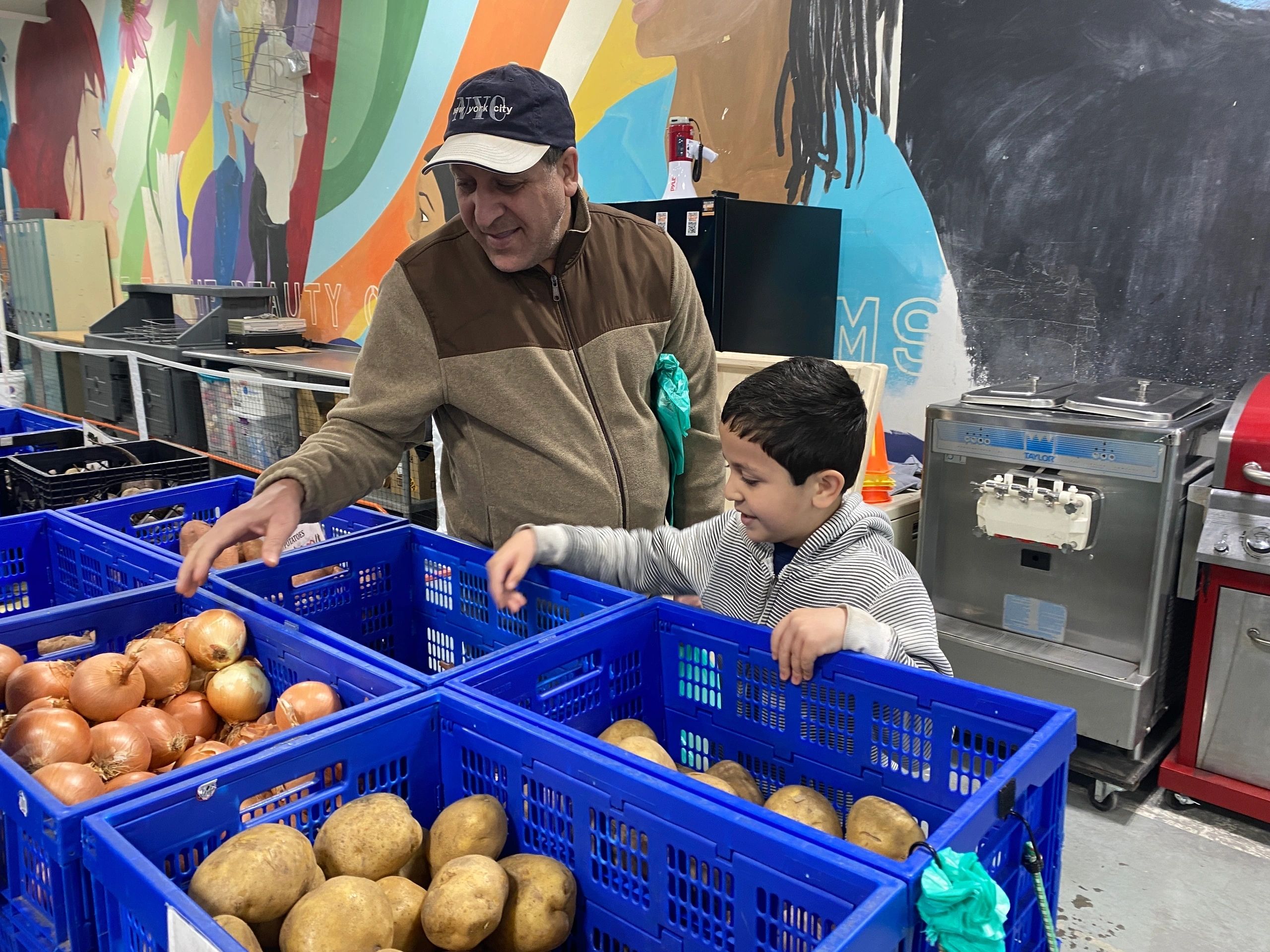
WORCESTER—The Regional Environmental Council is highlighting the benefits of the state’s Healthy Incentives Program after Gov. Maura Healey proposed a FY25 budget with $25 million for the program.
Through the program, when SNAP recipients use their EBT cards to buy fruits and vegetables they can receive $40 to $80 back on their cards depending on their household size, according to a press release from REC Worcester, which both extends their food budget and supports local farmers.
In addition to accepting cash and credit, REC Worcester’s farmers markets accept SNAP, which allows their customers to benefit from the Health Incentives Program.
“The Healthy Incentives Program is a vital resource for our community. It provides critical resources for families to stretch their food budgets and increases their ability to purchase fresh fruits and vegetables.”Grace Sliwoski, REC Worcester’s director of programs, said. “This program also invests in our local farming community and helps us to build a more resilient food system here in Massachusetts.”
HIP became available to SNAP participants in 2017, and while the program didn’t necessarily change what they bought at REC farmers markets, according to REC Farmers Market Coordinator Ashley Carter, it positively has impacted how often they can buy produce and the volume at which they can buy it.
“Since 2019, we have seen a 90 percent increase in the number of unique SNAP users at the market,” Carter told the Worcester Guardian. “We’ve also seen a 178 percent increase in produce sales since 2019. We know from surveys that we have conducted at markets that a main driver for folks visiting the markets is being able to utilize SNAP/HIP as a payment option.”
During the winter months, REC Worcester works to provide Worcester County residents access to fresh, local food with its Winter Mobile Market.
The Winter Mobile Market— three vans that make stops in Worcester, Webster, and Southbridge—operates from January to April.
“The mobile markets provide convenient access to affordable, locally grown produce in areas that face systemic barriers to food access,” REC Worcester said in a press statement. “With over 90 percent of customers utilizing SNAP benefits, it’s evident that these programs are vital in the fight against food insecurity in Massachusetts.”
The mobile market is currently offering greenhouse-grown fresh greens and tomatoes and winter storage crops including beets, carrots, onions, carrots, potatoes, and cabbage, according to Carter.
“During the winter we work with local food aggregators such as Marty’s Local and the Worcester Regional Food Hub to source produce grown from Massachusetts’ growers,” Carter said. “We also work with small-scale farms, such as Cotyledon Farm in Leicester, whose eggs we are currently offering at market.”
The mobile market also sells a variety of tropical foods to meet the needs of its diverse customer base, according to Carter.
The locations of the mobile market’s stops are the result of longtime relationships with community partners, Carter said, including the Worcester Housing Authority, the Worcester Senior Center, and the Worcester Youth Center.
“Questions we consider when deciding to pilot a new stop include, ‘Is this neighborhood/place somewhere that has food security needs?’ and ‘Is there an appropriate community partner in that location that can help support the stop?’ Carter said.
As the state budget is debated in the legislature, it is a priority for REC to ensure that it passes with the proposed $25 million for HIP as it is, according to the statement.
A schedule of when and where the mobile markets take place is available on the REC Worcester website.
Kiernan Dunlop is an award-winning journalist who has spent the past five years reporting in Worcester, New Bedford, and Antigua and Barbuda. Her work has been published in Bloomberg, USA Today, Canary Media, MassLive, and the New Bedford Standard Times, among other outlets. She can be contacted at kdunlop@theworcesterguardian.org
